Contractors working on wastewater collection systems in Utah’s Cottonwood Improvement District must secure a contractor permit bond, a three-party financial guarantee ensuring compliance with district rules. This bond protects public health, funds, and the environment by offering financial recourse if a contractor fails to meet standards.
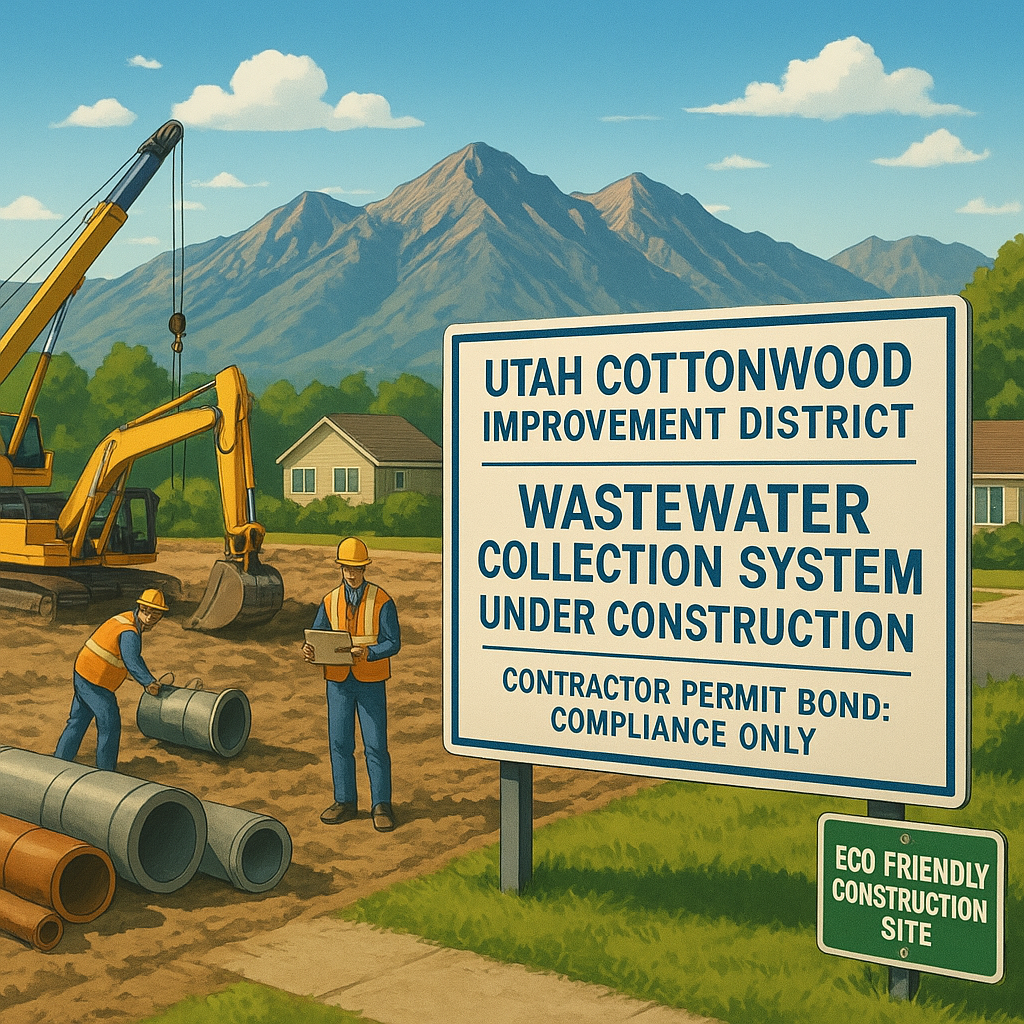
Working on wastewater systems isn’t a typical construction job. You’re dealing with pipes, treatment processes, and environmental safety — all while keeping a community’s health front and center. If you’re a contractor hoping to handle projects in the Cottonwood Improvement District in Utah, there’s one crucial requirement you need to understand: the contractor permit bond. Let’s break it down in plain, simple language, so you know exactly what’s expected and how to move forward with confidence.
What Exactly Is a Cottonwood Improvement District Contractor Permit Bond?
Think of this bond as a promise with a financial backbone. It’s a three-party agreement between you (the contractor), the Cottonwood Improvement District (the obligee), and a surety company (the one issuing the bond). The bond guarantees that you’ll follow all the rules, regulations, and standards set by the district when you’re working on wastewater collection systems. If you slip up and don’t follow those rules, the bond offers a way to make things right — without leaving the district or the public holding the bag.
It’s not insurance for your business, though. The bond protects the district and the public from financial loss due to your non-compliance. If a claim gets paid, you’ll need to repay the surety company every penny. So it’s more like a powerful incentive to do your job correctly.
Why Does the Cottonwood Improvement District Require This Bond?
Wastewater collection systems are delicate. A small mistake can lead to contamination, environmental damage, or expensive repairs that disrupt an entire neighborhood. The Cottonwood Improvement District oversees these critical systems in parts of Utah, and they need to be absolutely certain that every contractor working on them follows the rules to the letter.
Requiring a bond isn’t about creating hoops to jump through. It’s about protecting:
- Public health – preventing sewage backups or leaks into waterways.
- Public funds – avoiding costly fixes that taxpayers would otherwise fund.
- The environment – ensuring work meets state and federal environmental standards.
- The district’s infrastructure – making sure alterations or repairs don’t damage the system.
In short, the bond acts like a security deposit for the district’s peace of mind. You’re telling them, “I’ll do the job right, and if not, there’s a financial remedy in place.”
Who Needs to Get This Bond?
If you’re a contractor specializing in wastewater collection — laying new sewer pipes, repairing lift stations, connecting service lines, or performing any excavation or maintenance directly tied to the collection system — you’ll likely need this bond before you can pull a permit. The district wants to ensure that anyone who touches their infrastructure is properly vetted and bonded.
Even subcontractors might need to be covered, depending on the scope of work. It’s always wise to check with the Cottonwood Improvement District’s current requirements before bidding on a project. Rules can evolve, and staying ahead keeps your schedule on track.
How Does the Bond Actually Work? A Simple Breakdown
Let’s walk through a real-world scenario. Imagine you’ve won a contract to upgrade a segment of the wastewater collection pipeline. You’ve secured your permit bond for, say, $10,000. During the project, an inspector finds that work didn’t meet district standards — maybe the bedding material was wrong, or a connection wasn’t properly sealed. The district has to hire another contractor to fix the issue, costing $6,000.
Here’s what happens next:
- The district files a claim against your bond for the $6,000 in corrective work.
- The surety company investigates. If the claim is valid, they pay the district up to the bond’s limit.
- Then the surety comes to you for reimbursement of that $6,000, plus any legal or administrative fees they incurred.
Unlike insurance, a bond claim doesn’t shield your wallet. It simply provides an immediate remedy for the district while keeping you fully accountable. That’s why it’s called a compliance bond — it enforces compliance in a very direct way.
How Much Does the Cottonwood Improvement District Permit Bond Cost?
You won’t pay the full bond amount upfront. Instead, you pay a small percentage called the premium, usually between 1% and 5% of the total bond amount. Several factors influence that rate:
- Your credit score – higher scores typically mean lower rates.
- Your business’s financial history – a stable, well-established company may get better terms.
- The bond amount required – the district sets this; it might vary based on the project size or contractor classification.
- Your past claims history – a clean record works in your favor.
For example, if the district requires a $10,000 bond and your premium rate is 2%, you’d pay just $200 for the year. Many contractors find the cost surprisingly manageable when they see how it unlocks project opportunities. Always shop around with a reputable surety bond provider to get the best rate.
Steps to Get Your Bond Quickly and Easily
The process isn’t complicated, but a little preparation goes a long way. Here’s a typical sequence:
- Confirm the bond amount and exact requirements with the Cottonwood Improvement District. Don’t assume — check their current contractor packet or website.
- Gather basic business and personal information, such as your company’s legal name, address, tax ID, and owner details.
- Reach out to a surety bond agency that understands Utah municipal bonds. They’ll walk you through a quick application, often online.
- Undergo a brief underwriting review. For smaller bonds, this can be nearly instant. Larger bonds may need additional financial documents.
- Pay the premium and receive your bond form.
- File the bond with the district as part of your permit application. Keep a copy for your records.
Many agencies can issue the bond the same day, so even if you’re on a tight deadline, you’re not out of luck.
Common Questions Contractors Ask
Is this bond the same as general liability insurance?
No. General liability insurance protects you against third-party injury or property damage claims. The permit bond specifically guarantees compliance with district rules and pays the district if you fail to meet those standards. You’ll likely need both.
Can I get bonded if my credit isn’t perfect?
Yes, many surety companies offer programs for contractors with less-than-stellar credit. Your premium might be a bit higher, but it’s often still obtainable. Talk to your bond agent about “bad credit bonding programs.”
How long does the bond last?
Most permit bonds are issued on a term basis — often one year — and need to be renewed as long as you’re actively permitted with the district. Some bonds are project-specific and expire once the work is completed and accepted.
What happens if I let my bond lapse?
Your permit could be suspended or revoked, forcing you to stop work immediately. It can also damage your reputation with the district, making future projects harder to win. Treat bond renewal dates as seriously as your license renewal.
A Little Planning Saves a Lot of Headaches
Securing a Cottonwood Improvement District wastewater collection contractor bond might feel like just another bureaucratic task, but it’s actually a mark of professionalism. It signals that you take your work seriously, that you stand behind your compliance, and that you’re ready to protect the community you serve.
Think of it this way: every time you pull a permit in the district, that bond is quietly telling officials, “This contractor is accountable.” And in an industry where trust is built one project at a time, that small printed document can open big doors.
Whether you’re a seasoned wastewater contractor expanding into Utah or a local business just getting started, make the bond a priority. Get clear on the required amount, find a knowledgeable surety partner, and file the paperwork before you ever break ground. It’s one of those tasks where a little upfront effort pays off in uninterrupted work and a solid reputation.
Ready to take on your next wastewater project in the Cottonwood Improvement District? The path starts with understanding and securing the right bond. Now you know exactly what to do.