A VA fiduciary bond is a financial guarantee required for Wyoming custodians appointed by the Department of Veterans Affairs to manage a veteran’s benefits, ensuring funds are handled honestly. It protects the veteran’s estate by allowing the surety to reimburse losses if the fiduciary mishandles money.
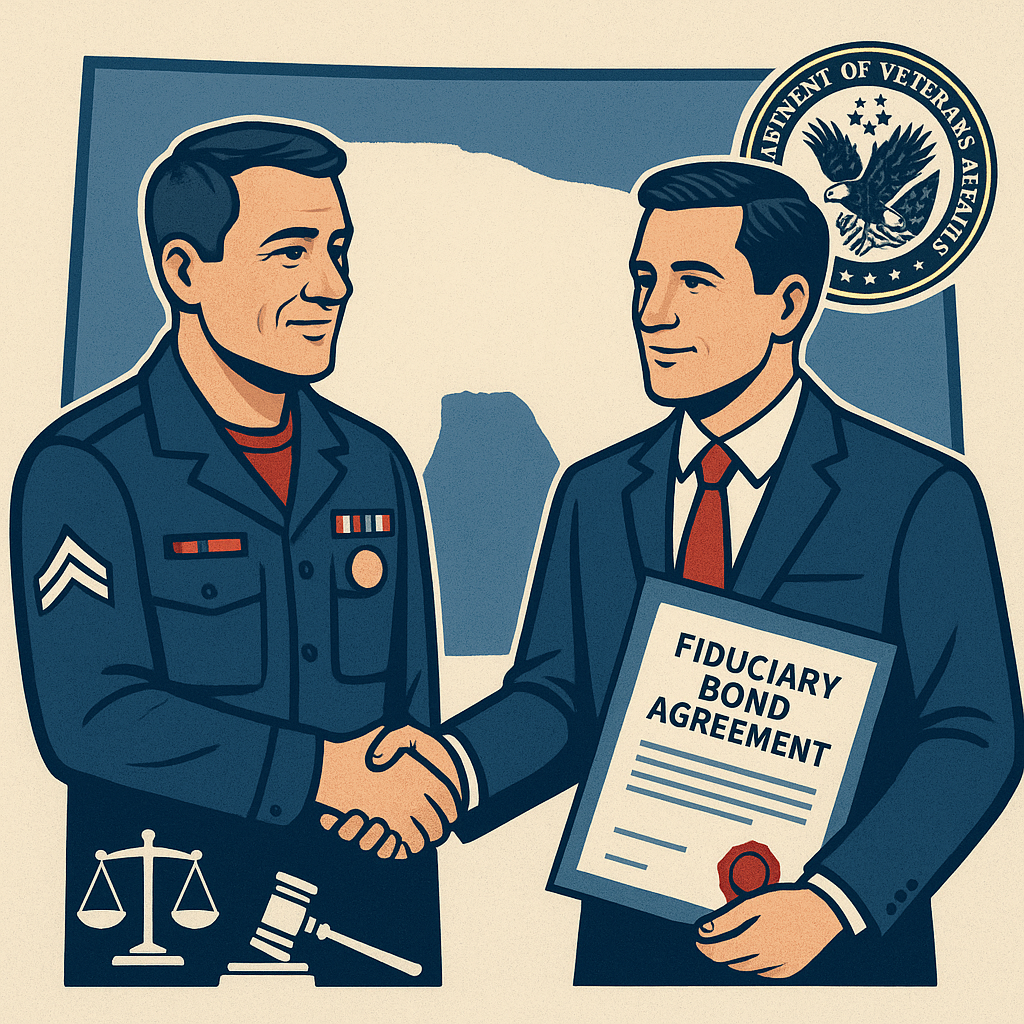
Imagine this: your uncle, a proud veteran, has served his country but now struggles to manage his VA benefits due to age or illness. A family member or trusted friend steps in to help. The Department of Veterans Affairs (VA) might then officially appoint that person as a legal custodian — a fiduciary — to handle those benefits responsibly. But before they can take on that role, they’ll likely need something called a VA fiduciary bond. If you’re a bit confused about what that means for Wyoming residents, you’re not alone. Let’s walk through this together in plain, simple terms.
So, What Exactly Is a VA Fiduciary Bond?
Think of a VA fiduciary bond as a financial promise. It’s not an insurance policy for the custodian, but a layer of protection for the veteran. When the VA appoints someone to manage a veteran’s benefits (that person is called a legal custodian or fiduciary), the bond guarantees that the custodian will handle the money honestly and according to the rules. If they don’t, the bond can step in and reimburse the veteran’s estate up to a set amount.
The official title you might see on paperwork is “Secretary of the Department of Veterans Affairs Legal Custodian Required of Veteran (VA) Appointed Fiduciary Bond.” That long name simply connects the bond to the VA Secretary as the requiring party — the one who insists on this protection. In Wyoming, the same federal requirement applies, but we’ll refer to it here as a Wyoming legal custodian bond or a VA appointed fiduciary bond.
Who Needs This Bond in Wyoming?
Not every helper needs a bond. If you’re just an informal support, like a family member who cooks meals or drives the veteran to appointments, this doesn’t apply to you. The bond is specifically for people the VA officially appoints as fiduciaries. These custodians are given the legal authority to receive and manage VA benefit payments on behalf of a veteran who can’t do it themselves due to injury, illness, or age-related limitations.
In Wyoming, the VA’s Fiduciary Hub (often based in a regional office) will notify you if a bond is necessary. The decision usually hinges on the amount of money involved. If the veteran’s annual benefits exceed a certain threshold, or if the VA determines a bond is in the veteran’s best interest, you’ll need to get one before you can officially start.
Breaking Down How the Bond Works
A surety bond involves three parties, and understanding their roles makes the whole process less intimidating:
- The Principal: That’s you — the court-appointed or VA-appointed legal custodian. You’re promising to manage the veteran’s money correctly.
- The Obligee: The Secretary of the Department of Veterans Affairs. This is the entity requiring the bond and the one protected if something goes wrong.
- The Surety: The bond company that issues the bond. They’re backing your promise financially.
If a custodian mishandles funds — say, using benefits for personal expenses instead of the veteran’s care — the surety company can pay a claim to make the veteran whole. But here’s a crucial detail: the custodian must repay the surety for any losses. It’s similar to a co-signer arrangement; you remain responsible for your actions.
Why Does the VA Require This?
Veterans deserve to have their benefits protected with the utmost care. The VA fiduciary program exists to safeguard those who are most vulnerable. A bond adds an extra layer of accountability. It assures the VA that the appointed custodian has been screened by a surety company, which checks for financial stability and trustworthiness. In a way, the bond is a safety net, not because people are dishonest, but because life can get complicated and errors happen. Wyoming’s veterans, just like those in every state, benefit from this uniform federal protection.
The Cost of a VA Fiduciary Bond in Wyoming
One of the first questions people ask is, “How much will this cost me?” The good news is that the premium is typically small relative to the coverage amount. The bond amount is set by the VA based on the value of the veteran’s estate you’ll manage. For many fiduciaries, the required bond might range from $10,000 to $100,000 or more, but you only pay a percentage — usually between 1% and 3% per year.
For example, if the VA requires a $50,000 bond, your annual premium might be around $500 to $1,500, depending on your credit and financial history. The surety company evaluates your personal credit score, any history of bankruptcy, and your overall financial stability. Don’t worry if your credit isn’t perfect; many providers work with a range of scores. They may ask for a slightly higher premium or additional documentation, but it’s rarely a flat denial.
Steps to Get Your Wyoming VA Fiduciary Bond
The process is more straightforward than those lengthy bond forms suggest:
- Receive Notice from the VA: The VA field office or fiduciary hub will send you a letter outlining the bond requirement and the specific amount.
- Apply with a Reliable Surety Bond Provider: You can submit an application online or by phone. You’ll need personal information, the bond amount, and details about the veteran’s case (the VA will provide a case number or bond form).
- Underwriting Review: The surety checks your credit and background. This step often happens quickly — sometimes within a few hours.
- Pay the Premium: Once approved, you pay the premium, and the bond is issued.
- File the Bond: You’ll receive the official bond document. You must submit it to the VA exactly as instructed, keeping a copy for your records.
Throughout this process, treat the bond as an integral part of your fiduciary acceptance. You can’t manage the veteran’s funds until the bond is properly filed and accepted.
Common Misunderstandings About Fiduciary Bonds
Let’s clear up some confusion. A fiduciary bond is not the same as fiduciary liability insurance, which might protect the custodian personally. This bond protects the veteran and the VA. Also, the bond doesn’t release you from your duty to follow VA rules. You’re still required to keep accurate records, provide annual accountings, and use funds solely for the veteran’s benefit. The bond is there to catch financial harm if you stray from those duties.
Another question we hear: “Does the bond follow me forever?” The bond period typically aligns with your appointment. As long as you remain the legal custodian, the bond must remain in force. You might need to renew it annually. If you step down or are removed, the bond coverage will eventually end, but any claims for actions during the bond period can still be made even after cancellation, up to the surety’s limit.
What If Something Goes Wrong?
Nobody plans to make mistakes, but life happens. Suppose a custodian accidentally commingles funds, or a well-meaning relative uses some money for a non-approved expense. A concerned family member or a VA auditor might discover the issue. The VA can then file a claim against the bond. The surety investigates and, if the claim is valid, pays up to the bond’s penalty. The custodian must then reimburse the surety. This underscores why careful record-keeping and strict adherence to VA guidelines are non-negotiable.
It’s far better to avoid claims entirely. When in doubt, reach out to your VA fiduciary hub for guidance. They exist to help you succeed in your role.
Why This Matters for Wyoming Veterans’ Families
Wyoming’s veteran community is tight-knit. Many families take on fiduciary roles out of love and a sense of duty. The bond requirement might feel like just another hurdle, but it’s actually a vote of confidence — a way for the VA to say, “We trust you enough to handle this responsibility, and we also want to make sure the veteran is protected no matter what.”
By securing a VA appointed fiduciary bond, you’re signaling your commitment to transparency and care. You’re also ensuring that the veteran’s funds remain safe, which can give peace of mind to everyone involved.
Finding the Right Support in Wyoming
When you search for “Wyoming VA fiduciary bond” or “legal custodian bond for veterans,” you’ll find many surety companies. Look for one that understands the unique nuances of VA bonding and can guide you through the paperwork without making your head spin. Some agencies specialize in these bonds and can even help you navigate if your credit history is a bit bumpy.
Remember, you’re not alone in this. The VA’s fiduciary program, combined with the bond, creates a structured way to care for veterans who need it most. Whether you’re in Cheyenne, Casper, or a small town in the Bighorn Basin, the requirements remain the same, and help is available online or by phone.
Wrapping It All Up
Stepping up as a legal custodian for a Wyoming veteran is a meaningful way to give back. Yes, there’s a bit of paperwork, and yes, the fiduciary bond might seem like a strange puzzle at first. But once you understand that it’s simply a tool to protect the veteran’s financial world, it all makes sense. Take it step by step, ask questions, and lean on the resources the VA and surety experts provide.
With the bond in place, you can focus on what really matters: making sure the veteran in your life receives the dignity, care, and financial stewardship they deserve. After all, that’s the whole point.