A Summit County Road Cut Permit Bond is a surety bond required before any excavation or trenching on county-maintained roads, ensuring proper restoration and protecting the county from substandard work. It applies to contractors and property owners, shifting financial risk from taxpayers to the permit holder.
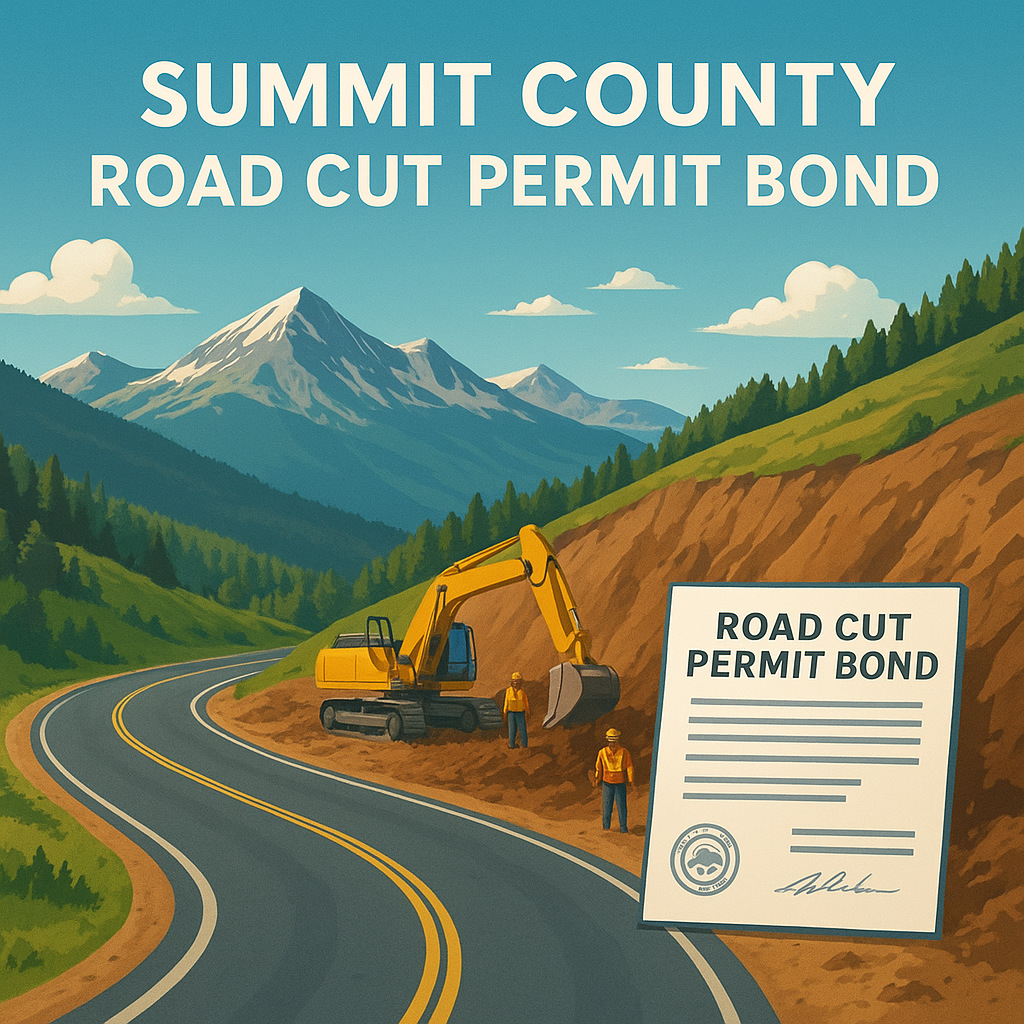
So, you’re planning a project in beautiful Summit County, Colorado. Maybe you’re finally installing that new gas line for your cozy mountain cabin, laying fiber optic cable for faster internet, or putting in a driveway access on your property. There’s just one catch – you need to dig into a county road. That’s where the Summit County Road Cut Permit Bond comes in. It might sound like a mouthful, but don’t worry. We’re going to break it all down in plain, everyday language so you can get back to your project with confidence.
What Exactly Is a Summit County Road Cut Permit Bond?
Let’s start with the simplest definition. A Summit County Road Cut Permit Bond is a type of surety bond required by Summit County, Colorado, before you can legally cut into, excavate, or trench across any county-maintained road or right-of-way. Think of it as a financial promise. You, the contractor or property owner (the principal), promise the county (the obligee) that you will complete the road cut and all related repairs according to their strict standards. A third party, the surety company, backs that promise.
If you fail to patch the road properly, leave a dangerous pothole, or just walk away from the job, the county can make a claim against your bond. The surety will then pay to fix the road up to the bond amount – and they’ll come back to you for every penny. So, it’s not insurance for you; it’s protection for the public and the county’s infrastructure.
Why Does Summit County Require This Bond in the First Place?
Picture this: it’s a snowy January morning in Breckenridge. A snowplow is clearing the streets, and it hits a poorly patched road cut from a utility job done six months ago. The plow blade catches the edge, tearing up a large chunk of asphalt and damaging the plow. Suddenly, that small, unassuming cut has become a safety hazard, a traffic nightmare, and a costly repair for the county.
Summit County’s roads endure a lot – heavy snow, freeze-thaw cycles, and high-altitude UV exposure. A substandard road patch can quickly deteriorate, leading to potholes, cracked pavement, and even damage to vehicles. The Road Cut Permit Bond is the county’s safeguard. It ensures that whoever disturbs the road surface has a serious financial stake in restoring it to a condition that’s as good as, or better than, before. It shifts the financial risk of shoddy workmanship from the taxpayers to the entity making the cut. The bond requirement simply says, “We welcome your progress, but you must leave our roads in perfect shape.”
Who Needs to Get This Bond?
It’s a common question: “I’m just a homeowner. Does this apply to me?” The answer often depends on who is pulling the permit. In most cases:
- Licensed Contractors: If you’re a utility company, a general contractor, or a specialized excavation company doing any work that involves cutting a Summit County road, you will absolutely need to secure a bond. The county wants your bond on file before you even think about picking up a saw.
- Homeowners Acting as Their Own Contractor: If a homeowner is pulling the permit to do the work themselves (for instance, installing a driveway culvert), the county may still require them to obtain a bond. This protects the county just the same as if a pro were doing the work.
- Utility and Service Providers: Think gas, water, internet, and electric companies. Any time they need to install, repair, or upgrade their lines under a county road, a bond is a non-negotiable part of the permit process.
When in doubt, always call the Summit County Engineering Department or Public Works office. They’ll give you the definitive answer for your specific project. Trust us, a quick phone call is far easier than facing a stop-work order.
How Does the Road Cut Permit Bond Work? A Three-Party Promise
A surety bond can feel abstract, so let’s make it concrete with a simple analogy. Imagine you’re renting a fancy piece of equipment for the weekend. The rental company asks for a damage deposit. You give them a few hundred dollars. If you return the equipment in perfect condition, you get your full deposit back. If you damage it, they keep the money to cover repairs.
A road cut bond works the same way, but with a few more players and a much lower upfront cost. Here are the three parties involved:
- The Principal (You): The contractor or property owner doing the road work. You’re the one responsible for finishing the job correctly.
- The Obligee (Summit County): The entity requiring the bond. They are protected by it.
- The Surety (The Bonding Company): The financial company that issues the bond and guarantees your performance to the county.
If you complete the road cut and restoration to the county’s satisfaction, the permit is closed, and the bond’s obligation ends. But if you do a poor job and the county has to step in, they file a claim. The surety company investigates. If the claim is valid, the surety pays the county up to the full bond amount. Then, the surety uses a legal agreement called an indemnity agreement to demand reimbursement from you for everything they paid out, plus legal costs. You are always the one ultimately on the hook.
How Much Does a Summit County Road Cut Bond Cost?
This is the million-dollar question, and the good news is it’s not a million-dollar answer. You won’t need to pay the full bond amount upfront. The bond amount – the total coverage the county requires – is set by the county based on the scope of your project. It could be $5,000 for a small driveway cut or $50,000 or more for a large utility trench spanning several blocks.
What you actually pay is a small percentage of that total amount, called the bond premium. For well-qualified applicants with good credit, this premium typically ranges from 1% to 3% of the total bond amount. For example:
- A $10,000 road cut bond might only cost you $100 to $300 per year.
- A $25,000 bond could run $250 to $750 annually.
Several factors influence your exact rate, including your personal credit score, business financials, and how long you’ve been in business. The best approach is to talk to a surety bond specialist. They can shop a few different markets and find you the most competitive rate. Even with less-than-perfect credit, a bond program is often available, though the premium percentage will be higher.
Step-by-Step: How to Get Your Bond
The process is straightforward and often much faster than you’d expect. Here’s how it generally goes in Summit County:
1. Contact the County First. Before you apply for a bond, reach out to the Summit County Engineering or Road and Bridge Department. They’ll provide the exact bond form, tell you the required bond amount for your specific permit, and outline all restoration specifications like compaction standards and asphalt thickness. Getting this right upfront saves you from having to rebond later.
2. Gather Your Information. Have your business details (or personal info if you’re a homeowner) ready. This includes name, address, Social Security Number or EIN, and the exact bond amount needed.
3. Apply with a Surety Bond Agency. You can do this online or over the phone. You’ll complete a short application. Many agencies offer instant quotes for smaller bonds.
4. Pay the Premium and Sign the Documents. Once approved, you’ll pay the premium. The agency will then issue the bond and typically send you a digital copy immediately.
5. Submit the Bond to the County. You take the original, signed bond document to the county as part of your permit application package. The county will keep it on file. You can now break ground!
The entire thing can often be done in a single business day, ensuring your project timeline stays on track.
Common Questions We Hear from Summit County Locals
Is This the Same as General Liability Insurance?
No, and this is a critical distinction. General liability insurance might protect you if you accidentally damage a homeowner’s property while working. It won’t satisfy the specific requirement for a road cut permit. The county requires the surety bond because it guarantees the funds are set aside specifically for the road repair. They are two completely different products serving different purposes.
What Happens if My Job Spans Multiple Roads or Locations?
Often, a single “blanket” bond can be written to cover multiple permits or projects over a set term, usually a year. This is very common for contractors who do frequent work in Summit County. You’ll need to verify with the county what annual bond amount they require for a blanket bond.
How Do I Avoid a Bond Claim?
Prevention is simple: follow the rules. Use proper compaction methods, wait for the specified curing times, and match the existing pavement type and thickness perfectly. Have the county inspector sign off on the temporary patch and then again on the permanent restoration. Document everything with photos. A proactive approach with the county inspector is your best defense against a claim down the road.
The Bottom Line: Protecting Our Mountain Community
At first glance, another permit and another bond can feel like just more red tape. But when you’re navigating a Breckenridge winter or a Frisco mud season, you’ll be grateful that every past road cut was done right. The Summit County Road Cut Permit Bond isn’t a hurdle designed to slow you down. It’s a shared agreement that keeps our high-country infrastructure safe, functional, and reliable for everyone – from the early-morning commuter to the snowplow driver clearing the way after a fresh three-foot dump.
So, whether you’re bringing a new utility to a backcountry lot or improving an in-town property, start your project on solid ground. Get the details from the county, secure your bond, and then do the job well. With the right preparation, you’ll be able to drive away knowing you’ve contributed to Summit County’s lasting quality of life, one properly patched road at a time.