Contractors working in Lawrence, Kansas, public rights-of-way must obtain performance bonds guaranteeing project completion per city standards and maintenance bonds covering defects for one to two years after acceptance.
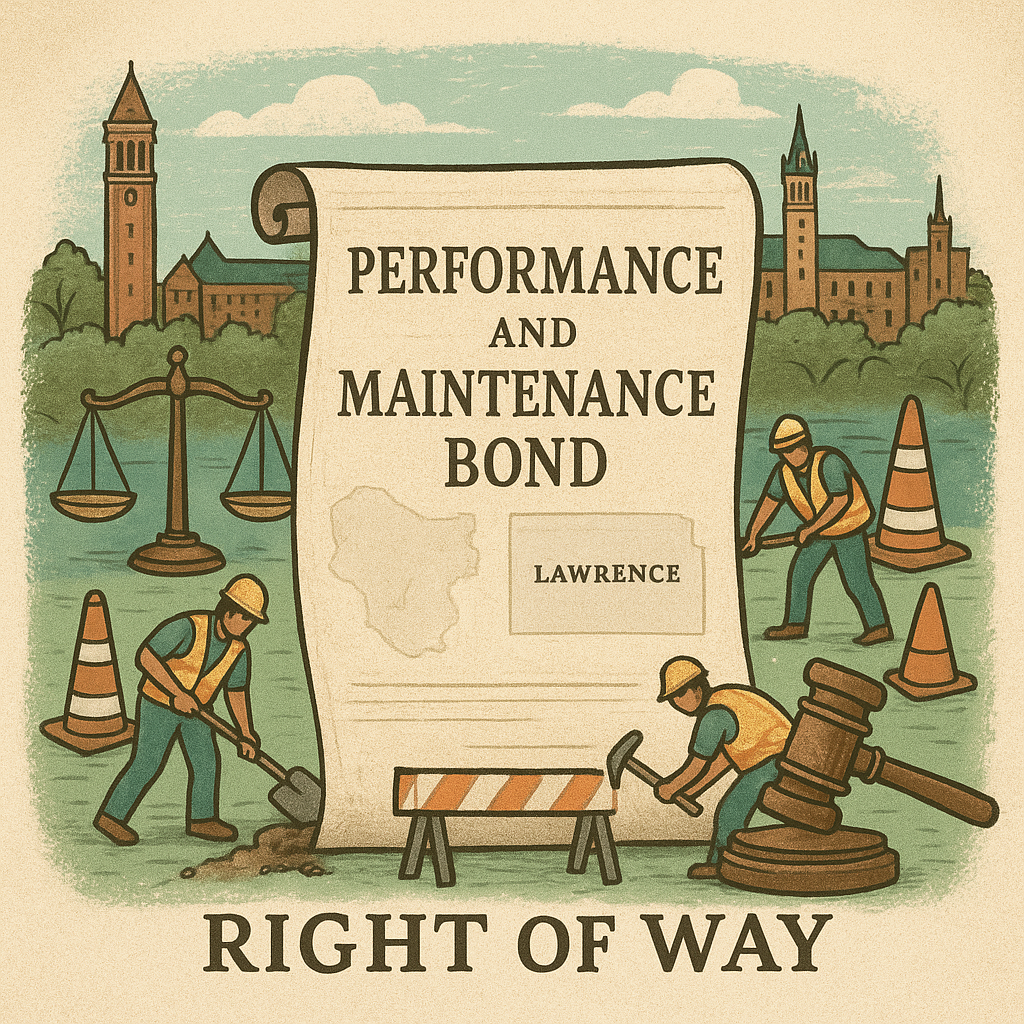
Have you ever driven over a freshly patched strip of asphalt on a city street and wondered, “Who makes sure this doesn’t fall apart in six months?” If you’re a contractor, developer, or utility company planning to dig, build, or install anything in Lawrence, Kansas, the answer involves two small but mighty words: performance and maintenance bonds. They might sound like complicated financial jargon, but breaking them down is actually pretty straightforward—and knowing the ropes can save you a ton of headaches.
Whether you’re laying fiber-optic cable, replacing a water line, or constructing a new driveway approach that touches the public right-of-way, the City of Lawrence wants a guarantee. That guarantee comes in the form of a surety bond, which acts like a financial promise that your work will be done right and will last. Let’s walk through what these bonds are, why Lawrence requires them, and how you can navigate the process without breaking a sweat.
What Exactly Is a Right-of-Way Performance Bond?
Imagine you’re lending your favorite tool to a neighbor. You’d probably feel better if someone reliable promised, “If they break it or never return it, I’ll make it right.” A performance bond works the same way, only scaled up for city infrastructure projects. Specifically, a Lawrence KS performance bond for right-of-way work is a three-party agreement that ensures a contractor will complete a project according to the city’s approved plans, specifications, and standards.
When you cut into a public street, sidewalk, or utility easement, you’re impacting something that belongs to everyone. The bond guarantees that if you fail to finish the job, or if you do shoddy work, there’s a pool of money to fix it. The city doesn’t have to dip into taxpayer funds to repave a botched trench or correct a dangerous drop-off.
Think of it as a safety net woven from trust. The obligee (the City of Lawrence) is protected, the principal (you, the contractor) is held accountable, and the surety (an insurance-like company) backs the whole thing up.
And What About a Maintenance Bond?
Now, a job isn’t truly finished the moment the last backhoe drives away. Sometimes problems show up months later—concrete sinks, asphalt crumbles, a patch develops cracks. That’s where a maintenance bond steps in. While a performance bond covers the actual construction phase, a maintenance bond extends the guarantee window, typically for a period set by the city, often one or two years after the work is accepted.
It’s like a manufacturer’s warranty, but for your excavation or building work in the right-of-way. If a defect appears because of faulty materials or poor workmanship during that maintenance period, the bond pays to correct it. The City of Lawrence wants to know that the street won’t turn into a pothole puzzle a few seasons later, and this bond gives them that peace of mind.
Why Does the City of Lawrence, Kansas Require Both Bonds?
You might be thinking, “I do great work; why all the red tape?” The answer lies in protecting the public. Lawrence is a vibrant community with miles of sidewalks, bike lanes, utilities, and roadways that weave through neighborhoods and commercial corridors. Every time someone excavates the right-of-way—whether for a major development or a small utility repair—there’s a risk the pavement won’t be restored properly. A failed trench can mean vehicle damage, tripping hazards, water seepage, and expensive emergency fixes.
By requiring both performance and maintenance bonds for right-of-way permits, the city creates a layer of financial assurance. The performance bond assures completion to code. The maintenance bond assures that the restoration holds up. This dual approach keeps Lawrence’s infrastructure safe and long-lasting without leaning on taxpayer funds when something goes wrong. It also levels the playing field; responsible contractors aren’t undercut by those who might cut corners and disappear.
How Do These Bonds Work in Real Life?
Let’s put the pieces together with a practical example. Suppose you’re a contractor installing a new sewer lateral for a Lawrence homeowner, and you need to trench across a section of city sidewalk and street to connect to the main. Before you get the right-of-way permit, the city requires you to post a performance bond. You contact a surety company, provide some financial information, and secure a bond that covers the estimated cost of restoring the sidewalk and pavement.
Work goes smoothly, and the city inspector approves your trench patch and new sidewalk. The performance bond has done its job. But the story isn’t over—now the maintenance bond kicks in. For the next two years, if that sidewalk slab settles and creates a lip, or if the asphalt trench develops alligator cracks, the city can call on the maintenance bond. The surety will either make you fix it or hire another contractor to do so, using the bond’s funds. Everyone wins, except the potholes.
So, who’s who? The obligee is always the City of Lawrence. The principal is you—the permittee responsible for doing the work. The surety is the company issuing the bond. It’s crucial to remember a bond is not insurance for you; it’s protection for the city. If a claim is paid out, you’re ultimately responsible for reimbursing the surety company.
How Much Bond Coverage Do You Need in Lawrence?
There’s no one-size-fits-all dollar amount. Bond limits are typically based on the scope of the work and the estimated cost of reconstructing the disturbed right-of-way. The City of Lawrence will calculate a permit fee estimate that includes the area of pavement, sidewalk, or landscaping you’ll affect. The performance bond amount might be set at 100% of that restoration cost, or sometimes a multiple, depending on the project’s complexity. The maintenance bond often equals a percentage—frequently 10% to 20%—of the construction cost, but the exact figure comes straight from the city’s engineering or public works department.
Always verify with the city’s right-of-way permitting division before securing a bond. They’ll give you a bond letter of intent or a form that spells out the required amounts. Guessing can cause delays, and you don’t want your excavator sitting idle.
How to Get a Performance and Maintenance Bond in Lawrence, Kansas
Securing a Lawrence KS performance and maintenance bond isn’t as intimidating as it sounds, especially if your financial house is in order. Start by reaching out to a surety bond agency that’s licensed in Kansas and familiar with municipal bonds. They’ll ask for basic information: your business’s financial statements, credit history, and details about the project. For smaller right-of-way jobs, the process can be quick—sometimes you can get bonded without a deep dive into your balance sheet, using a streamlined “small bond” program.
Here’s a simple roadmap:
- Get the exact bond requirements from the City of Lawrence. Ask for the bond forms, required coverage amounts, and the maintenance term length.
- Complete an application with a surety provider. Be ready to share personal and business credit info. Strong credit usually leads to lower premiums.
- Receive a quote and pay the premium. The premium is a small percentage of the total bond amount, often between 1% and 5% for well-qualified applicants.
- Submit the original bond document to the city. Electronic delivery is becoming common, but check what the permit office accepts.
Pro tip: If you regularly work in the right-of-way, ask your agent about setting up a blanket bond or a line of credit that can cover multiple permits. This can streamline your paperwork dramatically.
What If Something Goes Wrong and a Claim Is Filed?
Let’s be honest—nobody wants to face a bond claim, but it’s important to understand the mechanics. If the city determines that you failed to complete restoration correctly or a defect appears during the maintenance period, they’ll notify the surety. The surety investigates and typically gives you, the contractor, a chance to resolve the issue yourself. This is your opportunity to fix the cracked pavement or settle a dispute without a formal payout.
If you can’t or won’t address the problem, the surety may step in, hire a replacement contractor, and then come to you for reimbursement. Yes, you’ll owe every penny the surety paid out, plus potential legal fees. Your reputation and future bonding capacity can take a serious hit too. That’s why clear communication with the city and a commitment to quality work aren’t just good practice—they’re your best defense against claims.
Common Pitfalls and How to Avoid Them
Many first-time permit applicants trip up by assuming their general liability insurance covers this. It does not. A liability policy might protect against accidents or property damage during the job, but it won’t compel you to finish an incomplete sidewalk or guarantee your asphalt patch for two years. The bond is a completely separate animal.
Another mistake is underestimating the maintenance term. If your bond accidentally expires before the city’s required window, your permit could be flagged as incomplete, and future permits might be held up. Keep a calendar reminder. Also, always ensure that the bond form you use is the exact one the city specifies—any alteration, even a comma, can cause rejection at the permit counter.
A Quick Word for Homeowners and Business Owners
You might not be the one pulling a right-of-way permit, but if you’re hiring a contractor who will, it’s smart to ask, “Are you bonded for performance and maintenance with the City of Lawrence?” A bonded contractor has already jumped through financial hoops and given the city a guarantee. It’s an extra layer of confidence that your project won’t leave you with a crumbling sidewalk and a vanished phone number.
Wrapping It All Up
Performance and maintenance bonds may never be the star of your construction project, but they’re the quiet guardians of Lawrence’s public spaces. They ensure that when the work is done, it stays done right. The next time you’re gearing up for a right-of-way job, look at the bonding requirement not as a hurdle, but as a badge of reliability. It tells the city and your customers that you stand behind your work from the first shovel of dirt to the final inspection—and well beyond.
Ready to dig in? Reach out to a knowledgeable surety professional, double-check those Lawrence municipal requirements, and give yourself the peace of mind that comes with a solid bond. Because a smooth pavement today shouldn’t become tomorrow’s bump in the road.