A Gardner KS abatement bond is a three-party financial guarantee between a developer, the City of Gardner, and a surety company that ensures soil erosion and sediment control regulations are followed during land-disturbing projects. It protects the city and public from cleanup costs if construction activities cause environmental damage to stormwater systems or waterways.
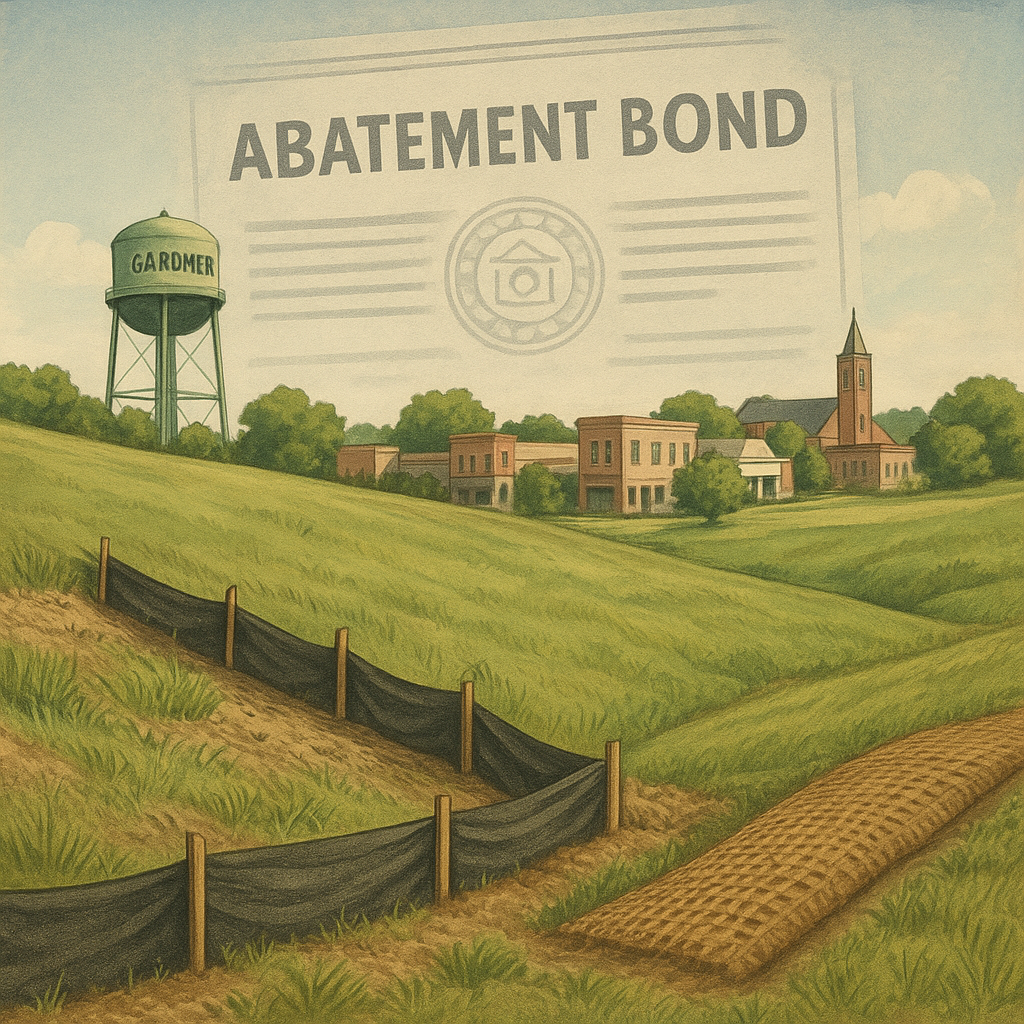
If you’re planning a construction project, landscaping overhaul, or any kind of land disturbance in Gardner, Kansas, you’ve probably heard the term “abatement bond” tossed around. At first glance, it sounds like just another piece of red tape. But understanding what a Gardner KS abatement bond for soil erosion or sediment control actually is can save you from frustrating delays, unexpected fines, and even legal headaches. Let’s break it down in plain English, without the jargon, so you can get back to focusing on your project.
What Exactly Is a Gardner KS Abatement Bond?
Think of an abatement bond as a financial promise. It’s a three-party agreement between you (the property owner or developer), the City of Gardner, and a surety company. You’re essentially telling the city, “I’ll follow all the rules about controlling soil erosion and sediment on my site, and if I don’t, there’s money set aside to fix any problems I cause.”
Unlike insurance, which protects you from unexpected accidents, this bond protects the city and the public. It guarantees that if your project creates a muddy mess that clogs storm drains or harms neighboring properties, the city won’t be stuck footing the cleanup bill. They can make a claim against your bond to cover the cost of repairs or remediation.
Why Does the City of Gardner Care So Much About Soil Erosion and Sediment Control?
If you’ve ever watched a heavy rainstorm turn a bare construction site into a river of mud, you already know the answer. Uncontrolled erosion doesn’t just make things look messy. It washes soil, debris, and pollutants into stormwater systems, creeks, and streams. Over time, that sediment chokes aquatic life, clogs drainage ways, and can even contribute to localized flooding.
Gardner is a growing community with plenty of new development. The city’s regulations—and these bonds—are designed to keep that growth sustainable. By requiring an abatement bond, they’re making sure that temporary construction activities don’t create long-term environmental damage. It’s a “leave it the way you found it” kind of deal, only backed by a financial safety net.
Breaking Down the Bond’s Purpose: A Simple Analogy
Imagine you’re borrowing a friend’s pristine white carpet for a weekend party. Your friend says, “Sure, but you need to put down a deposit. If anything spills and the carpet gets stained, I’ll use that deposit to have it professionally cleaned.” That deposit is your abatement bond. You’re motivated to protect the carpet (or in this case, the soil and waterways), and if something goes wrong, your friend isn’t left paying for the damage out of their own pocket.
The city acts like your cautious friend. They’re not trying to be difficult—they just want to make sure their community’s natural resources stay protected.
Who Typically Needs a Gardner KS Abatement Bond?
Not every small gardening project requires a bond, but you’ll almost certainly need one if your work involves:
- Clearing land for a new home or commercial building
- Grading or significant earthmoving
- Installing utilities that disturb soil
- Creating subdivisions or large parking lots
- Any activity that exposes soil and could lead to sediment runoff
The City of Gardner’s planning or public works department will tell you specifically whether your project triggers the bond requirement. It’s always better to ask early than to assume you’re exempt and face a stop-work order later.
How Does the Bond Process Actually Work?
Getting an abatement bond isn’t as complicated as it sounds. Here’s a step-by-step look:
1. You Apply for a Permit
Before you move any dirt, you’ll need a grading or land disturbance permit from the city. During that application, staff will review your erosion and sediment control plan. They’ll want to see how you’ll use silt fences, sediment basins, temporary seeding, or other best practices to keep soil in place.
2. The City Sets the Bond Amount
Based on the disturbed acreage and complexity of the site, the city calculates a bond amount. This figure is meant to cover the worst-case scenario: the cost to re-stabilize the site and repair any off-site damage if you fail to do it yourself.
3. You Secure the Bond from a Surety Company
You’ll pay a small percentage of the total bond amount—usually between 1% and 3% for applicants with good credit—as a premium. The surety company then issues the bond, which you provide to the city as proof of financial responsibility.
4. You Complete Your Project Responsibly
Follow your erosion control plan. Maintain those silt fences, stabilize exposed areas promptly, and keep mud off the streets. Once the city inspects and confirms your site is stable and compliant, the bond obligation is released.
What Happens if Erosion Problems Pop Up?
Let’s say a sudden storm washes a portion of your site’s sediment into the neighboring creek despite your best efforts. The city may issue a notice of violation. You’ll have a set amount of time to correct the issue. If you don’t—or if the damage is severe—the city can file a claim against your bond. The surety company will pay out up to the bond’s full amount to remedy the problem. And here’s the kicker: you’re ultimately responsible for reimbursing the surety for every penny they paid. So the bond doesn’t let you off the hook; it just guarantees the city gets quick access to cleanup funds.
How Much Does a Gardner KS Abatement Bond Cost?
The cost depends on two things: the bond amount set by the city and your financial profile. A small residential lot might only require a $5,000 bond, giving you a premium as low as $50 to $150. Large commercial projects can demand bonds of $50,000 or more, pushing premiums up considerably. The good news? You’re not paying that full face amount upfront—just the premium. And if you keep your site clean, you’ll never have to think about the bond again after it’s released.
Several factors influence your premium rate: personal or business credit score, financial history, and sometimes even experience in the industry. Working with a bond agency that understands Kansas regulations can help you find the best rate.
Can You Skip the Bond and Just Promise to Be Careful?
That’s a tempting thought, but it won’t fly with the city. Skipping the required abatement bond can lead to immediate project shutdowns and fines. More importantly, without that financial guarantee, you’re personally on the line for any environmental damage your project causes—which can escalate far beyond the cost of the bond premium. It’s a little like driving without car insurance. You might be fine until you’re not, and then the consequences are painful.
Practical Tips for a Smooth Bonding Experience
- Plan Your Erosion Control Early. Design your silt fencing placement, construction entrances, and temporary seeding as part of your initial project planning. A solid plan often speeds up city approval and bond processing.
- Keep Good Records. Photograph your site before, during, and after construction. If a dispute ever arises over sediment leaving your property, dated photos can be a lifesaver.
- Work with a Knowledgeable Bond Agent. Find an agency experienced with City of Gardner requirements. They can walk you through the paperwork quickly and help you avoid common mistakes.
- Don’t Let the Bond Lapse. If your project timeline extends, make sure your bond stays active. The city expects continuous coverage until they issue a formal release.
- Communicate with City Inspectors. They’re not your adversaries. A quick phone call or on-site meeting can clarify what they’ll look for during inspections, making compliance easier.
What About Sediment Control vs. Soil Erosion Control?
You’ll often see these terms used together, and they’re certainly related, but they aren’t identical. Erosion control focuses on preventing soil from moving in the first place—think mats, blankets, or vegetation that keep soil anchored. Sediment control, on the other hand, captures soil that has already started to move, like a silt fence trapping muddy water before it reaches a storm drain. Your bond covers both aspects because they work hand-in-hand. It’s like using both a raincoat (erosion control) and an umbrella (sediment control) in a storm; each layer reduces the chance you’ll get soaked.
Real-World Example: A Gardner Homebuilder
Picture a local builder clearing a quarter-acre lot for a new single-family home. Before starting, they apply for a grading permit, and the city requires a $10,000 abatement bond. The builder pays a $150 premium and gets the bond. During construction, a week of heavy rain threatens to wash soil into the street. Because they installed sturdy silt fencing and a rocked construction entrance, the runoff stays contained. After the home is finished, the yard is graded and seeded, and the city inspector signs off. The bond is released, no claims made. That $150 bought peace of mind—and kept the project in compliance.
Frequently Overlooked Benefits of the Bond Requirement
Beyond just keeping the city happy, bonding helps you build credibility. Neighbors see that you’re taking responsibility for the environment. Future clients or buyers recognize that you follow the rules. And the very act of preparing an erosion control plan often uncovers site drainage issues early, so you can address them before they become expensive problems. It’s a layer of protection for your reputation as much as for the land.
Addressing Some Common Concerns
“Will the bond requirement delay my project?” Not if you factor it into your timeline from day one. Bond approvals can often happen within a day or two when your paperwork is in order. “What if my credit isn’t perfect?” Some surety companies offer programs for those with less-than-ideal credit, though premiums may be slightly higher. “Do I have to get a new bond for each phase of a large development?” Usually, a single bond covers the entire project, but the city may adjust the amount as additional phases are added. Always confirm with the planning department.
Wrapping It All Up
A Gardner KS abatement bond for soil erosion or sediment control isn’t a punishment—it’s a smart, collaborative tool that keeps development running smoothly and waterways clean. By understanding how it works, planning your erosion controls thoughtfully, and partnering with the right surety professional, you’ll navigate the process with confidence. Whether you’re building a dream home, expanding a business, or shaping a new subdivision, this small step helps ensure your project leaves a positive mark on the Gardner community—without leaving a mess behind.