Commerce City uses public improvements bonds to guarantee that developer-built streets, utilities, and sidewalks meet city standards before public ownership, protecting taxpayers from incomplete projects. These financial assurances support the city's growth by ensuring new infrastructure is durable and seamlessly integrated into the community.
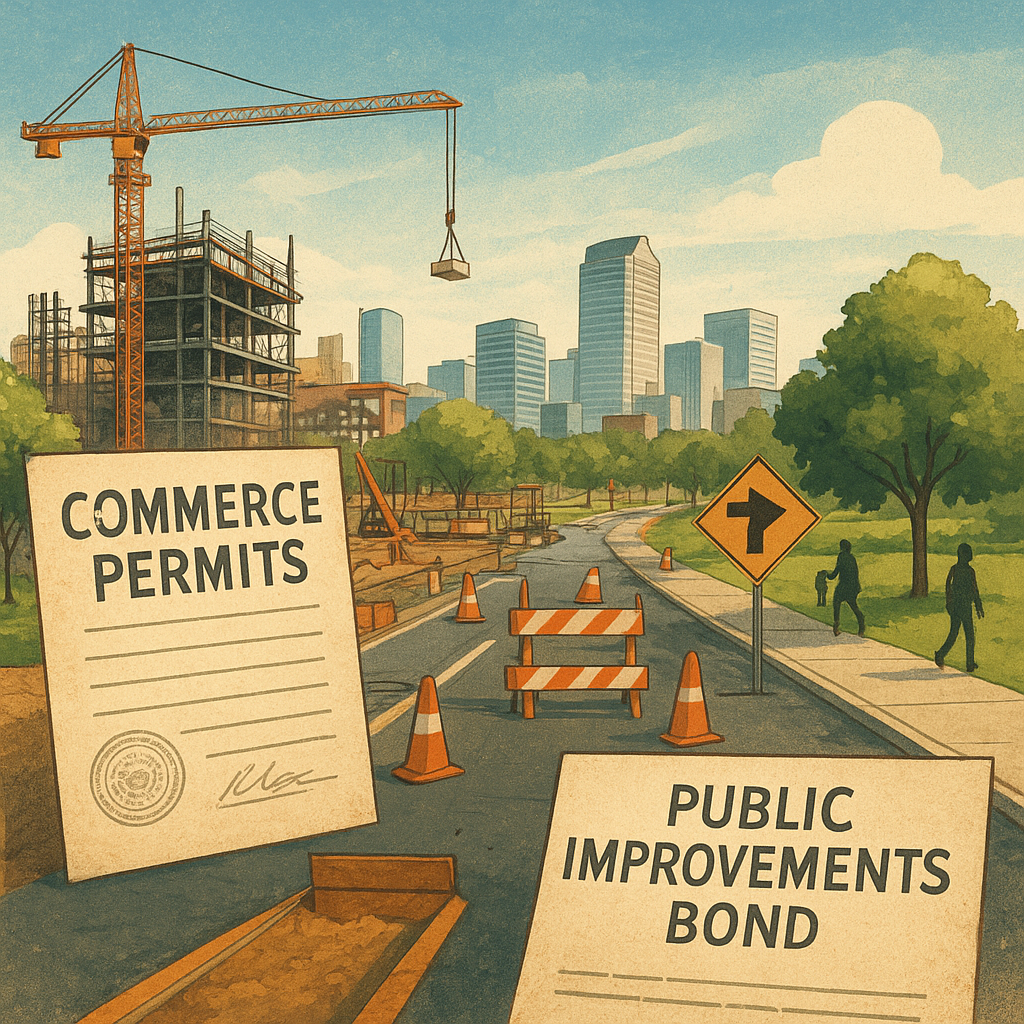
Ever noticed fresh pavement, new sidewalks, or updated utility lines springing up in your neighborhood and wondered how it all comes together? Behind every smooth road and every neatly installed water pipe in Commerce City, Colorado, there’s a well-oiled system of permits, plans, and financial assurances. At the heart of that system sits a tool called a public improvements bond. If you’re a contractor breaking ground, a developer mapping out a subdivision, or simply a curious resident, understanding the bond and permit process unlocks the bigger story of how our community keeps growing stronger.
Turning Plans into Reality: What Is a Public Improvements Bond?
Think of a public improvements bond as a promise backed by money. When a developer or contractor wants to build something that will eventually belong to the whole city—like streets, drainage systems, sewer lines, or sidewalks—Commerce City needs a guarantee that the work gets done right. A public improvements bond is exactly that guarantee. It’s a financial security deposited with the city, ensuring the project will be completed according to approved plans and city standards, even if the original builder runs into trouble.
Without this safety net, taxpayers could get stuck holding the bag for half-finished projects. The bond effectively says, “If we can’t finish what we started, there’s money set aside to hire someone who can.” That’s a huge relief for everyone who uses those public spaces.
Why Commerce City Puts Bonds at the Center of Infrastructure
Commerce City has been buzzing with growth. New neighborhoods, commercial centers, and industrial expansions mean more demands on roads, water lines, and public gathering spots. The city’s requirement for public improvements bonds isn’t just red tape. It’s a strategic move to protect public investments and maintain the high quality of life residents expect. By asking for a bond, the city ensures that private development seamlessly plugs into the wider community framework without leaving loose ends.
Imagine a developer starts a new housing subdivision and installs streets and streetlights. Those improvements will eventually be dedicated to the city for ongoing maintenance. The bond acts as a bridge. It covers the work during construction and guarantees that everything meets city specs before the city takes ownership. That way, the streets you drive on every morning are built to last, not patched up later at community expense.
The Bond and Your Daily Drive
You might be thinking, “This sounds like paperwork, so why should I care?” The answer is right outside your door. The smooth asphalt you drive on, the stormwater drains that keep your street from flooding, and the well-lit path to the local park—many of those started as developer-built improvements. A public improvements bond stands behind them, making sure they were installed correctly and will hold up over time. When a bond is in place, you get peace of mind knowing that the infrastructure under your feet isn’t temporary or shoddy.
The Permit Puzzle: Right-of-Way and Beyond
Before a shovel hits the dirt, there’s a crucial step: the right-of-way permit. A right-of-way is the strip of land that contains public roads, sidewalks, and often underground utilities like water and sewer lines. If you’re doing any work in that zone—whether it’s a major utility upgrade or simply connecting a driveway—you need a permit from Commerce City. This permit ensures the work won’t disrupt traffic unnecessarily, damage existing infrastructure, or put pedestrians at risk.
Commerce permits cover a wide range of activities: excavating to lay fiber optic cables, installing a new fire hydrant, repairing a broken water main, or even planting street trees. Each permit application requires detailed plans showing traffic control, safety measures, and restoration of the surface afterward. The city reviews these plans to keep our public spaces safe and accessible. Without this oversight, you could end up with a patchwork of poorly repaired trenches that make roads bumpy and prone to potholes.
Connecting the Dots: Permits, Bonds, and the Bigger Picture
Here’s where the magic happens. Many right-of-way projects are small and straightforward, but larger public improvements—like building an entire street section or a new storm sewer network—often trigger the need for a public improvements bond. The permit gives you permission to work in the public right-of-way, while the bond provides the financial “oomph” that the finished product will meet all requirements. They work hand in hand, creating a clear path from a developer’s vision to a durable community asset.
Let’s say a contractor wants to extend a water main to serve a new apartment complex. They’ll pull a right-of-way permit to open the street. Because the new main will eventually become part of the city’s utility system, Commerce City will also request a public improvements bond covering that water line construction. The bond stays active until the city inspects the line, tests the water pressure, and signs off. Only then does the bond get released. This layered approach prevents corner-cutting and ensures every new pipe and pavement section can stand the test of time.
How the Process Works in Commerce City, Colorado
Navigating city requirements can feel like learning a new language, but it’s simpler when broken down. Typically, a builder or utility company will follow a sequence like this:
- Pre-application meeting: Discuss the project scope with Commerce City staff to understand which permits and bonds are needed.
- Plan submission: Submit detailed engineering drawings showing the proposed improvements, erosion control, and traffic management.
- Plan review: City engineers review the plans for safety, code compliance, and compatibility with existing infrastructure.
- Bond estimation: The city calculates the bond amount, often based on the estimated cost of the improvements. This ensures enough funds exist to complete the work if the original contractor defaults.
- Bond posting: The developer or contractor provides the financial security—usually through a surety company or cash deposit.
- Permit issuance: Once the bond is on file and all fees are paid, the right-of-way permit is issued, allowing work to begin.
- Construction and inspections: Work proceeds under city inspection. Inspectors check materials, compaction, and installation methods at key stages.
- Final acceptance and bond release: After final inspection and any required testing, the city accepts the improvements and releases the bond.
This orderly process means less chance of forgotten details and fewer unpleasant surprises for neighbors who just want to enjoy a quiet street.
What Happens When Things Don’t Go as Planned?
Life is unpredictable, and construction projects aren’t immune to delays, contractor bankruptcies, or weather disasters. The public improvements bond really shines here. If a contractor abandons a project halfway, Commerce City can step in and use the bond funds to hire another qualified firm to complete the work. Residents don’t get left with a gaping trench in front of their home for months. The bond bridges the gap between a failed project and a finished one.
This safety net also encourages contractors to perform with excellence from day one. No one wants a claim against their bond—it hurts their reputation and future ability to get bonded. So everyone in the chain stays motivated to do the job right the first time.
Why This Matters for Homeowners and Business Owners
If you own property in Commerce City, you might someday need to do work in the right-of-way yourself, like installing a new sewer tap or widening your driveway approach. Even smaller projects can require a permit, though the bond requirement is usually for larger-scale public improvements. Understanding the system helps you plan your budget and timeline. It also explains why your neighbor’s construction crew seems to have city inspectors dropping by so often—it’s all part of protecting the community’s collective assets.
For business owners, reliable infrastructure is a direct economic advantage. Smooth delivery routes, dependable water pressure, and well-lit streets make Commerce City an attractive place to operate. By holding developments to a high standard through permits and bonds, the city preserves the kind of environment where businesses can thrive and customers feel welcome.
Common Questions Floating Around Town
“I’m just fixing a broken sprinkler line next to the curb. Do I need a permit?” Possibly, if the work disturbs the right-of-way. It’s always best to call Commerce City’s Public Works department first. They’ll let you know if a small permit is required and save you from a potential fine or unsafe situation.
“Are public improvements bonds the same as a contractor’s license bond?” Not quite. A license bond guarantees the contractor follows laws and regulations, but a public improvements bond is project-specific and tied to physical infrastructure. They serve different purposes but can both be required.
“How long does the bond stay in effect?” Usually until the city issues final acceptance of the improvements, which might include a warranty period after construction. The timeline varies by project complexity.
Commerce City’s Commitment to Smart Growth
Every time you see a new park path or a repaved road, you’re witnessing Commerce City’s dedication to carefully managed expansion. The bond and permit requirements may sound like dry administrative steps, but they represent a deeper promise: that growth won’t outpace quality. City leaders understand that infrastructure isn’t just pipes and asphalt—it’s the foundation for family picnics, thriving main streets, and resilient neighborhoods.
By weaving together public improvements bonds, right-of-way permits, and rigorous inspections, Commerce City creates a framework where developers, contractors, and residents all win. Developers get a clear roadmap. Contractors gain trust and credibility. Residents enjoy lasting improvements without the fear of shoddy work coming back to bite them later.
Looking Ahead: Your Role in the Community’s Future
You don’t need to be an engineer to appreciate the value of a well-built community. Next time you spot a permit board on a construction fence or hear about a new bond requirement at a city council meeting, you’ll know exactly what’s going on. These aren’t just bureaucratic hoops—they’re the guardrails steering Commerce City toward a vibrant, safe, and connected future.
Have questions about a specific project in your neighborhood? The city’s engineering and community development teams are there to help. A quick call or a visit to the city website can give you insight into current permits and upcoming improvements. After all, informed residents make a community stronger. Whether you’re dreaming of a backyard patio or just curious about the orange cones down the block, understanding permits and bonds brings the whole picture into focus.