Colorado requires commercial driving schools to secure a surety bond before licensing, serving as a financial guarantee that protects students and the state if a school violates regulations or fails to deliver paid services. This bond applies to all schools, from new solo instructors to established businesses, and must remain active for compliance with the Division of Motor Vehicles.
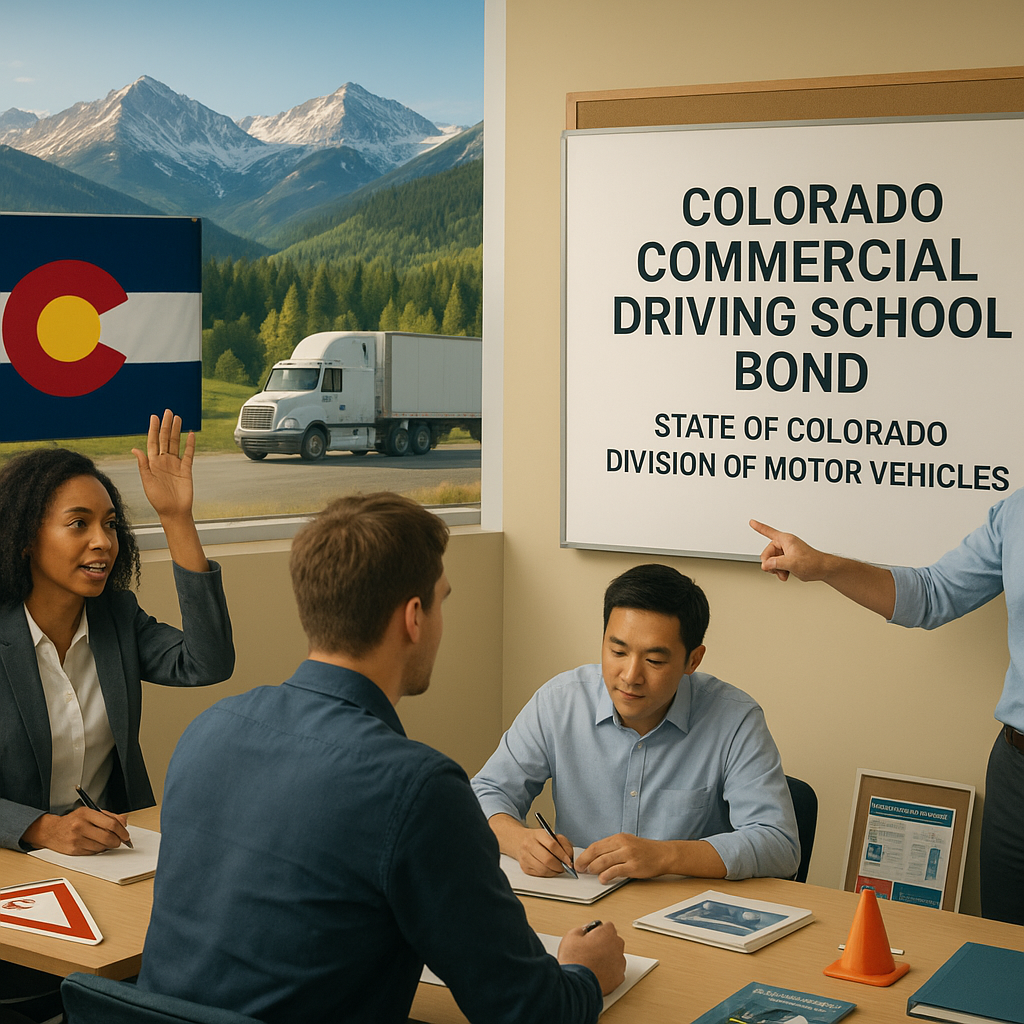
Thinking about opening a driving school in Colorado? Or maybe you are a seasoned instructor looking to make sure your paperwork is rock solid. Either way, there’s one piece of the puzzle that surprises a lot of people: the Colorado Commercial Driving School Bond. It sounds official—even a little intimidating—but it’s actually a simple concept once you break it down. Let’s walk through everything you need to know in plain, everyday language.
So, What Is a Colorado Commercial Driving School Bond?
At its core, this bond is a promise wrapped in a financial safety net. The State of Colorado, through the Division of Motor Vehicles, requires many driving schools to post a surety bond before they can get licensed. Think of it as a pre-paid guarantee that your school will follow the rules, treat students fairly, and handle money honestly.
It’s not insurance for your business. Instead, it protects your students and the state if something goes wrong. If a school takes payments and never provides lessons, or violates Colorado driving school regulations, the bond is there to make things right—up to a certain dollar amount.
Who Actually Needs This Bond?
In Colorado, the DMV requires a commercial driving school bond for most businesses that teach people how to operate a motor vehicle for a fee. This includes standard passenger car driving schools, but the bond requirement stretches further than you might think. If you plan to offer behind-the-wheel training, classroom instruction, or even specialized courses, you’ll likely need to add this bond to your license application checklist.
Are you a solo instructor thinking about starting small? You’re not off the hook. The bond applies to newly launched schools and long-standing businesses alike. Even if you’ve been teaching for years, you must keep your bond active and current to stay in good standing with the Colorado Division of Motor Vehicles.
Why Does the State Care So Much About a Piece of Paper?
Picture this: a student pays a driving school upfront for a package of ten lessons. The school suddenly closes its doors, and the owner is nowhere to be found. Without a bond, that student is left holding an empty wallet and no driver’s license. The Colorado Commercial Driving School Bond acts as a financial cushion in exactly these situations.
The DMV doesn’t just hand out licenses and walk away. They want assurance that schools operate ethically and follow all state laws. The bond gives regulators teeth. If a school breaks the rules, a claim can be filed, and the money gets paid out to those who were harmed. That’s a powerful incentive for driving school owners to stay on the straight and narrow.
How the Bond Helps Students and Parents Sleep Better
When a family invests hundreds of dollars in driver education, trust matters. The bond isn’t just bureaucratic busywork—it’s a consumer protection tool. It tells your potential customers, “This state stands behind your transaction. If something goes sideways, you have a way to recover your loss.” For aspiring instructors, that peace of mind can actually be a marketing point. Promoting that you’re fully bonded and licensed builds instant credibility with nervous parents and new drivers.
How Much Does a Colorado Driving School Bond Cost?
Here’s where people get pleasantly surprised. The required bond amount is set by the state—commonly a $10,000 surety bond for commercial driving schools in Colorado. But you don’t pay $10,000 out of pocket. You pay a small premium, usually a percentage of that total bond amount.
What determines your premium? Mainly your personal credit score and financial history. For applicants with good credit, the premium can be as low as 1% to 3% of the bond amount. That means you could secure a $10,000 bond for somewhere between $100 and $300 per year. Even if your credit is less than perfect, there are still options. Some surety companies work with higher-risk applicants, though the premium will be higher. It’s a small price to pay for the privilege of legally operating your driving school.
Don’t Confuse the Bond With Insurance
This trips up many new business owners. A bond is not a substitute for general liability insurance or commercial auto insurance. If a student damages your vehicle, your auto policy handles that. If a student slips in your office, your liability insurance kicks in. The bond covers specific financial harms linked to violations of state law or dishonest business practices. You’ll still need proper insurance policies to run a driving school safely and legally.
What Are the Exact Bond Requirements From the Colorado DMV?
The Division of Motor Vehicles spells out that a driving school must file a continuous surety bond in the principal sum of $10,000. The bond must be issued by a surety company authorized to do business in Colorado. It needs to name the State of Colorado as the obligee, meaning the state is the party protected by the bond’s terms.
Before your license gets approved, you’ll submit the original bond form with your application packet. The bond stays on file and remains active as long as your school operates. Every renewal period, you’ll need to provide updated proof that the bond is still in force. Let it lapse, and your license could be suspended or revoked quick as a flash.
The Paperwork Dance: What to Submit
When you apply for a Colorado driving school license, your bond is just one piece of a larger puzzle. Along with the bond, you’ll typically need:
- A completed application form from the DMV.
- Proof of business registration with the Colorado Secretary of State.
- Fingerprints and a background check for each owner or key employee.
- Proof of insurance coverage for your vehicles.
- A list of all instructors who will be teaching.
- The required licensing fees.
Assembling everything can feel like a scavenger hunt, but tackling one item at a time turns a mountain into a manageable hill. The bond is often the quickest part to knock out if you work with a reputable surety bond agency.
How Do You Actually Get Bonded? A Step-by-Step Breather
Getting a Colorado Commercial Driving School Bond isn’t complicated. Most of the process can be handled online in under fifteen minutes. Here’s the path most people follow:
- Find a reliable bond provider. Look for companies that specialize in DMV bonds or surety bonds for driving schools. They’ll know the exact language the state requires.
- Submit a quick application. You’ll provide basic business and personal information. Don’t worry, it’s not a 20-page document.
- Receive a premium quote. The surety company reviews your credit and issues a price. You can often get a quote within a few hours or even instantly.
- Pay the premium and sign. Once you accept the quote, make the payment and electronically sign your bond documents.
- Get your bond form. The surety sends you the original bond document or a certified copy to include with your DMV application.
Yes, it’s genuinely that straightforward. The key is to ensure your bond meets the exact wording mandated by the Colorado Division of Motor Vehicles. A good agent will handle that for you, so you don’t have to become a legal expert overnight.
What Happens if Someone Files a Claim Against Your Bond?
Let’s have a real talk about claims. The bond is there to protect consumers and the state, not to give you a free pass. If a valid claim gets approved, the surety company will pay out the damaged party up to the bond amount. But here’s the catch: you, as the driving school owner, are 100% responsible for reimbursing the surety company for every penny they paid.
That’s right, a bond is not a gift. It’s a form of credit. The surety says, “We’ll back you, but if we have to clean up a mess, you owe us back.” That’s why it’s critical to run your school with integrity, keep flawless records, and never promise services you can’t deliver. A single claim can damage your reputation and make future bonds more expensive or impossible to obtain.
Pro Tips for Aspiring Driving School Instructors
Ready to launch or renew? A little strategy goes a long way. Follow these pointers to keep your bond and your business in peak condition:
- Start early. Don’t wait until the last minute to get your bond. Processing and mailing can eat up days you don’t have before a deadline.
- Bundle your needs. If you also need an auto dealer bond or other surety bonds, ask about multi-bond discounts. Some agencies reward loyal customers.
- Guard your credit. Since your premium largely hinges on your credit score, paying bills on time and keeping debts low will keep your bond costs minimal year after year.
- Keep your bond active forever. Set a calendar reminder two months before your bond expires. Renewing early prevents any gap that could suspend your license.
- Document everything. Should a dispute arise, detailed logs of payments, lesson hours, and signed student agreements can be your best defense against a baseless claim.
Can You Operate Without the Bond?
Short answer: no. Operating a commercial driving school in Colorado without the required surety bond is a fast track to fines, legal trouble, and a permanent mark against your name. Even a temporary lapse can trigger a cease-and-desist order from the Division of Motor Vehicles. The risk simply isn’t worth it when renewing your bond costs less than a tank of gas for a fleet vehicle.
Think of your bond as a backstage pass. Without it, you’re standing outside the venue while all the opportunity happens inside. Secure the bond, step through the door, and get to work shaping the next generation of safe drivers.
Wrapping It All Together
The Colorado Commercial Driving School Bond might feel like just another item on a long regulatory list, but it’s actually a badge of trust. It signals that you’re serious about your business and that the state has your students’ backs. By understanding what the bond is, why it’s needed, and how to get it affordably, you remove stress and set your driving school up for a smooth road ahead.
Got your business plan ready? Your fleet tuned up? Then give your bond the same attention you’d give a student on their first day behind the wheel. A little preparation turns a nerve-wracking requirement into a simple box you check with confidence. The driver’s seat is waiting—make sure your bond is buckled up right beside you.