Colorado collection agencies must now meet updated surety bond requirements, with the minimum bond amount rising from $15,000 to $25,000 to strengthen consumer protections and industry accountability.
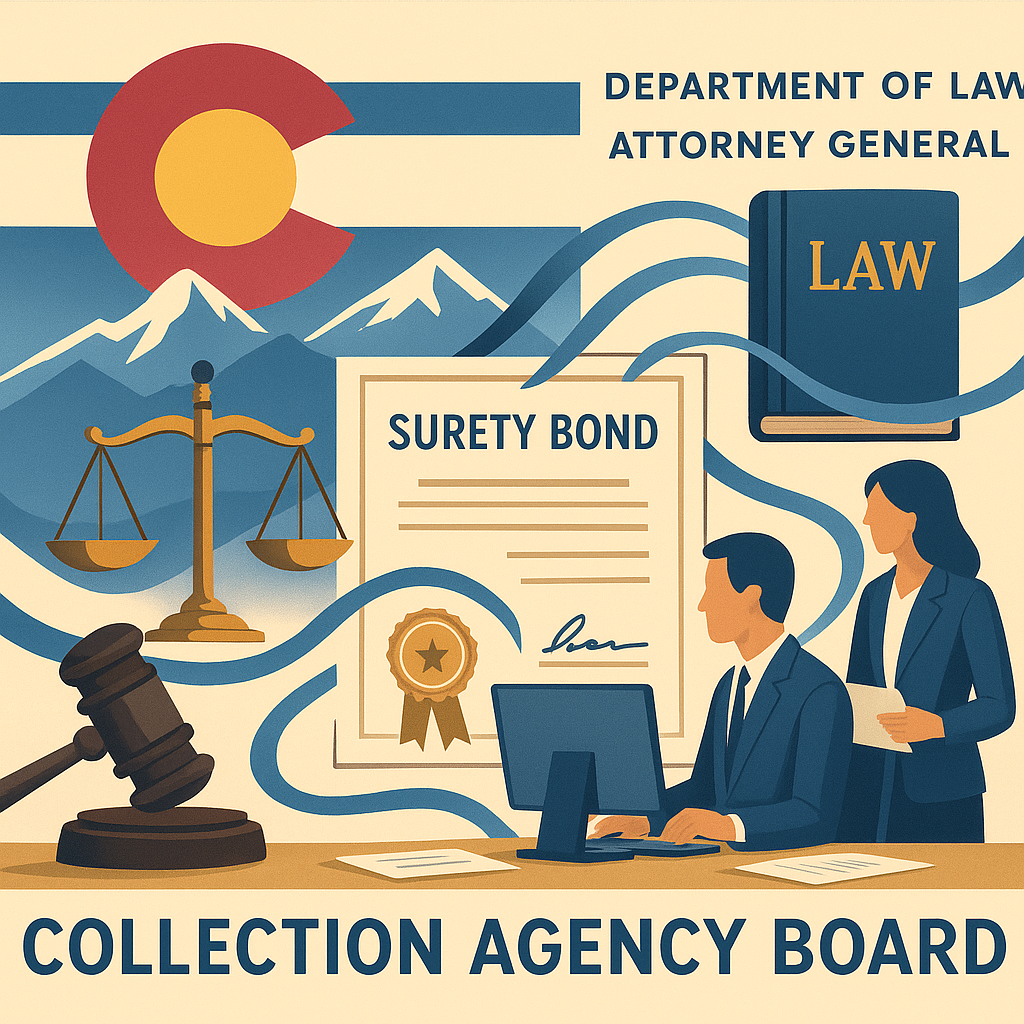
A Major Shift for Colorado Collection Agencies
If you run a debt collection business in Colorado, something important just landed on your radar. The Colorado Collection Agency Board, working hand in hand with the Colorado Department of Law and the Attorney General of the State of Colorado, has announced new surety bond requirements. This isn’t just a minor paperwork tweak. It’s a significant update designed to protect consumers and keep the industry fair and accountable.
Maybe you’re thinking, “A surety bond change? Why should I care?” Whether you’re a seasoned agency owner, a compliance officer, or someone just stepping into the world of debt collection, these fresh rules will shape how you do business in the Centennial State. Let’s walk through everything you need to know in plain, everyday language—no legal mumbo-jumbo, just the facts that matter.
What Exactly Is a Surety Bond, Anyway?
Before we dive into the Colorado update, let’s clear up what a surety bond actually is. Think of it as a three-way promise. On one side, you have your collection agency (the principal). On the other side, there’s the Colorado Collection Agency Board (the obligee), which acts under the authority of the Colorado Department of Law. In the middle stands a surety company that backs up your promise to follow all state laws and regulations.
It’s a lot like a safety net. If your agency breaks the rules or harms a consumer financially, the bond can provide compensation up to a certain amount. You’re not handing over a pile of cash upfront. Instead, you pay a small percentage of the total bond amount—a premium—and the surety company guarantees the full limit. It’s a classic trust-building tool, and now the rules around it are getting a refresh.
Why the Colorado Collection Agency Board Made This Move
The Attorney General of the State of Colorado and the Board didn’t wake up one morning and decide to stir things up for no reason. Consumer debt is a sensitive topic. Families up and down the Front Range and across the Western Slope rely on fair treatment when a collector comes calling. Over time, inflation, shifting market conditions, and a few bad actors meant the old bond levels lost some of their teeth.
By raising the surety bond amount and clarifying filing rules, the Colorado Department of Law aims to keep pace with today’s economy. More financial backing means stronger protection for Colorado residents. And for legitimate agencies? It’s a chance to show you mean business and stand behind ethical practices. A stronger bond requirement signals to clients and consumers alike that you’re vetted, credible, and serious about compliance.
Breaking Down the New Surety Bond Requirements
So, what’s actually changing? Here’s the straightforward summary. The Colorado Collection Agency Board has updated the minimum required bond amount. While the previous standard sat at $15,000, the new threshold moves to $25,000 (note: always verify the exact figure with the latest Board bulletin, as variations can apply based on your specific license type). This increase acknowledges the growth in average debt portfolios and ensures a more robust financial cushion.
Alongside the dollar amount, the Board emphasized that the bond must be issued by a surety company licensed to do business in Colorado. No shortcuts. The bond also needs to be filed directly with the Board office, and electronic filing through approved portals is now the preferred method. This tightens the chain of custody and speeds up the verification process, so your license stays shiny and current.
Who Exactly Needs This Bond?
Not every business that touches money requires this specific bond. The requirement squarely targets third-party collection agencies that collect debts owed to someone else. If your company reaches out to Colorado consumers to recover unpaid bills for creditors, you’re in the spotlight. This includes traditional collection firms, some debt buyers, and even out-of-state agencies that contact Colorado residents. If you hold a collection agency license issued by the Colorado Collection Agency Board, this new bond applies to you.
How Much Does It Cost Your Agency?
Take a deep breath. The $25,000 figure is the coverage limit, not your out-of-pocket expense. You typically pay a premium that ranges between 0.5% and 5% of the bond amount. Where does your agency fall on that scale? It depends on your credit score, business financials, and the surety company’s own assessment. A well-managed agency with strong credit might pay a few hundred dollars annually. Others could see a slightly higher price. In any case, it’s far more affordable than the full face value might suggest.
How This Affects Your Collection Agency (And Your Clients)
Picture this: You land a new client, a medical practice needing help with overdue accounts. The office manager asks about your credentials. Pointing to your fully compliant surety bond, filed with the Colorado Department of Law, immediately builds confidence. You’re not just saying you’re trustworthy—you’ve got a financial guarantee to back it up.
On the flip side, missing the deadline or clinging to an outdated bond can put your license at risk. You might face fines, suspension, or even revocation. Nobody wants to explain to their team that operations are on hold because a piece of paper got overlooked. Staying current with the Colorado Collection Agency Board keeps your doors open and your reputation intact.
Beyond immediate compliance, think about the bigger picture. When the industry raises its own standards, the bad apples get squeezed out. You compete on service quality, not on who can cut the most corners. That’s good for ethical agencies and even better for the Colorado families they interact with every day.
Simple Steps to Get Compliant Before the Deadline
Feeling a little overwhelmed? Don’t be. Treat it like a straightforward checklist. You’ve handled tougher challenges in this business. Follow these steps and you’ll breeze through.
- Review the official notice. Head to the Colorado Collection Agency Board website or check the latest release from the Attorney General of the State of Colorado. Download the exact wording so you know the precise bond amount and effective date.
- Work with a reputable surety bond provider. Not all bond agencies understand the nuances of collection laws. Choose a partner with experience in Colorado surety bonds for the Department of Law. They’ll walk you through the application.
- Gather your paperwork. You’ll typically need your agency’s license number, financial statements, and ownership details. Having these ready speeds up the quote process.
- Pay the premium and get the bond form. Once approved, the surety company issues the bond document. Double-check that it lists the obligee as the Colorado Collection Agency Board or the Colorado Department of Law exactly as required.
- File the bond with the Board. Today, this often means uploading a PDF through a secure portal. Keep a confirmation receipt for your records. Mark your calendar a month before expiration so renewals never sneak up on you.
- Update your internal compliance file. Make sure your team knows the new bond is in place. If a creditor or consumer asks, you can provide proof instantly.
The Hidden Benefits of the New Bond Requirements
It’s natural to view any regulatory update as a hurdle. But let’s flip the lens. A heftier surety bond requirement can actually be a marketing advantage. When you pitch your services, you can highlight that you’re bonded at the highest current standard set by the Colorado Collection Agency Board. It’s a quiet signal that you take compliance seriously while some competitors might try to skate by.
Moreover, a strong bond requirement filters out undercapitalized operators who might give the whole industry a black eye. As those players face higher barriers, the market becomes less crowded with fly-by-night collectors. That leaves more room for professional, empathetic agencies that understand Colorado’s unique communities—from Denver to Durango.
Frequently Asked Questions
What if I already have a $15,000 bond on file?
You’ll need to increase it to meet the new minimum. Reach out to your current surety company. They can often issue a rider or a replacement bond that bumps the coverage up. Don’t wait until the last week; the paperwork can take a few days to process and file.
Are there any exemptions for small agencies?
Generally, no. The bond requirement ties to your license category, not your company size. Whether you’re a solo operator in Grand Junction or a firm with fifty collectors in the Denver Tech Center, the same rule applies. Always confirm directly with the Colorado Department of Law if you think an exception might apply to your specific situation.
How long does it take to get bonded under the new rules?
For many agencies, the process can be wrapped up within a few business days—sometimes even 24 hours—if your credit and paperwork are in order. More complex cases might take a week. Starting early avoids any stressful scramble close to the enforcement date.
Does this bond cover all types of debt collection?
It covers your agency’s compliance with Colorado collection laws across the board, whether you’re collecting credit card debt, medical bills, or past-due utilities. If your activity requires a license from the Colorado Collection Agency Board, the bond is your blanket commitment to play by the rules.
Wrapping It Up: Your Next Move
Change can feel like a cold splash of water, especially in a tightly regulated field. But the new surety bond requirements from the Colorado Collection Agency Board and the Attorney General of the State of Colorado are really about building a healthier marketplace. You protect consumers, you prove your agency’s reliability, and you help nudge the whole profession toward higher ground.
So, what’s your next move? Open a browser tab and check the latest bulletin from the Colorado Department of Law. Pick up the phone and call a surety bond specialist who talks about collection agency bonds every day. Ask the simple question: “What do I need to do to meet the new CO surety bond requirement?” A few minutes now can save you from license headaches later and show your clients you’re the kind of partner who stays ahead of the curve. Colorado consumers will be better off because of it—and your agency will be, too.