Boulder City has strengthened its Right of Way License Bond regulations to protect public infrastructure and hold contractors accountable for damages. The updated rules increase bond amounts, streamline the claims process, and clarify requirements for those performing work in public spaces.
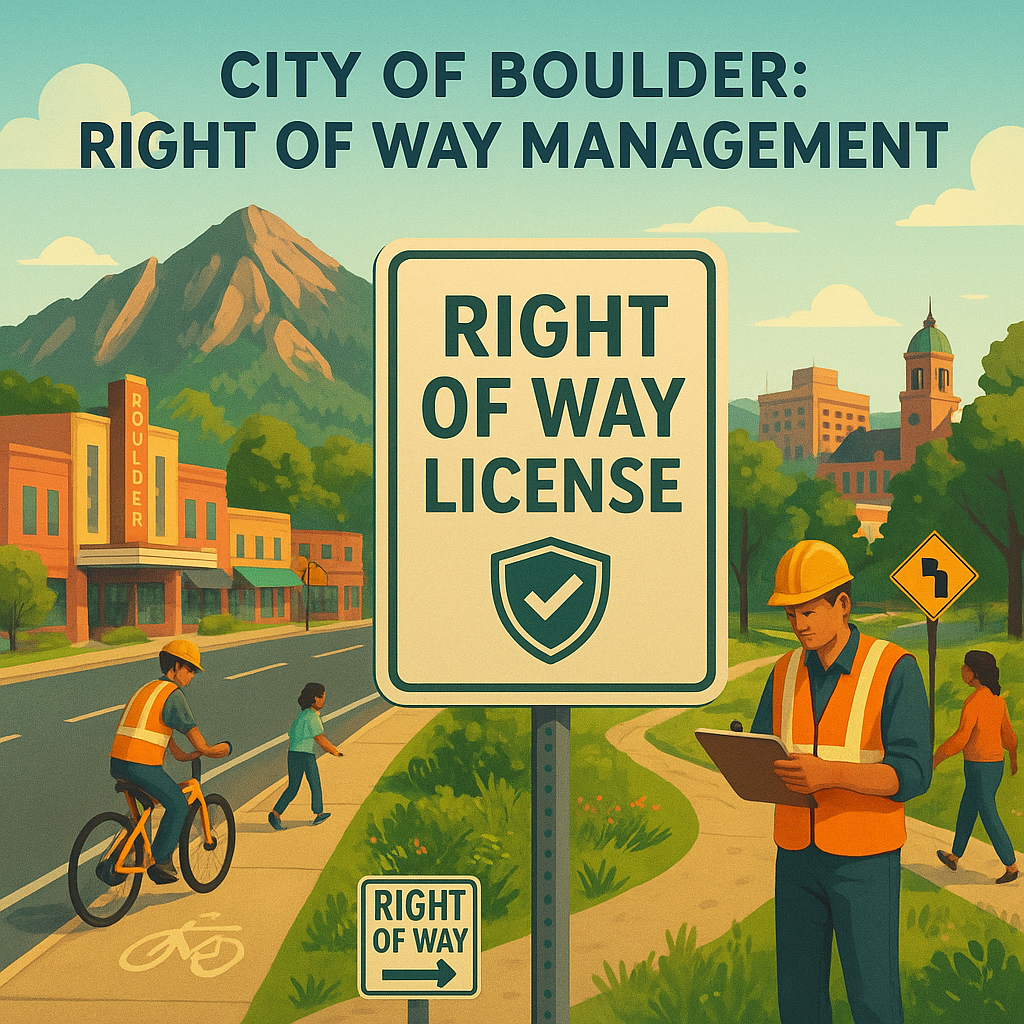
If you’ve ever watched a construction crew dig up a sidewalk, or noticed a utility truck blocking a lane while installing new fiber-optic cables, you’ve seen the public right-of-way in action. It’s that strip of land we all share—the streets, sidewalks, and utility corridors that keep a city humming. But what happens when that work damages the pavement or leaves a mess behind? That’s exactly why the City of Boulder CO Right of Way License Bond has become a hot topic. The city recently strengthened its bond regulations to protect taxpayers, hold contractors accountable, and keep Boulder’s infrastructure in tiptop shape.
In this post, we’ll break down everything you need to know about the Boulder City Right of Way License Bond regulations. We’ll skip the legal mumbo-jumbo and talk like two neighbors chatting over a fence. Whether you’re a contractor, a business owner, or just a curious resident, you’ll walk away with a crystal-clear picture of how these bonds work and why they matter.
What Is a Right of Way License Bond, Anyway?
Think of a right of way license bond as a financial promise wrapped in a safety net. When a contractor or utility company wants to perform work in the public right-of-way—like digging, paving, or installing equipment—the city of Boulder grants them a license. That license says, “You have permission to be here.” But the city also needs assurance that the work will be done correctly and that any damage will be repaired. That’s where the bond comes in.
A Right of Way License Bond is a three-party agreement between the contractor (the principal), the city (the obligee), and a surety company. If the contractor fails to restore the street, fix a cracked curb, or clean up debris, the city can make a claim against the bond to cover repair costs. It’s similar to a security deposit you’d put down when renting an apartment, except it specifically protects public property. The bond doesn’t let the contractor off the hook—they eventually have to pay back the surety for any claims paid out. So, it’s a powerful motivator to get the job done right the first time.
Why Boulder City Tightened Its Bond Regulations
Boulder is known for its beautiful open spaces, well-maintained trails, and pride in community infrastructure. But even a city this thoughtful faces challenges from construction booms and aging utility networks. Over the last few years, city officials noticed a handful of projects where restoration work didn’t meet standards. Pothole patches failed early, landscaping wasn’t replaced, and residents sometimes waited weeks for sidewalks to be repaired.
The updated City of Boulder CO Right of Way License Bond regulations are the city’s way of saying, “We’re serious about protecting public property.” The new rules increase bond amounts for certain types of work, streamline the claims process, and make it clearer who needs a bond in the first place. By reinforcing these requirements, Boulder ensures that neither taxpayers nor neighborhoods shoulder the cost of subpar restoration.
For local contractors, this change might feel like an extra hoop to jump through. But in the long run, a well-managed bonding system keeps the playing field even. Reputable businesses that already do quality work won’t have anything to fear. Meanwhile, fly-by-night operators who cut corners are discouraged from bidding on city projects. It’s a win-win for residents and responsible businesses alike.
Who Needs a Boulder Right of Way License Bond?
Not every business operating in Boulder needs this bond. The requirement generally applies to anyone excavating, installing, or maintaining infrastructure within the public right-of-way. Here are some common examples:
- Utility companies running gas, water, electric, or telecommunications lines.
- Contractors performing sidewalk repairs, curb cuts, or driveway approaches.
- Excavation and grading crews working near streets or alleyways.
- Telecom and cable providers laying fiber-optic or coaxial cables under roads.
- Landscaping firms making major changes to tree lawns or public planting strips.
If you’re a homeowner planning a small project, like replacing your own driveway apron, you might not need a bond—but you’ll still need a permit. The bond requirement kicks in for licensed professionals doing work that significantly disturbs the public space. When in doubt, a quick call to the City of Boulder’s Right of Way permitting office can clear things up. It’s always better to ask than to face a penalty later.
How Does the Bond Work in Real Life?
Let’s imagine a scenario. ABC Utilities is installing new water mains along a residential street in Boulder. They obtain the necessary right-of-way license and a Boulder City Right of Way License Bond for $50,000 (the exact amount varies by project scope). The work goes smoothly, but two weeks later, a neighbor notices the asphalt patch over the trench is sinking and creating a tripping hazard. The neighbor reports it to the city.
City inspectors visit the site and confirm the repair wasn’t up to code. They notify ABC Utilities, giving them a chance to fix the problem. If ABC drags its feet or refuses, the city can file a claim against the bond. The surety company investigates, and if the claim is valid, it pays the city the cost of hiring another contractor to redo the patch. Then, ABC Utilities must repay the surety. In this way, the bond acts like a pressure valve—it protects the public without requiring the city to chase down irresponsible contractors in court.
Breaking Down Bond Costs and Requirements
You might be wondering, “Is this bond going to break the bank?” The good news is that a Right of Way License Bond is often more affordable than you’d think. Contractors don’t pay the full bond amount upfront. Instead, they pay a premium—typically a small percentage of the total bond value, based on factors like credit history, business experience, and the bond amount required.
For a bond valued at $10,000, a contractor with solid credit might pay as little as $100 to $300 annually. Even larger bonds of $100,000 or more can come with reasonable premiums, especially if the contractor has a track record of financial stability. It’s not a profit center for the city—it’s a risk management tool. The premium you pay is essentially the price of that security deposit guarantee.
Contractors should also keep in mind that bond requirements can vary by project. Some quick utility repairs might fall under a blanket bond the company already holds, while large-scale excavations could trigger a supplemental bond. Always review the specific conditions when pulling a permit in Boulder. The city’s website offers detailed checklists, and the permitting staff are known for being helpful and approachable.
Steps to Secure Your Boulder Right of Way License Bond
Getting bonded doesn’t have to be a headache. Here’s a simple roadmap:
- 1. Determine your bond amount. Check Boulder’s right-of-way permit requirements for your specific scope of work.
- 2. Gather your business documents. You’ll typically need a license number, financial statements, and details about the project.
- 3. Shop around with surety providers. Work with an experienced bond agency that understands Colorado municipal bonds. They can help you compare quotes.
- 4. Complete the application. The surety will review your credit and business history. If approved, you’ll receive a quote for the premium.
- 5. Pay the premium and receive your bond form. File it with the City of Boulder to finalize your license.
The entire process can often be completed in a few days, especially if your paperwork is in order. Many agencies even offer same-day bonding for smaller amounts.
What These Regulations Mean for Boulder Residents
You might live in Boulder and never give a second thought to right-of-way bonds—until a construction project impacts your daily walk to the park. These regulations directly benefit you. They mean that when a contractor finishes work on your street, the pavement will be smooth, the crosswalks will be properly marked, and the landscaping will be restored. If something does go wrong, the city has a clear, financially backed path to make it right. No finger-pointing, no drawn-out disputes.
Beyond the practical fixes, the bond requirement fosters a culture of accountability. It sends a message that Boulder values its public spaces and expects anyone working in them to do the job respectfully. That’s something we can all appreciate, whether we’re driving, cycling, or pushing a stroller through town.
Common Misconceptions About Right of Way Bonds
Let’s clear up a few myths that often float around:
- “It’s just another tax.” Not at all. The bond premium is paid to a private surety company, not the city. It’s a risk-based fee for a guarantee, not a government revenue stream.
- “Only big companies need these.” Many small, independent contractors need bonds too. If you’re doing any work that disturbs the right-of-way, size doesn’t exempt you.
- “If I have insurance, I don’t need a bond.” Insurance and bonds serve different purposes. Your general liability policy protects you from third-party injury or property damage claims; the bond specifically guarantees compliance with city regulations and restoration standards.
- “Once I get a bond, I’m covered forever.” Bonds have expiration dates and must be renewed. Projects that span multiple years may require ongoing bonding.
Looking Ahead: Bonding as a Sign of Professionalism
In many trades, being bonded is a badge of trust. When you present a City of Boulder CO Right of Way License Bond alongside your credentials, you’re telling clients and the city, “I stand behind my work, and I have the financial backing to prove it.” This can give you an edge when competing for contracts, especially with public entities that prioritize risk management.
Boulder’s updated regulations might feel like a shift, but they align with a broader trend across Colorado and the nation. Cities are increasingly using bonding requirements to protect aging infrastructure as utility upgrades and urban renewal projects accelerate. Getting comfortable with the bonding process now will prepare your business for similar requirements in neighboring communities like Longmont, Louisville, or Denver.
Your Questions, Answered
Does a homeowner need a right-of-way bond for a DIY project? Typically, no. Homeowners pulling a permit for their own property aren’t classified as licensed contractors and generally don’t need a bond. However, you must still follow all city specifications for restoration.
How long does a Boulder Right of Way License Bond last? Most bonds are issued for one-year terms and must be renewed annually. If a project extends past the bond’s expiration, you’ll need to provide renewal documentation.
Can the city require a higher bond amount mid-project? It’s possible. If the scope of work changes significantly, or if past performance issues arise, the city may request an increased bond. It’s wise to stay in close communication with the permitting office throughout the job.
What if I disagree with a claim against my bond? You have the right to contest it. The surety company will investigate, and you can provide evidence that the restoration was done correctly. Keeping detailed photos and records of your work is your best defense.
Embracing the New Normal
Change can feel uncomfortable, even when it’s for the better. For contractors who’ve operated in Boulder for years without a bond, the new regulations might seem like an extra expense. But look at it this way: a robust bonding system raises the bar for everyone. It weeds out those who underbid by planning to skimp on restoration, and it protects the hard-earned reputation of quality tradespeople.
If you’re a Boulder resident, these regulations are your invisible shield. You might never see the bond paperwork, but you’ll see the results—streets that stay smooth, sidewalks that stay safe, and a city that keeps its promise of caring for public spaces.
So, whether you’re planning a major infrastructure project or just watching one unfold outside your window, you now know the role that a simple bond plays. It’s a small piece of paper with a big responsibility, helping keep Boulder beautiful and functional for years to come.