The City of Aurora, Colorado, has issued a public improvement bond to fund essential infrastructure upgrades, focusing on roads, sidewalks, and utilities. This proactive investment aims to address the demands of rapid growth by coordinating comprehensive right-of-way improvements, ensuring smoother commutes and safer public spaces.
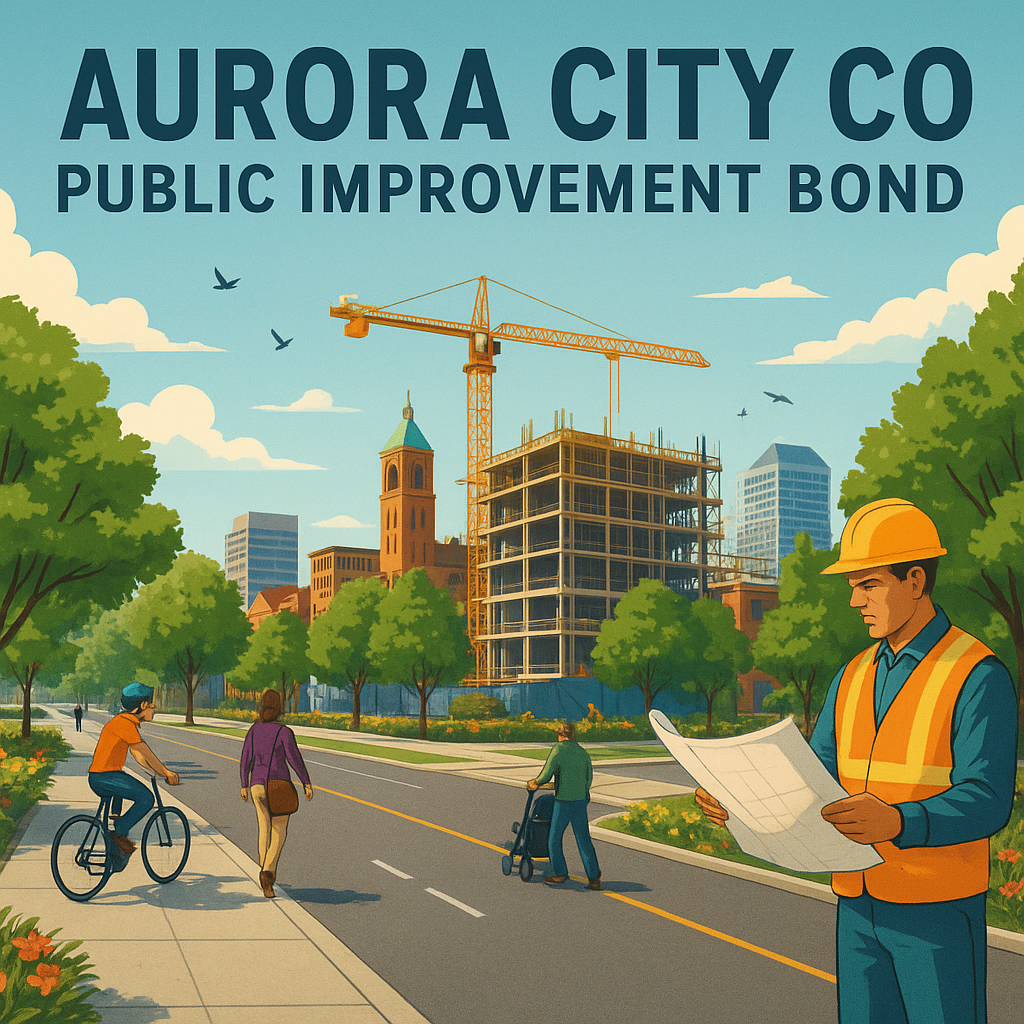
A Fresh Investment in Aurora’s Streets and Sidewalks
The City of Aurora, Colorado, is taking a big step forward. Officials have recently issued a public improvement bond aimed at boosting local infrastructure. If you live in Aurora or pass through on your daily commute, this news matters more than you might think. It’s not just a financial headline — it’s about smoother roads, safer intersections, and more reliable public spaces.
You might be asking, “What does a bond actually do for me?” Think of it like a neighborhood potluck. Everyone chips in a little over time so the whole street can enjoy a fresh, paved road, better lighting, and upgraded utilities. The Aurora City CO Public Improvement Bond does just that, pooling resources strategically to tackle projects that keep our community running smoothly.
What Exactly Is a Public Improvement Bond?
Let’s break it down without the financial jargon. A public improvement bond is a way for a city to borrow money for specific projects, usually things like roads, bridges, parks, or water lines. Investors purchase the bonds, and the city promises to pay them back over time, often with interest. In return, the community gets the improvements right when they’re needed most, instead of waiting years while saving up pennies.
In the case of the Aurora City Colorado Public Improvement Bond, the focus is clearly on infrastructure enhancement, with a special spotlight on right-of-way projects. If that phrase makes your head spin, hang tight — we’ll explain it simply in just a moment. The key takeaway? This bond isn’t about building flashy new stadiums. It’s about the everyday backbone of the city: the streets you drive, the sidewalks your kids walk to school on, and the underground pipes that keep your morning shower warm.
Why Aurora Needs This Infrastructure Boost Right Now
Aurora is one of Colorado’s largest and fastest-growing cities. With new homes popping up and businesses moving in, the demand on existing roads and utilities has skyrocketed. Old storm drains that once handled a gentle spring rain now struggle during heavy downpours. Intersections that flowed freely five years ago can turn into afternoon bottlenecks. That’s not just annoying — it can be a safety concern.
The city’s leadership sees the Aurora CO Public Improvement Bond as a proactive tool. Rather than reacting to potholes and water main breaks with expensive emergency repairs, they’re investing in upgrades now. This approach often saves money in the long run and spares residents from constant patchwork fixes. Have you ever wondered why some streets seem to get torn up just a year after being resurfaced? Often, it’s because the underlying utilities weren’t updated first. This bond aims to coordinate those improvements so the whole right-of-way gets a comprehensive makeover in one go.
Demystifying “Right-of-Way” — It’s Not Just a Legal Term
You might have heard the phrase “right-of-way” and pictured traffic laws about who goes first at a four-way stop. In the world of public works, it means something a bit different but just as important. Imagine a slice of land that stretches from the edge of your front yard across the sidewalk, the grassy strip, the curb, and into the street itself. That’s essentially the public right-of-way — the area reserved for transportation, utilities, and public access.
When Aurora says the bond will target Aurora City CO Public Improvement Bond Right of Way enhancements, they’re talking about fixing up that entire corridor. It could include:
- Repaving a cracked road and adding fresh lane markings.
- Repairing or replacing crumbling sidewalks so pedestrians can stroll safely.
- Upgrading traffic signals and crosswalks near schools.
- Replacing old water and sewer lines hidden beneath the asphalt.
- Improving drainage to prevent street flooding during Colorado’s sudden summer storms.
This holistic view is what makes the Aurora City Colorado Public Improvement Bond different from a quick-patch job. By treating the right-of-way as a complete system, the city can avoid duplicating work and minimize disruptions. After all, no one enjoys seeing the same street dug up three times in one year.
How Does a Bond Like This Actually Work? A Simple Analogy
Let’s compare the bond to a large home renovation project. You need a new roof, updated electrical wiring, and a refinished basement — but you don’t have all the cash on hand. Instead of doing the basement this year with a credit card, the roof next year with another high-interest loan, and the wiring two years later after a scary short circuit, you take out a structured home improvement loan with a manageable repayment plan.
The City of Aurora is doing the same thing, just on a much larger scale. They issue bonds, investors buy them because they’re a stable investment, and the city gets the upfront money to pay contractors, engineers, and material suppliers. Over time, the city repays those bondholders using revenue streams already in place — often from property taxes, sales taxes, or specific district funds. It’s a disciplined, long-term strategy rather than a budget Band-Aid.
Real Benefits You’ll Notice in Your Daily Life
Big infrastructure talk can sometimes feel abstract. But the outcomes of the Aurora City Colorado Public Improvement Bond will show up in very tangible ways. Picture these small but meaningful moments:
- Smoother morning commutes on freshly paved arterials, with synchronized traffic lights that ease the rush-hour crawl.
- Safer walks to school thanks to repaired sidewalks and clearly marked crosswalks — no more dodging wobbly concrete slabs or standing water after a storm.
- Fewer boil-water advisories because aging water mains under the right-of-way were replaced before they could burst.
- More attractive neighborhoods with tree-lined strips and accessible curb ramps that welcome everyone, including neighbors in wheelchairs or parents pushing strollers.
Beyond convenience, these improvements can also boost property values. Well-maintained public spaces signal that a community cares about its future, making homes and businesses more desirable. If you’ve ever chosen an apartment based partly on how nice the surrounding streets felt, you already understand this ripple effect.
Tackling the Elephant in the Room: Will This Cost Me More?
It’s a fair question — and one the City of Aurora addresses openly. Bonds do come with repayment obligations, which can influence budget allocations. However, public improvement bonds like this one are typically structured to avoid sudden tax shocks. Municipalities often use existing revenue streams that were already designated for infrastructure, so the bond simply accelerates the timeline without piling on fresh burden.
Think of it as shifting money from a low-interest savings account into a carefully planned investment that prevents far more expensive emergencies down the road. A collapsed sewer line or a failed culvert can cost exponentially more in emergency repairs, property damage, and lost business than a proactive upgrade. By getting ahead of those failures, the Aurora CO Public Improvement Bond might actually protect your wallet in the long run.
What Specific Projects Could We See?
While the exact project list will be rolled out by the city’s public works department, documents tied to the Aurora City Colorado Public Improvement Bond point toward several right-of-way heavy initiatives. We can expect:
- Major arterial rehabilitation along corridors that connect residential areas with commercial hubs.
- ADA-compliant sidewalk and curb ramp installations, making Aurora more inclusive for all residents.
- Stormwater drainage upgrades in neighborhoods that have experienced repetitive flooding.
- Traffic signal synchronization projects that use modern technology to reduce idling and cut emissions.
- Water and wastewater pipe renewals that secure the system for decades to come.
If you’ve ever sat at a red light with no cross traffic and wished the city could do something, signal coordination funded by these bonds might just be your answer. And if you’ve held your breath driving through a flooded underpass, the drainage piece will feel like a quiet victory.
Community Involvement and Transparency
Aurora isn’t moving forward in secret. The issuance of the Aurora City CO Public Improvement Bond follows public meetings, budget hearings, and detailed planning documents available on the city’s website. Residents are encouraged to track progress, attend future open houses, and even sign up for construction notifications.
Why does this matter? Because informed citizens can offer valuable feedback. Maybe you’ve noticed a crosswalk that feels dangerous, or a bus stop that’s practically unreachable after a rain. Your input helps the city fine-tune project priorities within the bond’s scope. It turns the “City of Aurora” from an impersonal government entity into a partner that’s genuinely listening.
The Bigger Picture: Building a Resilient Aurora
Healthy infrastructure is a lot like your own health. You don’t always notice when everything is working well — but a sudden breakdown can dominate your entire week. The same goes for a city. Smooth traffic flow, reliable water pressure, and storm drains that do their job silently are hallmarks of a resilient community.
By issuing this public improvement bond, the City of Aurora, Colorado, is making a clear statement: we’re planning for growth, not just patching potholes. The term “right of way” might sound technical, but at its heart, it’s about the shared spaces that connect all of us. When those spaces thrive, so do we.
So next time you roll down a freshly paved street, push a stroller on a smooth sidewalk, or notice that an intersection feels less chaotic, remember that bonds like this one are often the quiet engine behind those improvements. Aurora’s investment today lays the pavement, literally and figuratively, for a safer, more connected tomorrow.