Planning construction in Brighton, Colorado that impacts public sidewalks, streets, or alleys requires a right of way permit bond to guarantee the city that work will follow codes and restore public property. This surety bond protects taxpayers from the financial risk of unfinished or substandard work, a requirement for contractors and property owners involved in excavation, utility trenching, or new construction affecting public spaces.
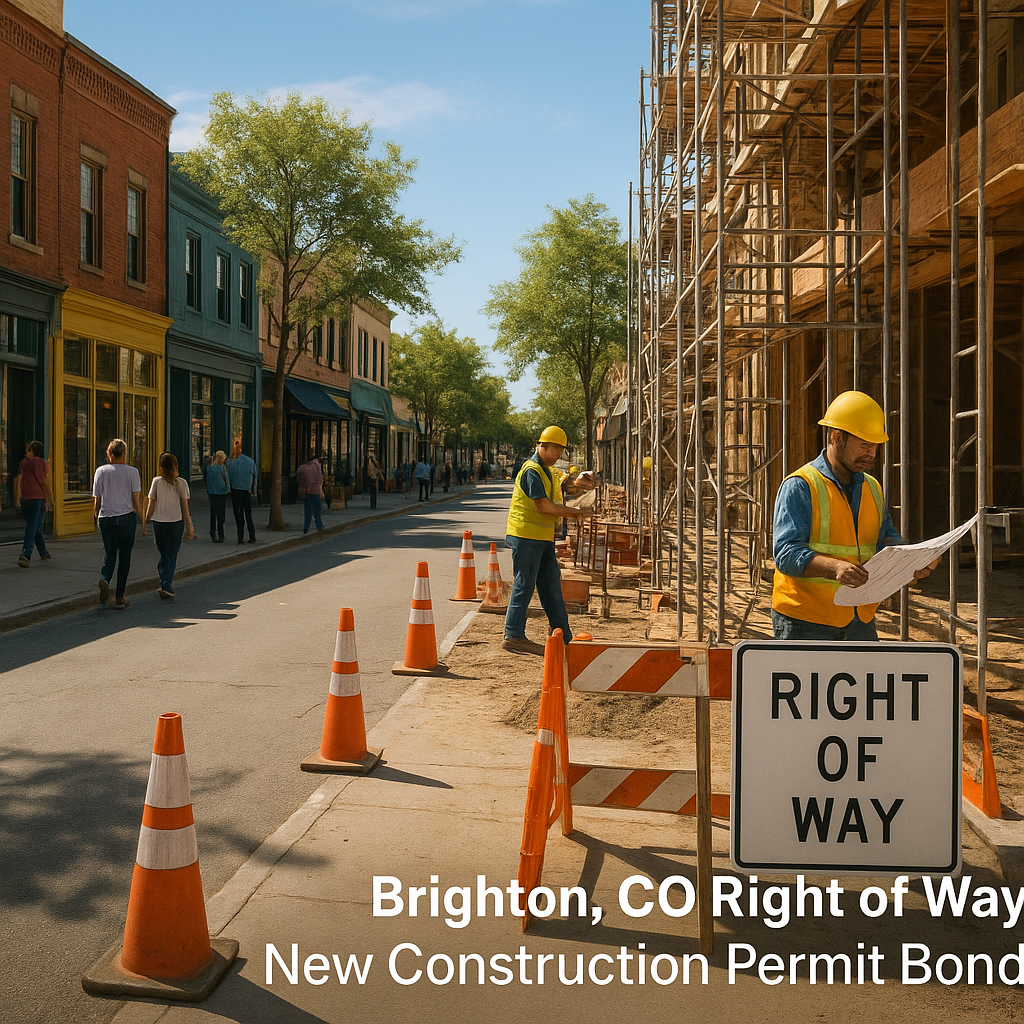
Planning any kind of construction work in Brighton, Colorado, that touches a public sidewalk, street, or alley? You’ve probably heard the term “right of way permit bond” thrown around. It might sound like just another bureaucratic hoop to jump through, but understanding this requirement early can save you a world of headaches, delays, and unexpected costs.
Let’s break it all down in plain English. No dizzying insurance jargon, no confusing legalese. Just the clear, simple facts you need to move your project forward with confidence.
What Exactly Is a Right of Way Permit Bond in Brighton?
A right of way permit bond is a type of surety bond. Think of it as a financial promise, a sort of security deposit, but one that involves three parties instead of two. You, the contractor or property owner (called the principal), purchase the bond from a surety company. The bond guarantees to the City of Brighton (the obligee) that you’ll follow all local codes, complete the work properly, and restore any public property you disturb.
If you think about renting an apartment, you pay a security deposit in case you damage the walls. The bond works similarly for public spaces. The city doesn’t hold your cash; instead, a bond assures them that funds are available if something goes wrong. That way, taxpayers aren’t left footing the bill for a botched sidewalk repair or an un-restored trench in the road.
Why Does the City of Brighton Require These Bonds for Construction?
Brighton, like many growing communities along Colorado’s Front Range, takes its public infrastructure seriously. Streets, curbs, gutters, sidewalks, and utility strips don’t belong to any single homeowner or business. They are shared spaces, maintained by the city for everyone’s safety and convenience.
When a contractor digs into a public right of way to connect a new water line, install fiber optic cable, or build a driveway approach, the city needs assurance that the site will be returned to its original condition—or better. A bond transfers the financial risk from the community to the party doing the work. If a contractor defaults, leaves a jobsite dangerously open, or fails to meet engineering standards, the bond can cover the cost of hiring someone else to fix it.
So, while the bond requirement might feel like red tape, it’s really a shield for your neighbors, your clients, and the entire Brighton community.
Who Needs a Brighton Right of Way / New Construction Permit Bond?
You may need this bond if your project involves any of the following within Brighton city limits:
- Excavating or grading in a public right of way
- Installing or repairing sidewalks, driveways, or curb cuts
- Trenching for utility lines (water, sewer, gas, electric, telecommunications)
- Placing temporary structures, dumpsters, or equipment on city streets or alleys
- New construction that connects to public utilities or impacts drainage swales
Both general contractors and subcontractors might need to secure a bond in their own name. Even a homeowner acting as an owner-builder could be required to post a bond if they are pulling the permit and doing the work themselves. Always check with the Brighton Public Works or Community Development Department to confirm whether your specific project triggers the bond requirement. They are usually happy to guide you, and a quick phone call can prevent a permit from being held up.
How Does the Bond Process Work, Step by Step?
The journey might seem mysterious at first, but it’s quite straightforward once you see the map. Here’s how it flows:
1. Determine the Required Bond Amount
The city will tell you the bond amount based on the scope of your work. It’s usually a calculation tied to the estimated cost of restoring the right of way. For smaller jobs, the bond might be a few thousand dollars. For larger infrastructure projects, the amount can be significantly higher. The city wants enough coverage to fully repair any potential damage.
2. Apply for the Bond Through a Surety Agency
You don’t get the bond from the city itself. You go to a surety bond agency—either a specialized firm or often through your insurance agent. You’ll fill out a short application, provide some basic business information, and the agency will run a credit check. For most right of way bonds in Brighton, approval is quick, often same-day, especially if you have decent credit.
3. Pay the Premium
You do not pay the full bond amount. You only pay a small percentage, called the premium. More on exact costs below. Once you pay that premium, your bond becomes active.
4. File the Bond with the City
The surety company will issue a bond form that you submit alongside your permit application. The city keeps it on file. Without this, your permit won’t be issued. So treat the bond as a crucial puzzle piece right alongside your site plans and contractor’s license.
5. Complete the Work and Request a Release
Once the project passes final inspection and the right of way is restored to the city’s satisfaction, you can request that the bond be released or canceled. The city then closes out the obligation, and any ongoing premium requirement (if it’s a renewable bond) can stop.
How Much Does a Construction Permit Bond Cost in Brighton?
This is the question everyone asks first, and the good news is that it’s almost always far less than you might fear. The premium you pay is based on the total bond amount and your personal credit score.
For bonds under a certain threshold—often around $25,000 to $50,000—many surety companies offer a flat rate program that doesn’t even require a credit check. You might pay as little as $100 to $250 for a small bond. If your credit is strong, premiums can be as low as 1% to 3% of the bond amount. So a $10,000 bond could cost you only $100 per year.
If your credit has some blemishes, don’t panic. Premiums may be a bit higher, perhaps 4% to 10%, but many agencies work with clients in all credit situations. There’s almost always a path forward. The key is to shop around and work with an agency that understands the Brighton market—they’ll know exactly what the city expects.
What Happens If Something Goes Wrong on the Job?
Let’s imagine a realistic scenario. You’re a plumber installing a new water service across a residential street. The trench is backfilled but settles over the next few weeks, creating a sunken, dangerous dip in the pavement. The city inspector issues a correction notice, but for whatever reason, you’re unable or unwilling to return and fix it.
In that case, the city can file a claim against your bond. The surety company will investigate. If the claim is valid, the surety pays out to the city up to the full bond amount, allowing Brighton to hire another contractor to repair the street. Here’s the part many miss: the surety then comes back to you for reimbursement of every penny they paid out, plus legal fees. A bond is not insurance for you. It’s a guarantee to the city that you will perform, backed by your promise to repay.
That’s why handling your right of way work with care and maintaining good communication with inspectors is so vital. The bond protects the public, but it also keeps you accountable.
Common Misconceptions About Right of Way Bonds
Let’s clear up a few foggy areas. You’re not alone if you’ve wondered about these:
“Isn’t my general liability insurance enough?”
No, liability insurance covers bodily injury and property damage to third parties. It doesn’t promise the city that you’ll finish the specific permitted work according to code. They serve completely different purposes. You’ll likely need both.
“Can I use cash instead of a bond?”
Some municipalities allow a cash deposit in lieu of a bond, but Brighton typically requires a surety bond. A cash deposit ties up your working capital, which could be spent on materials and payroll. A bond frees up that cash for your business.
“I have a great track record—why do I still need this?”
The city applies the requirement uniformly. It’s not a judgment of your skills. Even the most experienced contractor can hit an unforeseen underground utility or experience a materials failure. The bond is there for those rare “what if” moments.
How to Smooth Out Your Permit Journey in Brighton
Here are a few practical tips that seasoned local contractors use to keep things moving:
- Start early. Contact your surety agent before you even finalize the permit application. This way you’re not scrambling at the last minute.
- Keep your bond paperwork organized. Know the bond number and expiration date. Some bonds renew annually; missing a renewal can automatically flag your permit.
- Document the pre-construction condition. Take photos and notes of the right of way area before you start digging. This can resolve disputes later about what damage existed beforehand.
- Build a relationship with the city’s right of way inspector. They aren’t adversaries. A friendly, professional approach often leads to helpful advice and faster sign-offs.
Your Next Step: Turn Confusion Into Confidence
Right of way construction permit bonds may never be the most glamorous part of your building project, but understanding them puts you in control. Instead of seeing a frustrating requirement, you can see a tool that helps you win bids, demonstrate reliability, and protect the community where you work and live.
If you’re gearing up for a new construction project in Brighton, reach out to a surety bond professional today. Explain exactly what your permit demands. You’ll likely be surprised by how affordable and painless the process can be—and how much peace of mind it unlocks for everyone involved.