The City of Englewood, Colorado requires a Public Right of Way Performance Bond as a financial guarantee that any work in public spaces is completed to city standards, protecting the community from the cost of shoddy repairs. This bond applies to any contractor, developer, or homeowner disturbing streets, sidewalks, or parkways, ensuring the city has a safety net to fix issues like sinking pavement without dipping into taxpayer funds.
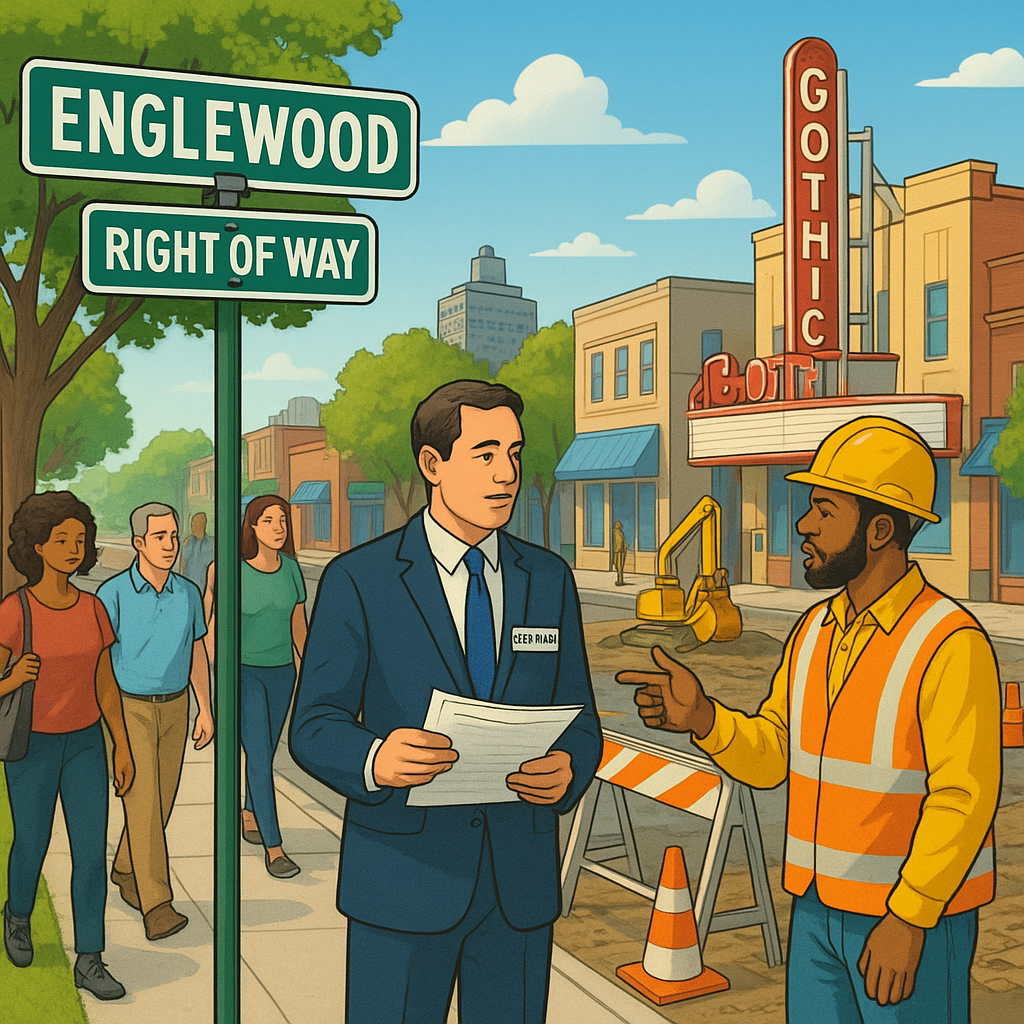
Picture this: a crew is tearing up a sidewalk on a busy Englewood street to install new fiber-optic cables. The work gets done, but a few months later, the pavement sinks, creating a tripping hazard. Who pays to fix it? That’s exactly where the City of Englewood CO Public Right of Way Performance Bond steps in. It’s not just a dusty piece of paperwork—it’s a promise to the community that any work in public spaces will be done right, and if it isn’t, the city has a financial safety net.
If you’re a contractor, developer, or even a homeowner planning a project that touches a public right of way in Englewood, Colorado, understanding this bond is crucial. But don’t worry—this isn’t a dry legal lecture. Let’s break it all down in plain, everyday language.
What Exactly Is a Public Right of Way Performance Bond?
Think of a performance bond as a security deposit for the city. When you get permission to dig up a street, repair a curb, or build a driveway that crosses a sidewalk, the City of Englewood wants assurance that you’ll restore the area to its original condition. A Right of Way bond guarantees exactly that. It’s a three-way agreement between you (the contractor or property owner), the City of Englewood (the obligee), and a surety company (the financial backer). If the work isn’t completed according to city standards, the bond covers the cost of repairs.
In Englewood, this bond specifically applies to any activity within the public right of way. That includes streets, alleys, sidewalks, curbs, gutters, and the strip of grass between the sidewalk and the curb—often called the parkway. Even if your project is on private property, if it connects to or disturbs the public right of way, you’ll likely need this bond.
Why Englewood Takes Its Right of Way Seriously
You might wonder, “Why all the fuss? It’s just a patch of concrete.” But public right of ways are the arteries of a city. They carry pedestrians, cyclists, cars, and essential utilities like water and gas lines. A poorly repaired trench can turn into a sinkhole. A cracked sidewalk becomes a lawsuit waiting to happen. Englewood, just like other proactive Colorado cities, uses the Englewood CO Public Right of Way Performance Bond to protect everyone—residents, visitors, and the city’s budget.
Without this requirement, the city would have to dip into taxpayer funds to fix shoddy contractor work. The bond shifts that risk to the party doing the digging. It’s a way of saying, “We trust you, but we also need a backup plan.”
Who Needs This Bond in Englewood, Colorado?
You’d be surprised how many projects fall under this umbrella. It’s not just for huge construction companies. Here’s a quick list of common scenarios:
- Utility contractors installing or repairing gas, electric, water, or telecom lines.
- Driveway installers building or expanding a curb cut that connects to the street.
- Landscapers working on irrigation systems or hardscaping that extends into the right of way.
- Excavation crews doing any grading or trenching near public infrastructure.
- Property owners taking on a major DIY project that involves sidewalk repair or replacement.
If you’re not sure whether your project qualifies, the City of Englewood’s public works or permitting department is your best friend. They can tell you exactly what type of bond you need.
How Does the Bond Work? A Simple Analogy
Let’s compare the bond to renting an apartment. When you move in, you pay a security deposit. If you leave the apartment with holes in the walls, the landlord uses your deposit to patch them up. If you leave it spotless, you get your deposit back. The City of Englewood CO Public Right of Way Performance Bond works the same way, except the “landlord” is the city and the “deposit” is backed by a surety company.
Here’s the typical flow:
- You apply for the bond through a surety provider.
- The surety evaluates your credit and experience to determine the bond premium—a small percentage of the total bond amount.
- Once issued, you file the bond with the city as part of your permit application.
- You complete the work according to city specs.
- The city inspects and releases the bond after ensuring everything is in good shape.
If something goes south—say, the asphalt patch sinks six inches—the city can file a claim against the bond. The surety pays the city to fix the problem, and then you reimburse the surety. So it’s not insurance for you; it’s a financial guarantee for the city that you’ll stand by your work.
What Does the Bond Actually Cover?
The bond’s purpose is narrow: it ensures the public right of way is restored to Englewood’s standards. That includes:
- Repaving streets to the correct thickness and smoothness.
- Replacing sidewalks, curbs, and gutters with ADA-compliant ramps if required.
- Restoring landscaping and irrigation in the parkway.
- Compaction testing to prevent future settling.
- Traffic control and safety measures during construction.
It does not cover work on your private property, unless that work directly caused damage to the right of way. If you’re building a fence in your backyard and never touch the sidewalk, this bond probably isn’t on your radar.
The Cost: How Much Will You Pay?
Bond costs in Englewood vary based on the project scope. The city sets the required bond amount—often anywhere from $2,000 to $50,000 or more for large developments. The premium you pay is typically 1-3% of the total bond amount if you have good credit. So a $10,000 bond might cost you $100 to $300 per year. Contractors with weaker credit may pay a bit more, but it’s still far cheaper than having to pay for a major repair out of pocket.
Many contractors worry this is a budget-buster, but in reality, it’s a small line item that opens the door to permitted, legitimate work in the City of Englewood, Colorado. Plus, having a bond signals to clients that you’re a professional who follows the rules.
What If a Claim Is Filed Against Your Bond?
Let’s address the elephant in the room. Nobody wants a claim, but they happen. Maybe the soil settled unexpectedly, or a subcontractor cut corners. If the city determines the right of way was not restored properly, they’ll notify you and give you a chance to fix it. If you don’t, the claim proceeds. The surety investigates and, if valid, pays the city up to the bond limit. Then you must repay the surety—every penny. So it’s in your best interest to do the job correctly the first time, or at least respond to city requests promptly.
Think of the bond as a strict but fair referee. It keeps everyone playing by the same rules.
Common Questions (and Straightforward Answers)
Can I use a generic performance bond?
Usually not. The City of Englewood requires a bond specifically naming the city as the obligee and referencing the right of way work. A generic bond for your business won’t cut it. Always check with the city for the exact form they want.
How long does the bond stay active?
Typically, until the city gives final acceptance of the work. For small projects, this might be weeks. For large subdivisions, bonds can remain in place for a year or more to cover the warranty period. The bond form will state the expiration, but the city won’t release it until they sign off.
Do I need a separate bond for each project?
Often, yes. Some frequent contractors can secure a blanket bond that covers multiple small jobs, but that’s negotiated on a case-by-case basis. For most folks, each permit requires its own Right of Way bond.
How to Get Your Bond: A Step-by-Step Guide
Getting bonded doesn’t have to feel like rocket science. Here’s a simple roadmap:
- Find out the required bond amount. Contact the Englewood permit office with your project details. They’ll give you a number.
- Reach out to a surety bond agency. Look for one familiar with Colorado municipal bonds. You can often get a quote online in minutes.
- Provide basic info. The agency will ask about your business, credit history, and the project. No deep secrets—just standard underwriting.
- Pay the premium and get your bond form. The agency will issue the official document.
- File the bond with the city. Submit it alongside your permit application. Then you’re ready to break ground.
Why This Bond Is a Win-Win for Englewood
It’s easy to see the bond as just another bureaucratic hoop. But step back, and you’ll notice it actually makes the whole community stronger. The city avoids costly surprises. Contractors earn trust by showing they’re financially responsible. Residents get safe, durable infrastructure. Even property values benefit when neighborhoods have well-maintained streets and sidewalks.
The City of Englewood CO Public Right of Way Performance Bond might not be the star of your project, but it’s the quiet foundation that keeps everything solid long after the backhoes go home. Whether you’re laying a single water line or building an entire subdivision, respecting this process is part of being a good neighbor in this corner of Colorado.
So next time you see a crew carefully patching a street in Englewood, you’ll know there’s a bond backing up every scoop of asphalt. It’s a small tool with a big job—keeping our shared spaces safe, functional, and looking their best.