A Utah Defective Title Bond provides a legal path for vehicle owners to obtain a clean title when they lack sufficient proof of ownership, acting as a financial safety net for the state and potential claimants. This surety bond protects against future ownership disputes without penalizing the applicant.
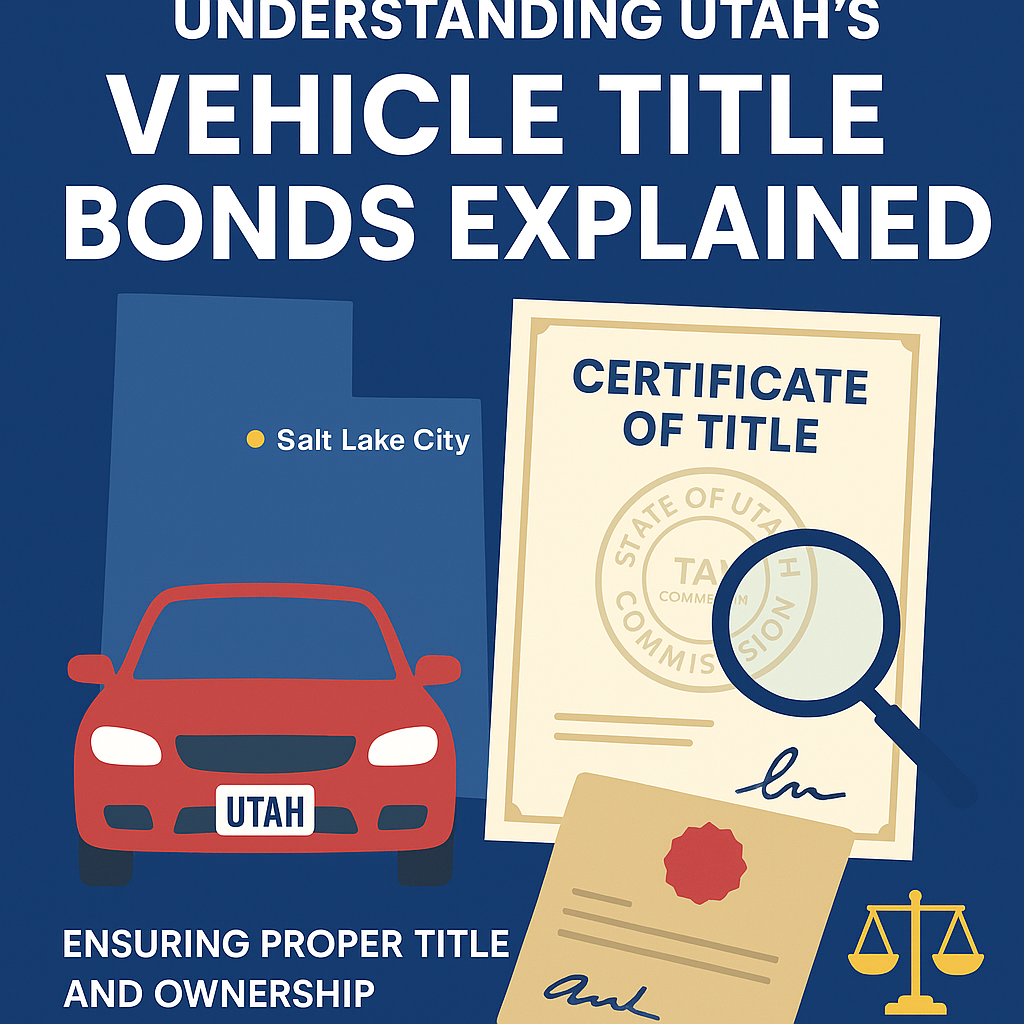
So, You Have a Car Without a Clean Title—Now What?
Picture this: you just bought a used car from a neighbor, or maybe you finished rebuilding a classic truck that’s been sitting in a field for a decade. Everything seems fine until you walk into the DMV to get your registration. That’s when you hear the words “defective title” or “insufficient evidence of ownership.” Your stomach drops. Suddenly, that vehicle you were so excited about feels like a giant paperweight.
If you’re in Utah, don’t panic. The state has a specific path forward called the Utah Defective Title Bond, often referred to as a motor vehicle defective title or insufficient evidence of ownership bond. This unglamorous-sounding document is actually your golden ticket to getting a clean, legal title. Let’s break down exactly what this bond is, why the Tax Commission requires it, and how you can turn that title headache into a distant memory.
What Does “Defective Title” Actually Mean?
Think of a vehicle’s title like a birth certificate. It officially proves who the parent (owner) is and that the child (the car) exists without any liens or messy disputes. A “defective” title is one that has a flaw in that proof. The Utah State Tax Commission may flag a title as defective for a bunch of reasons that are more common than you’d think.
Maybe you lost the original title and the previous owner is unreachable. Perhaps you bought a car with only a bill of sale, and the seller’s name was never properly recorded on the old title. Classic car projects often surface with missing paperwork after sitting in barns for decades. Even a messy chain of ownership—where the person who sold it to you wasn’t the legal owner on record—can trigger a problem. In all these cases, the Division of Motor Vehicles sees “insufficient evidence of ownership.” That’s where the bond steps in.
The Bond as a Financial Safety Net—Not a Penalty
A lot of people hear the word “bond” and think they did something wrong. That’s not the case at all. A Utah defective title bond is a surety bond, which is just a three-party promise. You (the vehicle owner) are the principal. The Utah State Tax Commission is the obligee—the entity requiring the bond. And a surety company backs you up.
Here’s the easy analogy: think of it like a security deposit for your apartment. Your landlord doesn’t think you’ll trash the place, but the deposit protects them just in case. This bond works the same way. It protects the state and any previous owners that might emerge. If it turns out later that someone else has a legitimate ownership claim to the car, they can make a claim against your bond for financial damages. You aren’t admitting guilt or fraud. You’re simply saying, “I’m confident I own this car, and I’m putting up a bond to back my word while the title gets sorted.”
Why the Utah Tax Commission Requires This Bond
The Tax Commission isn’t trying to make your life difficult. They’re the gatekeepers of clean titles, and their job is to prevent stolen vehicles from getting new identities and to protect rightful owners. Before they’ll issue a “bonded title,” they need that financial cushion. The bond holds you accountable. If a bank still had a lien on the car that you didn’t know about, or a co-owner never signed off on the sale, the injured party doesn’t have to chase you directly in an ugly court battle. They can file a claim on your surety bond and get compensated up to the bond amount.
Remember, the bond doesn’t replace insurance or excuse any past-due loans. It simply clears the path to a Utah certificate of title in your name when the usual paperwork trail has gaps.
Step by Step: How to Turn a Paper Problem Into a Clean Title
Navigating the process might feel overwhelming, but it’s a series of logical steps. You don’t need a lawyer, just patience and the right paperwork.
1. Get the Official Rejection First
You can’t just wake up one day and decide to buy a bond. You need a formal “insufficient evidence of ownership” letter or a rejected title application from the Utah DMV. They will review whatever documents you do have—your bill of sale, a handwritten note from the seller, an old registration card—and confirm that it’s not enough. This letter will tell you the required bond amount. That number is crucial.
2. Determine Your Bond Amount
The Tax Commission typically sets the bond amount at one and a half times the fair market value of the vehicle. If your car is worth $5,000, you’ll likely need a $7,500 bond. Don’t let that big number scare you; you won’t pay that much out of pocket. The dollar figure you see on the bond form is the maximum payout in case of a valid claim, not your cost to obtain the bond.
3. Purchase the Bond (It’s Surprisingly Affordable)
Here’s where good news arrives. You don’t have to fork over $7,500 in cash. You buy the bond through a surety agency for a small fraction of that total amount, called the premium. For a typical Utah motor vehicle defective title bond, your premium might range from $100 to a few hundred dollars, depending on the bond size and your credit standing. Many bonds are issued instantly online, and you’ll get a PDF of your bond form right away.
4. Present Your Bond to the DMV
Take your original surety bond paperwork back to the DMV, along with any other documents they asked for—like a completed title application, safety inspection certificate, and emissions paperwork if required. The clerk will verify everything and move your case forward. If all goes well, you’ll soon be issued a “bonded title.” This is a real, official title that clearly states a surety bond backs it.
5. Hold the Bond Until You Graduate to a Clean Title
A bonded title usually carries that designation for about three years in Utah. During that window, any prior owner, lienholder, or legal claimant can surface and make a case. If the three years pass without any valid claims, the “bonded” brand can often be removed, and you’ll receive a standard, clean title. It’s like a probation period for your car’s paperwork, and once it’s over, the bond has served its purpose.
Common Scenarios Where the Bond Saves the Day
Let’s ground this in real life. Imagine you inherited your grandfather’s old pickup. The truck has immense sentimental value, but the title was lost in a move years ago, and grandpa’s estate is long closed. The DMV rightfully won’t just take your story as proof. You’d apply for a bonded title after a rejected application, snag a bond for the required amount, and drive the truck legally while preserving the family heirloom.
Or, say you bought a motorcycle from a private seller on a classifieds site. You handed over cash, got a bill of sale, and the seller promised to mail the title. They vanished. Utah’s DMV will examine your bill of sale, the VIN, and any other clues. With a surety bond, you can still claim ownership without having to track down a ghost.
Will This Bond Break the Bank?
Absolutely not. The beauty of the insufficient evidence of ownership bond system is that the cost is proportional. For a vehicle valued under $10,000, you might pay a premium as low as $100. Even for pricier cars, the rate is manageable. Surety companies understand that applicants are regular folks dealing with bureaucratic hiccups, not high-risk offenders. Your credit score does play a role in the premium, but many providers offer competitive rates and easy online quotes. You can secure the bond in under ten minutes if you have your rejection letter in hand.
What If Someone Actually Files a Claim?
This is the part that makes people nervous, so let’s demystify it. If a valid claim arises and the surety pays out, you are ultimately responsible for reimbursing the surety company. That’s the indemnity clause. However, claims are rare when you’ve acted in good faith. The bond is there to protect against hidden defects in title, not to penalize honest buyers. If you bought the car with a straightforward bill of sale and no one popped up with a competing claim during the initial title attempt, odds are overwhelming that no one will suddenly appear later. The bond simply gives the system a legal framework to handle the tiny “what if.”
Your Title Is Waiting—Don’t Let Paperwork Stand in Your Way
A defective title isn’t a dead end. It’s a detour. The Utah State Tax Commission designed the bonded title process to give everyday people a fair shot at owning and registering their vehicles when life gets messy. Whether your missing title was caused by a lost document, a flaky seller, or a treasured old car with no records, the safety net is there.
So gather whatever paperwork you do have, make that DMV appointment, and walk in knowing that a Utah motor vehicle defective title bond is your simple, affordable bridge from frustration to a shiny new plate. You’ll be back on the road with the peace of mind that everything is legal, clear, and finally in your name.