Right of way bonds in Grand Junction act as a financial guarantee that contractors restore public spaces like streets and sidewalks to safe, city-approved conditions after construction. This bond protects taxpayers by covering repair costs if work is done improperly, ensuring the community's infrastructure remains well-maintained.
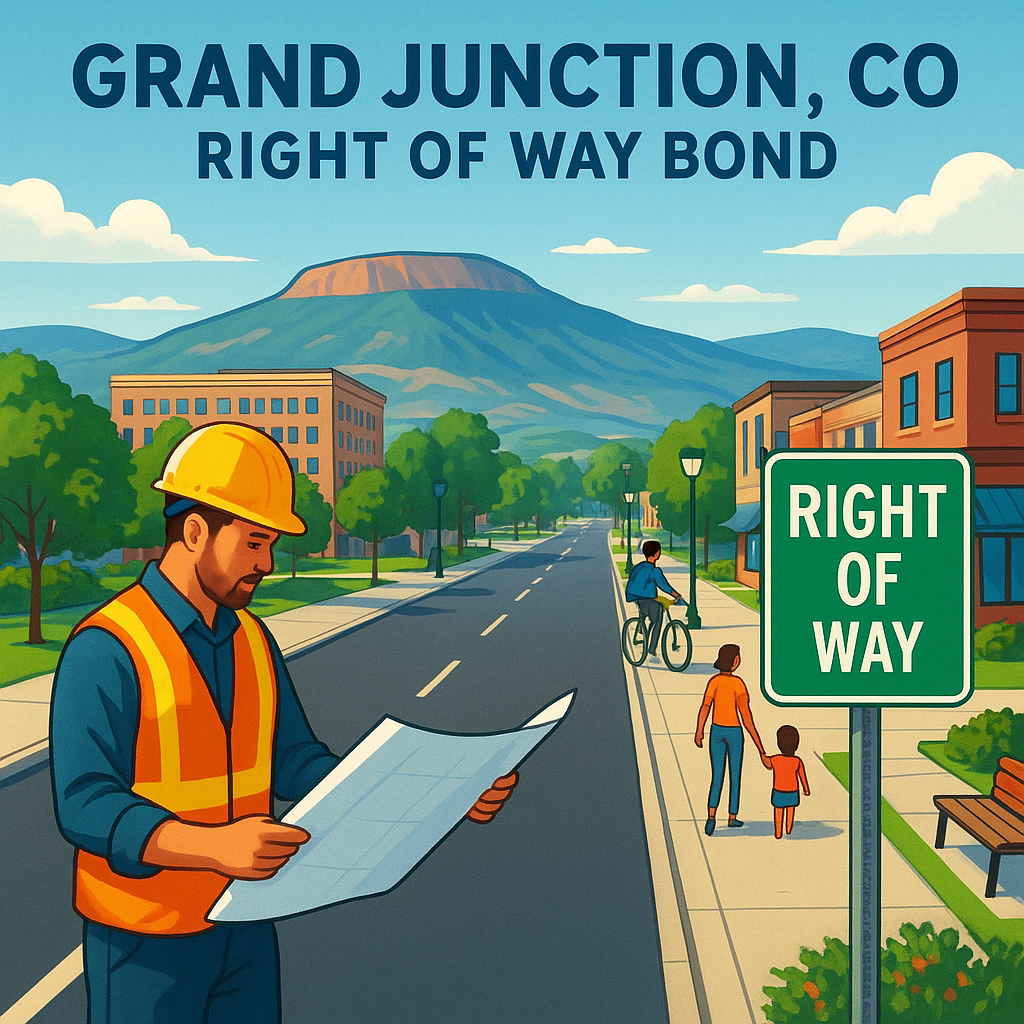
If you’ve ever walked or driven around Grand Junction, you’ve probably noticed patches of fresh asphalt, new utility boxes popping up, or a work crew carefully digging near the curb. What you might not see is the quiet, powerful safeguard working in the background to make sure everything gets put back exactly the way it should be. That safeguard is often called a Right of Way Bond. In a town as vibrant as Grand Junction, where growth and infrastructure go hand in hand, understanding this little piece of paper can save contractors, homeowners, and the entire community a lot of headaches.
What Exactly Is a Right of Way Bond?
Think of a right of way bond as a three-way promise. You have the person doing the work (often a contractor), the city that owns the public space, and a bonding company that acts like a financial backup. The bond says, “We guarantee this work will be done according to the city’s rules, and if it isn’t, there’s money set aside to fix it.”
It’s not insurance for the contractor. Instead, it’s protection for the City of Grand Junction and everyone who uses its streets, sidewalks, and public utilities. If something goes wrong—say a trench isn’t refilled properly or a sidewalk gets left dangerously uneven—the bond can cover the repair costs without tapping into taxpayer money. You can think of it like a security deposit. When you rent an apartment, you pay a deposit just in case you leave damages. A right of way bond works similarly, only it’s for work in public spaces.
Why Does the City of Grand Junction Require These Bonds?
The simple answer: shared spaces matter. The public right of way includes roads, alleys, curbs, gutters, sidewalks, and the strips of land where utilities run. When anyone digs into these areas, they’re affecting every driver, cyclist, and pedestrian in the neighborhood. The city needs a guarantee that the surface and underlying infrastructure will be restored to a safe, long-lasting condition.
Without a bond, a rushed or poorly done patch job could turn into a pothole next spring. A broken water line repair left without proper compaction might create a sinking trench that damages a car’s alignment. Grand Junction takes pride in its well-maintained streets and beautiful outdoor spaces. A City of Grand Junction Right of Way Bond helps keep that reputation intact by giving the city leverage. If the contractor doesn’t finish the job right, the bonding company steps in to fund the fixes.
Who Needs a Right of Way Bond in Grand Junction?
You might be wondering if this applies to you. Mostly, right of way bonds are required for contractors and businesses performing work that disturbs public property. Here are a few common examples:
- Excavation and utility contractors installing or repairing water, sewer, gas, or fiber optic lines beneath streets or sidewalks.
- Paving and concrete companies replacing driveway aprons, curbs, gutters, or crosswalks that tie into the public right of way.
- Landscaping and irrigation professionals working in tree lawns or planting strips that belong to the city.
- General contractors managing large projects where access to public roads or alleys must be temporarily altered.
Even a homeowner tackling a major project that extends into the right of way—like installing a new curb cut for a wider driveway—might need to pull a permit and provide a bond. The best move is to call Grand Junction’s Public Works or Engineering Department early in the planning stages. They’ll let you know exactly what’s needed for your specific job. And yes, many of those permits require a Grand Junction right of way bond as part of the package.
How Does the Bond Actually Work?
Let’s break it down into three simple roles:
The Obligee: The City of Grand Junction. They’re the party being protected. They set the rules and hold the bond.
The Principal: The contractor or individual doing the work. They buy the bond and promise to follow every regulation.
The Surety: The bonding company. They back the principal’s promise with financial strength.
Now picture a real-world scenario. A contractor is replacing a sewer line in front of a home. They cut into the asphalt, complete the repair, and patch the street. A year later, that patch sinks several inches, creating a serious hazard. Grand Junction contacts the contractor to fix it. If the contractor refuses or is no longer in business, the city can file a claim against the bond. The surety investigates, and if the claim is valid, they pay the city up to the bond amount. That money covers the cost of a proper, permanent road repair. The surety then seeks reimbursement from the contractor. So the bond doesn’t let the contractor off the hook—it just guarantees the community doesn’t suffer in the meantime.
Understanding Grand Junction’s Specific Requirements
Every city has its own thresholds, and Grand Junction is no different. The required bond amount often depends on the scope of the project. A small landscaping job that gently touches the right of way might need only a modest bond, perhaps a few thousand dollars. A large utility installation spanning multiple blocks could require a much larger figure, sometimes $25,000 or more. The city typically lists the bond amount directly on the permit application or within the municipal code.
Here’s a pro tip: don’t guess. Pick up the phone or visit the city’s website and look for the Right of Way Permit section. Grand Junction’s Engineering Division can point you to the exact bond form and amount. Obtaining the right Colorado Right of Way Bond tailored to Grand Junction’s paperwork is critical. Using a generic bond form might lead to rejection and project delays, so always verify that the bond language matches what the city clerks expect to see.
What Does a Right of Way Bond Cost?
You might be worried that a multi-thousand-dollar bond means you need to write an equally large check. Luckily, that’s not how it works. The bond amount is the maximum coverage, not the price you pay. You purchase the bond by paying a premium—a small percentage of the total coverage.
For a well-qualified contractor, that premium typically falls between 1% and 5% of the bond amount. Imagine Grand Junction requires a $10,000 bond. You might pay just $100 to $500 to secure it for the full permit term. The exact rate depends on factors like your personal credit score, business financials, and experience. Even those with less-than-perfect credit can often get bonded through special programs, though the premium may be higher. When you compare that modest cost against the risk of a lawsuit or city fines, a right of way bond in Grand Junction is one of the smartest investments a contractor can make.
How to Obtain Your Grand Junction Right of Way Bond
Good news: the process is usually fast, often completed in a single day. Follow these steps to get on the right track:
- Confirm your permit requirements. Speak with the City of Grand Junction to nail down the exact bond amount and form.
- Apply with a surety bond agency. Choose an agency licensed in Colorado that understands municipal bonds. You’ll provide basic business and personal information.
- Get your quote. In many cases, you’ll receive a quote within hours. If your credit is strong, you could get an instant rate.
- Pay the premium and receive your bond. The agency will issue the bond form made out to the City of Grand Junction.
- File the bond with the city. Submit the original bond document along with your permit application. Keep a copy for your records.
- Start your work with confidence. Once the city accepts the bond and issues the permit, you’re clear to begin, knowing you’re fully compliant.
Many contractors find it helpful to build a relationship with a bond agency that knows Grand Junction’s landscape. When you call and say, “I need a City of Grand Junction Colorado right of way bond for a sewer repair permit,” a knowledgeable agent will immediately know what form you need, saving you precious time.
How the Bond Protects Everyone—Not Just the City
It’s easy to see a bond as another bureaucratic hoop to jump through. But step back and look at the big picture. This small requirement creates a ripple effect of protection. The city avoids expensive emergency repairs. Drivers enjoy smooth roads. Homeowners don’t watch their property values dip because the sidewalk in front of their house has become a tripping hazard. And honest contractors? They gain credibility. When you can tell a client, “Yes, we’re bonded with the City of Grand Junction,” you’re sending a signal that you play by the rules and stand behind your work.
Common Pitfalls and How to Avoid Them
Even seasoned professionals can hit snags. Here’s what to watch for:
- Letting the bond lapse. A right of way permit bond typically stays valid for the length of the project plus a warranty period. Don’t assume your bond expires when the shovel goes back in the truck. Keep the bond active until the city formally releases it.
- Using the wrong bond form. Grand Junction may require its own specific language. A generic “Right of Way Bond” might not meet city code. Always check.
- Forgetting to update the bond for a change order. If your project scope expands, the city might demand a higher bond amount. Plan ahead so you don’t face a stop-work order.
- Confusing bond with insurance. A bond does not cover your employees getting hurt or your truck getting damaged. You still need proper liability and workers’ compensation insurance. The bond is strictly a guarantee to the city.
What if a Claim Is Filed Against My Bond?
First, don’t panic. A claim doesn’t automatically mean you’ve lost the battle. It simply means the city believes there’s a problem. Reach out to your surety company immediately. Often, issues are resolved through communication and a willing attitude to correct any deficiencies. If you do the work to fix the defect promptly, the claim can be closed out with minimal impact. But ignoring it is the worst possible path. That can lead to having to reimburse the surety for their payout and could make it difficult to get bonded in the future.
Frequently Asked Questions
Can I get bonded with poor credit? Yes. Many surety companies offer programs for credit-challenged applicants. The premium will be higher, but you can still obtain a bond and go to work.
Is a right of way bond the same as a contractor license bond? Not exactly. A license bond guarantees that a contractor will follow all local laws. A right of way bond is project-specific or blanket coverage for work in a public right of way. Grand Junction may require one or both, depending on your business type.
How long does a Grand Junction right of way bond last? The bond term usually aligns with the permit duration, often one year, and may include an extended restoration period. The city will specify the term.
I’m a homeowner doing my own work. Do I need a bond? Possibly. If your DIY project involves cutting into the street or sidewalk, the city might require a bond to make sure you restore the area properly. Talk to the permit office before you dig.
Bringing It All Together
Grand Junction is more than a dot on the map; it’s a community linked by roads, paths, and infrastructure that connect us all. A Right of Way Bond might sound like just another line item on a permit checklist, but it’s really a promise—a promise that when we dig in and make improvements, we’ll leave the space safe and sturdy for everyone who follows. Whether you’re a contractor breaking ground on a new subdivision or a small business owner upgrading a water line, taking that extra step to get bonded shows you care about quality and community. And at the end of the day, that’s the kind of mindset that keeps Grand Junction moving forward, one well-paved road at a time.