Contractors working in Adams County, Colorado must secure the Right of Way Road Cut Contractor Bond before digging into public roads—a financial guarantee that ensures proper road restoration and protects taxpayers from shoddy repair work. The bond applies to a wide range of professionals, from general contractors to utility and landscaping companies.
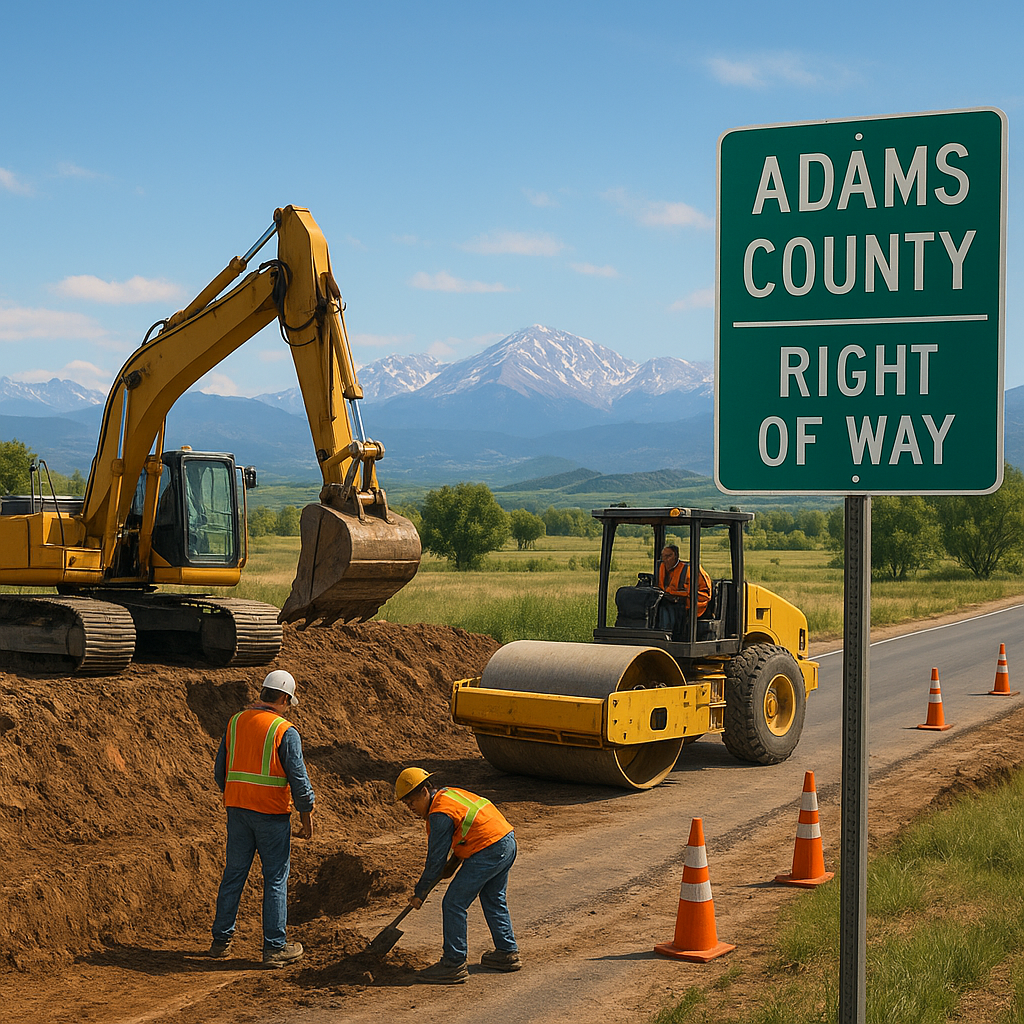
Have you ever been driving through a neighborhood when suddenly, the road is all torn up? That’s usually a contractor doing essential work underneath the pavement—repairing water lines, installing fiber optic cables, or fixing gas mains. But before anyone can dig into a public road in Adams County, Colorado, they need to jump through a few important hoops. One of the most critical steps is obtaining the Adams County Right of Way Road Cut Contractor Bond. It might sound like a mouthful, but it’s really just a promise—a financial guarantee—that the contractor will repair the road correctly after the work is done.
If you’re a contractor, a utility company, or even a DIY developer planning a project that involves cutting into a county road, understanding this bond isn’t just helpful, it’s mandatory. Let’s break down everything you need to know in a way that actually makes sense.
What Exactly Is a Right of Way Road Cut Contractor Bond?
Think of this bond as a three-legged stool. The first leg is the contractor (that’s you, the principal). The second leg is Adams County (the obligee), which owns the road. The third leg is the surety company that provides the bond. If you, the contractor, fail to patch up the road properly—or leave it in worse shape than you found it—the county can make a claim against the bond to cover the cost of fixing your mistakes.
It’s not insurance for your business. It’s a protection layer for the public. The county wants to be absolutely certain that taxpayers won’t have to foot the bill for a shoddy repair job. By requiring this bond, they’re saying, “Go ahead and dig, but we need a guarantee you’ll put things back right.”
Why Adams County Takes This Bond So Seriously
You might wonder, why all the fuss over a simple road cut? Think about it. A poorly patched road leads to potholes, water damage, and even safety hazards. If a depression forms months later and causes an accident, who’s responsible? Without a bond, the county and its residents are left holding the bag. The Right of Way Road Cut Contractor Bond shifts that risk squarely onto the contractor’s shoulders.
Adams County’s infrastructure is constantly evolving. New developments, utility upgrades, and emergency repairs all require opening up the pavement. The bond ensures that every single cut meets the county’s strict restoration standards. When the work is done right, everyone wins—the roads stay smooth, drivers stay safe, and the contractor’s reputation stays spotless.
Who Actually Needs This Bond?
It’s not just massive construction firms. The requirement applies to a broad range of professionals who need to perform excavations in the public right-of-way. Here’s a quick list:
- General contractors building new subdivisions or commercial properties
- Plumbing companies repairing a water or sewer service line
- Utility contractors installing gas, electric, or telecommunications lines
- Concrete and asphalt specialists doing curb, gutter, or driveway approaches
- Landscaping businesses that might disturb the road shoulder
Basically, if your project involves breaking the surface of any street, sidewalk, or alley maintained by Adams County, you’ll need to secure this bond before you pull a permit. Even smaller jobs aren’t exempt. It’s a standard part of the right-of-way permit process.
How Does the Bond Actually Work in Real Life?
Let’s walk through a typical scenario. Imagine you’re a plumbing contractor hired to replace a broken sewer lateral that runs under a quiet residential street. You obtain your right-of-way permit, cut into the asphalt, complete the repair, and temporarily patch the road. According to your agreement with the county, you have a certain timeframe—usually a year or more—to install the final permanent restoration.
If, during that maintenance period, the patch sinks or cracks, the county inspector will flag it. You’ll get a notice to fix it. If you ignore that notice or go out of business, the county files a claim against your Adams County Right of Way Road Cut Contractor Bond. The surety company investigates, and if the claim is valid, they pay the county up to the full bond amount. Then, here’s the kicker, the surety comes back to you to recover every penny. So it’s not a free pass. It’s a financial backstop that you’re ultimately responsible for.
What Does Getting This Bond Cost?
The cost of the bond, called the premium, is just a fraction of the total bond amount. Bond amounts are set by Adams County and typically range from $5,000 to $25,000, depending on the scope of work. For larger, more complex projects, the required bond might be higher.
You won’t pay that full amount out of pocket. Instead, you pay an annual premium. If the county requires a $10,000 bond, and your premium rate is 2%, you’d pay just $200 for the year. Rates vary based on your personal credit score, business financials, and experience. Contractors with strong credit often pay as little as 1-3% of the bond amount. Those with challenged credit might pay more, typically up to 10-15%, but it’s still a manageable cost compared to the risk of not being bonded at all.
Step-by-Step: How to Get Bonded Quickly
The process isn’t nearly as intimidating as it sounds. Most surety bond companies can issue the bond within 24 hours. Here’s the typical flow:
- Find out the required bond amount. Contact the Adams County Public Works or Engineering Department for your specific permit.
- Apply with a surety bond agency. You’ll fill out a simple application with basic business info and sometimes your social security number for a credit check.
- Receive your quote. Within minutes to a few hours, you’ll know exactly what you’ll pay.
- Pay the premium and get your bond form. The surety will email you the official bond document.
- File the bond with the county. Submit it along with your permit application and any other required paperwork.
That’s it. Once the county accepts the bond, your permit is one huge step closer to being approved. Keep a copy of that bond in your project file—you’ll need it handy if questions ever arise down the line.
What Happens If You Skip the Bond?
Let’s be blunt: nobody wants to deal with the fallout of working without a required bond. At best, the county will deny your permit outright, and your project will grind to a halt. At worst, you could start work without permission, get a stop-work order, and face fines that add up quickly. You might also ruin your relationship with the municipality, making it harder to get permits in the future.
Operating without a bond is a gamble that rarely pays off. The bond isn’t a bureaucratic hurdle; it’s a tool that protects your business too. When you’re bonded, you signal to clients and the county that you’re a legitimate, responsible professional who stands behind your work.
Common Myths About Contractor Bonds, Busted
Myth #1: “The bond covers my tools and equipment.”
Nope. That’s what general liability or property insurance is for. The bond is strictly for the county’s protection related to road repairs.
Myth #2: “Once I have a bond, I never have to think about it again.”
Semi-true. The bond is usually continuous until canceled, but you need to keep it active. If your bond lapses, the county can suspend your permit. Most bonds renew annually.
Myth #3: “I can use my general contractor bond for road cuts.”
Not usually. A general contractor license bond and a right-of-way road cut bond serve different purposes. Adams County specifically wants a bond that guarantees road restoration, not just your overall business ethics.
How to Keep Your Bond Claim-Free
Nobody wants a claim. It’s a headache for you, the county, and the surety. The best defense is doing excellent work and communicating openly. Here are a few practical tips:
- Follow the county’s restoration standards to the letter. Download the specs from the county website and keep them onsite.
- Document your work. Take photos before, during, and after the cut. Timestamped pictures can be your best friend if a dispute arises.
- Respond to notices immediately. If an inspector leaves a tag or sends a letter, address the issue within the given timeframe. Ignoring it is the fastest way to a claim.
- Use quality materials. Cheaping out on asphalt or compaction might save a few dollars today but can lead to a sinking patch that triggers a claim six months later.
- Maintain a healthy relationship with the county. A quick phone call to clarify expectations can prevent misunderstandings.
Looking Beyond the Paperwork
At first glance, the Adams County Right of Way Road Cut Contractor Bond seems like just another line item on a long list of contractor requirements. But stepping back, you’ll see it’s a cornerstone of community trust. It ensures that the roads we all rely on—taking our kids to school, commuting to work, running errands—stay safe and well-maintained, even after they’ve been opened up for necessary work.
For contractors, this bond is also a badge of credibility. Presenting your bond alongside your permit application tells the county, “I’m serious about doing this right.” It opens doors, builds confidence, and lets you focus on what you do best without looking over your shoulder.
So, whether you’re getting ready to dig into a major arterial road or just need to tap into a water main on a quiet dead-end street, make sure your bond is in place. It’s a small investment for a whole lot of peace of mind—for you, for the county, and for every driver who’ll roll over that invisible patch for years to come.