Nebraska requires appraisal management companies to secure a $25,000 surety bond to ensure compliance with state laws and protect consumers from financial harm. Real estate inspectors should understand this requirement because working with a bonded AMC safeguards their payments and professional reputation.
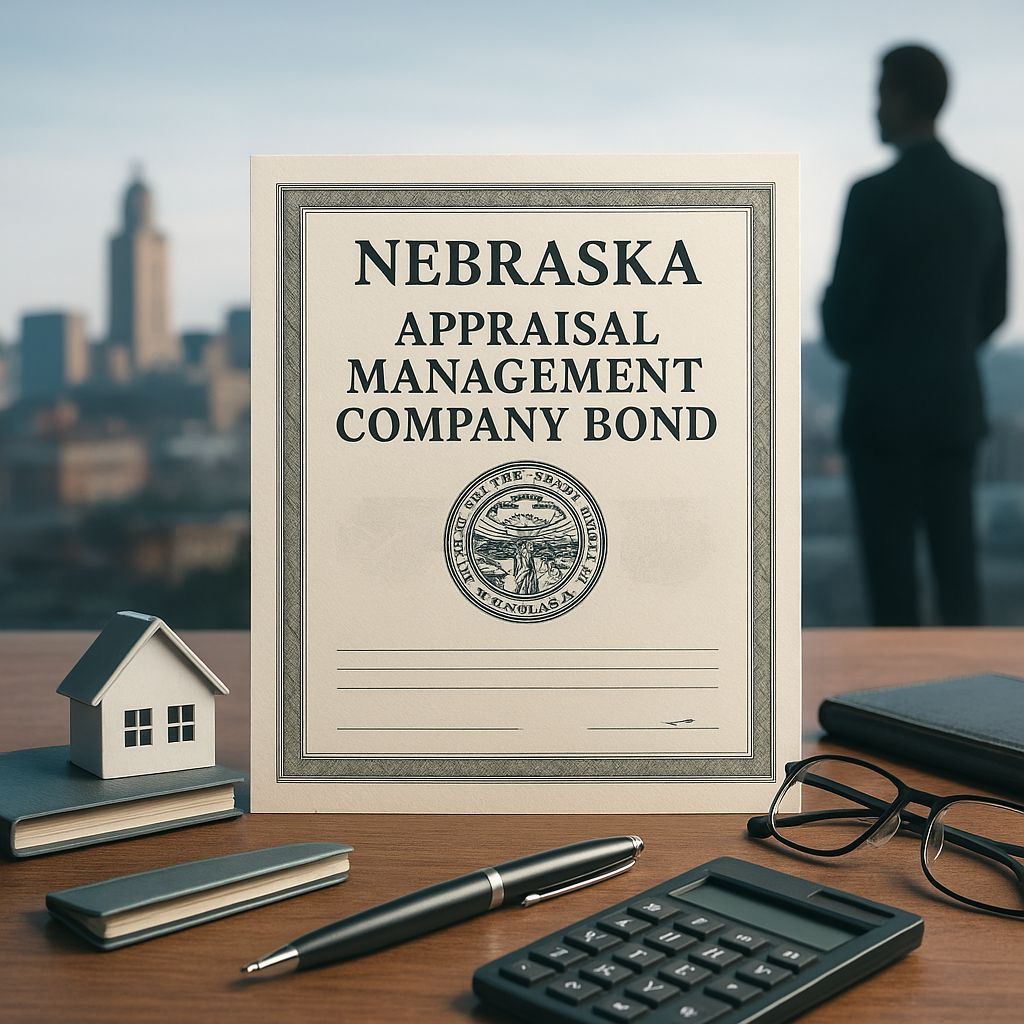
Let’s be honest—insurance and bonding requirements can feel like a tangled mess of paperwork. If you’re a real estate inspector or run an appraisal management company in Nebraska, you’ve probably stumbled across the term Nebraska Appraisal Management Company Bond and wondered what it actually means for your day-to-day work. You might even be asking, “Is this just another fee I have to pay, or does it really protect me and my clients?”
That’s exactly what we’ll unpack today. By the time you finish reading, you’ll understand what this bond is, why the State of Nebraska requires it, and how it connects to the world of real estate inspection. No confusing jargon, no legal fluff—just the clear, practical information you need to stay compliant and build trust with your clients.
What Exactly Is an Appraisal Management Company Bond in Nebraska?
Picture a safety net stretched beneath a tightrope walker. The performer is your appraisal management company (AMC), moving through a complex routine of ordering appraisals, reviewing reports, and coordinating with lenders and inspectors. The safety net is the Nebraska Appraisal Management Company Bond. It’s not for you—it’s for the public. If your AMC makes a mistake that causes financial harm, someone can fall back on that net.
In plain terms, a bond is a promise. The AMC promises to follow Nebraska state laws and regulations. If they break that promise—by acting unethically, committing fraud, or violating the rules—the bond covers financial losses up to a set amount. It’s a three-party agreement: the AMC (principal), the state (obligee), and the surety company (the one backing the bond). The state requires it so that homebuyers, sellers, and lenders aren’t left holding the bag.
Nebraska isn’t unique in demanding this bond, but every state has its own fine print. In the Cornhusker State, the bond must be issued by a surety licensed in Nebraska, and the coverage amount currently stands at $25,000. That figure might seem modest, but it’s a crucial layer of consumer protection.
How Does This Bond Affect Real Estate Inspectors?
You might be thinking, “I’m a home inspector, not an AMC. Why should I care?” Here’s the connection: many AMCs contract with independent real estate inspectors to complete property condition assessments. When an AMC hires you, their compliance—including holding a valid bond—becomes your business indirectly. If the management company cuts corners and later faces a claim, it can disrupt your payment schedule, project assignments, or even your professional reputation by association.
Knowing that the AMC you work with is bonded gives you peace of mind. It means the company has passed a basic integrity check and is held accountable by the state. So even if you never have to buy this bond yourself, understanding it helps you pick reliable partners and avoid headaches down the road.
Why Does Nebraska Require This Bond for AMCs?
Great question. Real estate transactions are enormous financial commitments—often the biggest deal a person makes in their lifetime. Appraisals influence lending decisions, sales prices, and insurance premiums. If an unprincipled AMC pressures an appraiser to inflate a value or ignores obvious red flags, the ripple effects can be devastating. Nebraska’s bond requirement acts as a regulatory seatbelt, buckling everyone in before the ride begins.
The state’s Real Property Appraiser Board oversees AMCs and mandates the bond under the Nebraska Appraisal Management Company Registration Act. Think of the bond as their tool to enforce accountability. If an AMC violates the act—say, by failing to pay an appraiser or knowingly relying on a faulty appraisal—the board can step in. The bond ensures there’s a pot of money available to make things right without taxpayers footing the bill.
Who Actually Has to Get Bonded?
Any entity that meets the definition of an appraisal management company in Nebraska needs a bond. The law defines an AMC broadly as a business that administers a network of appraisers to fulfill orders for clients, typically lenders. If you coordinate appraisal services for properties located in Nebraska, and you do this for a fee, you almost certainly fall under the requirement—even if your company is based in another state.
If you’re a solo real estate inspector who simply performs inspections and never manages other service providers, you don’t need this specific bond. But you might encounter AMCs that ask for proof of your own insurance or licenses. It’s smart to have a clear contract each time so responsibilities don’t blur.
Breaking Down the Cost and Application Process
Let’s talk numbers. A $25,000 bond doesn’t cost you $25,000 out of pocket. That’s the coverage limit, not the premium. Your premium—the annual fee you pay for the bond—typically ranges from $100 to $500, depending on your credit score, business financials, and the surety company you choose. For well-qualified applicants, it’s often on the lower end of that spectrum. Think of it like car insurance: your driving record influences your rate, but the liability coverage is much higher than what you pay yearly.
Applying is straightforward:
- Contact a surety bond provider licensed in Nebraska. Many agencies operate entirely online.
- Complete a brief application with basic business details and personal credit information.
- Receive a quote, usually within a few hours.
- Pay the premium and sign the bond document.
- Your agent files the bond with the Nebraska Real Property Appraiser Board as part of your AMC registration or renewal.
Don’t wait until the last minute. Processing can take a day or two, and the state won’t approve your registration without proof of bond. Running out of time leads to unnecessary stress and lost business opportunities.
Can You Get a Bond with Less-Than-Perfect Credit?
Yes, it’s possible. Surety companies understand that small business owners may have faced credit challenges. If your personal credit score is below 650, you might pay a higher premium, but you can still get bonded. Some surety programs are designed specifically for individuals who need a second chance. The key is to work with an agent who has access to multiple markets, not just one rigid lender. Be upfront about your situation—often that honesty speeds up the process.
What Happens If a Claim Is Filed Against the Bond?
Here’s where the safety net analogy really comes to life. If someone—say, a lender or a homeowner—believes an AMC caused them financial harm, they can file a claim against the bond. The surety company investigates. If the claim is valid, the surety pays the harmed party up to the bond’s $25,000 limit.
Now, don’t think of this as a free payout. The AMC is legally obligated to reimburse the surety for every penny paid out plus legal costs. That means a single bad decision can cost your company tens of thousands of dollars and severely damage your ability to get bonded again. It’s a powerful incentive to do things by the book.
Most AMCs will never see a claim because they play fair. But knowing the consequences creates a culture of careful compliance—and that’s exactly what the state intends.
Common Misunderstandings About the Nebraska AMC Bond
Let’s clear up some confusion that trips up many people in the real estate industry:
- “It’s the same as errors and omissions insurance.” Not true. Insurance protects you, the business owner. A bond protects the public. They serve different purposes and often must be purchased separately.
- “If I’m a small mom-and-pop shop, I’m exempt.” Nebraska doesn’t offer an exemption based on company size. If you meet the definition of an AMC, the bond is mandatory.
- “Once I buy it, I’m covered forever.” Bonds are renewable, usually annually. Your coverage must stay active the entire time your AMC registration is valid. Letting it lapse can result in fines or suspension.
- “The bond covers all mistakes my inspectors make.” The AMC bond covers the management company’s administrative failures, not necessarily a field inspector’s on-site error. That’s why many inspectors carry their own professional liability insurance.
How This Bond Strengthens the Real Estate Ecosystem
It might be tempting to view the Nebraska Appraisal Management Company Bond as just another bureaucratic hoop. But step back and consider the bigger picture. When AMCs are bonded, the entire real estate transaction becomes safer. Lenders trust the appraisal process more. Buyers can rely on accurate property valuations. And real estate inspectors who work through AMCs benefit from a more professional, stable network.
Imagine you’re a home inspector called out to a property for a bank-ordered evaluation. You do your job thoroughly, noting every crack, leak, and outdated system. Six months later, the buyer discovers a major foundation issue that your report mentioned, but the AMC edited out to push the deal through. Without a bond, the family might have nowhere to turn. With the bond in place, they have recourse. That’s the silent power of this requirement—it keeps honesty in the chain, link by link.
Practical Steps for AMCs and Inspectors Moving Forward
If you’re launching or renewing an AMC in Nebraska, start the bonding process early. Talk to a specialized surety bond professional who understands real estate regulations. Compare quotes, but remember the cheapest option isn’t always the best if the surety has poor claims support. Look for a company with strong financial ratings and good customer service.
For real estate inspectors, here’s your takeaway: when a new AMC reaches out with an assignment, politely ask about their state registration and whether they carry the required bond. Most legitimate companies will appreciate you knowing your stuff. If they dodge the question, consider that a red flag. Protecting your own business starts with aligning with credible partners.
Finally, keep learning. The Nebraska Real Property Appraiser Board website is a handy resource for up-to-date requirements and forms. Regulations change, and staying informed is the best defense against accidental violations.
Wrapping It All Up
The Nebraska Appraisal Management Company Bond isn’t designed to make life difficult. It’s a straightforward safeguard that ensures everyone in the property valuation pipeline—from appraisers and inspectors to lenders and families—can operate with a bit more confidence. Understanding it helps you avoid penalties, build credibility, and focus on what you do best: delivering reliable, honest service in a competitive market.
So next time you hear the term “NE appraisal management bond,” you’ll know it’s more than just a piece of paper. It’s a promise. And in a state where handshake deals still mean something, that promise matters a whole lot.