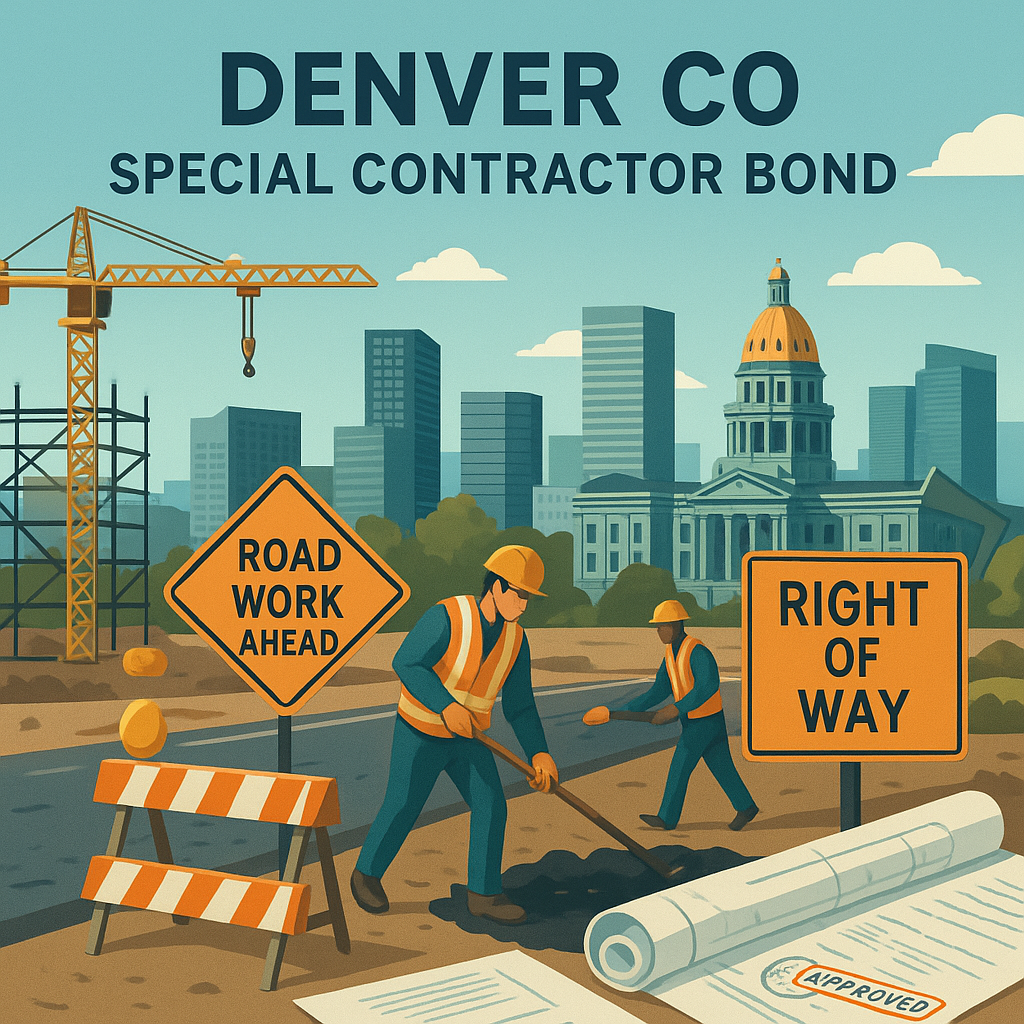
Denver requires a special contractor bond for right-of-way projects to guarantee that work on public streets, sidewalks, and underground utilities meets city standards and protects taxpayers from repair costs. This surety bond serves as a financial safety net, ensuring that any damage or substandard work is fixed without the city or its residents footing the bill.
What Is This Bond, Really?
Let’s cut through the confusion. If you’ve stumbled across the phrase “City and County of Denver CO Special Contractor Bond – Right of Way,” your first thought might be, “Is this just another piece of red tape?” Not exactly. Think of it as a handshake agreement with the city, but one that’s backed by a financial promise. It’s a specific type of surety bond that contractors must secure before they can legally dig, build, or repair anything in Denver’s public right-of-way. Without it, you can’t get your permit—period.
The bond isn’t a punishment. It’s a safety net. It protects Denver’s streets, sidewalks, and underground utilities, plus the taxpayers who use them every day. If a contractor’s work causes damage or doesn’t meet city standards, the bond steps in to cover the costs. In a way, you’re telling the city, “I’ll do the job right, and if I don’t, here’s a guarantee that someone will fix it without the city footing the bill.”
Wait, What Counts as a “Right of Way” Project?
You might be thinking, “I don’t work on highways, so this doesn’t apply to me.” But the phrase “right of way” covers more than you’d guess. It’s not just roads. In Denver, the right of way includes anything that falls between property lines in a public space. That means:
- Sidewalks and curbs
- Alleys and paved paths
- Street pavement and gutters
- Underground utility corridors for water, gas, electric, and fiber optic cables
- Traffic signals, streetlights, and signage
So, if you’re an excavation contractor laying new water pipes under a neighborhood street, a landscaper installing a sprinkler system that crosses a sidewalk, or a telecommunications crew pulling fiber through an underground vault, you’re squarely in right of way territory. A simple driveway approach repair? Yes. Boring under an alley for a new conduit? Absolutely. Even setting up a temporary crane that hangs over a lane of traffic can trigger the requirement. The common thread is that you’re working where the public walks, drives, or relies on underground services.
Why Does Denver Insist on This Bond?
The city isn’t trying to make life difficult. Picture this: a contractor opens up a street to repair a sewer line, finishes the work, but patches the asphalt poorly. Six months later, a pothole forms, and a resident damages their car. Who pays? Without a bond, the city might chase the contractor in court—a slow, expensive process. Or worse, taxpayers absorb the repair bill. The bond stops that scenario cold.
Denver’s right-of-way bond serves three big purposes:
- It safeguards public infrastructure. Roads, sidewalks, and buried lines are expensive public assets. Any work that disturbs them needs a guarantee that they’ll be restored to the city’s specifications.
- It ensures code compliance. The city has strict rules about how right-of-way work must be performed. The bond backs up the contractor’s promise to follow those rules to the letter.
- It shields taxpayers from financial headaches. If a contractor goes out of business halfway through a project, the bond funds can be used to hire someone else to finish the job safely.
It’s similar to a rental deposit. You want to put a hole in the wall to mount a TV? The landlord says okay, but only if you set aside money to patch it up when you leave. Denver wants that same assurance before you cut into their street.
How Does the Bond Actually Work? A Simple Look
You might hear the word “surety” and zone out. Let’s break it down without the legal noise. A surety bond involves three parties, no more, no less:
- The Principal – That’s you, the contractor. You’re the one buying the bond and promising to do the work correctly.
- The Obligee – That’s the City and County of Denver. They’re the ones requiring the bond and will be protected if something goes wrong.
- The Surety – This is the insurance or bonding company that backs your promise with cash. They’re the financial muscle.
When you get the bond, you’re not buying insurance for yourself. If a claim is paid out, the surety will come to you for reimbursement. It’s more like a line of credit you have to pay back. Think of it as having a wealthy relative co-sign your loan. They trust you’ll handle things, but if you don’t, they’ll cover the debt—and then you’ll owe them, big time.
Who Exactly Needs to Get One?
The requirement is written into Denver’s permit process. If your project needs a right-of-way permit from the Department of Transportation and Infrastructure (DOTI), you almost always need to show proof of a bond. This applies to general contractors, specialty tradespeople, and even some larger landscaping companies. Even if you’re a subcontractor hired by a general contractor, the city may still want to see your name on the bond or have the primary contractor extend their coverage to include your scope of work. When in doubt, a quick call to DOTI can save you a pile of trouble before you mobilize equipment.
How Much Does It Cost? Not What You Might Expect
A common myth is that a $10,000 bond costs $10,000. Breathe easy—it doesn’t. The bond amount is the maximum the city can claim if things go haywire, not the price you pay. In Denver, the required bond amount often lands around $10,000 or $25,000, depending on the project scope and size. But your actual out-of-pocket cost, called the premium, is just a small slice of that pie.
Most contractors pay between 1% and 5% of the total bond amount annually. So, for a $10,000 bond, you might pay as little as $100 a year if your credit and business finances are solid. Several factors influence your rate:
- Your personal credit score
- Your business’s financial history
- The number of years you’ve been operating
- Any past claims or bond issues
Even if your credit has a few dings, specialty programs exist. You might pay a higher rate, but access to a bond is rarely shut off completely. The key is to work with a bonding agency that knows Denver’s specific requirements, not just any generic online portal.
Step-by-Step: Securing Your Denver Right of Way Bond
Let’s walk through the process. It’s straightforward if you know what to expect.
1. Confirm Your Permit Needs. Check your project’s scope and talk to Denver DOTI. Ask what bond amount they require. Don’t guess. Getting the wrong amount will stall your permit.
2. Gather Your Business Paperwork. You’ll typically need your business license, federal employer ID number, and your own social security number for a credit check. A short list of recent projects can show financial stability and might earn you a better rate.
3. Work with a Bond Professional. You can go direct to a surety company, but a specialized bond agency is often better. They’ll shop rates across multiple sureties to fit your profile. Explain that you need a “City and County of Denver Right of Way Special Contractor Bond.” Using that exact phrasing helps avoid mix-ups.
4. Submit a Quick Application. Much of this is digital now. Fill out the application honestly, sign where needed, and authorize the credit check.
5. Pay the Premium and Get Your Bond Form. Once approved, you pay the annual premium. The bond form, which you’ll submit to the city, is usually emailed as a PDF the same day.
6. File with the City. You can’t just stuff the bond in a drawer. You must submit it as part of your permit package. The bond becomes a public record with the city.
Keeping Your Bond Healthy and Avoiding Pitfalls
Getting the bond is half the battle. Maintaining a clean track record is the other half. Every time you complete a job without damage, complaints, or code violations, you’re building a reputation that will keep future bond costs low. One of the fastest ways to burn a bridge with a surety is to ignore a legitimate complaint. If the city sends you a notice about a cracked sidewalk or an improper patch, address it immediately. Open communication often prevents a minor issue from mushrooming into a full bond claim.
Also, remember that bonds typically renew annually. Mark your calendar. Letting a bond lapse can trigger an automatic suspension of your right-of-way permits. You can’t afford to have a crew standing idle on a sunny Tuesday morning because a piece of paper expired two days ago.
What Happens If a Contractor Doesn’t Have This Bond?
Let’s paint a real-world picture. Imagine an eager homeowner hires a cut-rate paving crew to widen a driveway apron. The crew doesn’t pull a permit, no bond is in place, and they carelessly chip away at the public sidewalk. Two weeks later, the work looks shoddy, and a city inspector happens to drive by. The red tag goes up. Work stops. The homeowner is furious, the contractor faces steep fines from the city, and the cost to fix everything plus the penalty far exceeds what a bond premium would have been. Skipping the bond isn’t an ingenious cost-saver; it’s a legal and financial land mine.
Bonds and Insurance: Not the Same Game
Contractors often ask, “I already have general liability insurance. Why do I need another bond?” That’s a fair question. Insurance protects your business from accidents and unexpected events—like a worker spraining an ankle or a stray rock cracking a car windshield. That money goes toward third-party injuries or property damage that you cause, but it doesn’t guarantee the quality or completion of your work for the city. The bond, on the other hand, specifically guarantees that the project meets Denver’s right-of-way standards. The two protections work side by side, not one in place of the other.
A Final Thought: It’s About Trust
Navigating municipal rules can feel like wading through alphabet soup. But the Denver Special Contractor Bond for Right of Way is, at its heart, a tool for building trust. It tells the city, “I’m a professional, I stand by my work, and I respect public space.” It allows you to get on with the job you love while keeping the community safe. So, the next time you hear “right of way bond,” don’t picture a stack of forms. Picture a smooth partnership between you and the Mile High City, one that has the sidewalks, streets, and underground systems protected from day one.