An awning hanger's bond protects property owners and the public by holding contractors financially accountable for substandard work, while permits ensure installations in Kansas City, KS meet zoning, structural, and safety standards. Both requirements apply to new installations, replacements, and structural changes, with additional review for historic properties.
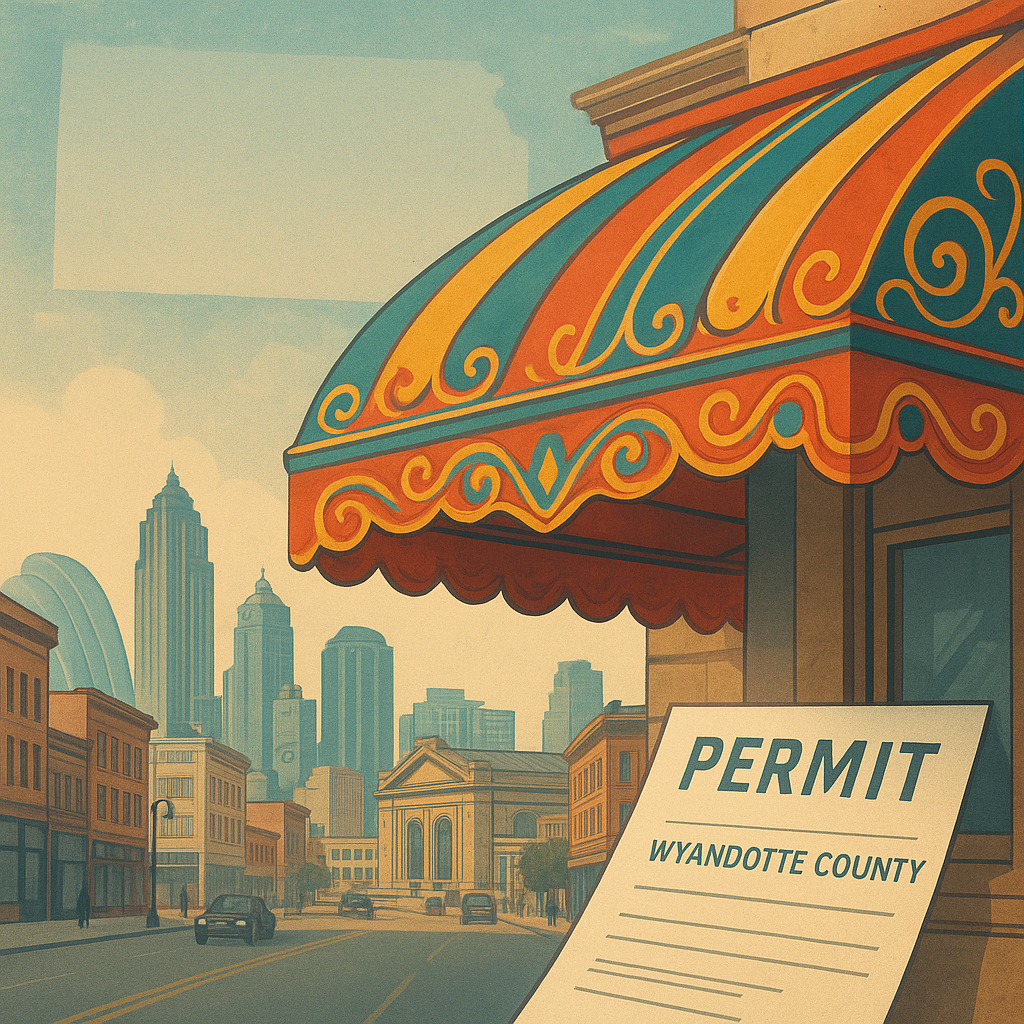
If you’re planning to install awnings on your business or home in Kansas City, Kansas, you might have heard the terms “awning hanger’s bond” and “permit” tossed around. At first glance, it sounds like bureaucratic red tape—just another hoop to jump through. But what if I told you these requirements are actually designed to protect you, your property, and your investment?
In this guide, we’ll unpack everything you need to know about awning hanger’s bonds and permits in Wyandotte County, Kansas City, KS. We’ll keep things friendly, simple, and free of confusing legal jargon. By the end, you’ll feel confident navigating the local rules whether you’re a contractor or a property owner.
What Exactly Is an Awning Hanger’s Bond?
Think of an awning hanger’s bond as a safety net. It’s a type of surety bond that contractors must obtain before they can legally install awnings in certain cities, including Kansas City, Kansas. The bond acts as a financial promise. If the contractor does shoddy work, violates local building codes, or fails to complete the job as agreed, the bond can cover damages up to a certain amount.
In plain English: the bond is there to catch you if something goes wrong. It doesn’t protect the contractor—it protects you, the public, and the city itself.
Why Does Kansas City, KS Require This Bond?
Kansas City, which sits within Wyandotte County, wants to make sure any awning installation meets strict safety and quality standards. An improperly anchored awning could collapse under snow, become a wind hazard, or cause injuries. The city minimizes these risks by requiring a bond. It’s like making sure every driver has insurance before hitting the road—only here, it’s for hanging awnings.
The bond requirement is part of a broader contractor licensing system. By tying a bond to the license, the city ensures that contractors have skin in the game. If they cut corners, there are real financial consequences.
The Permit Puzzle: Do You Really Need One?
Short answer: almost certainly yes. In Kansas City, Wyandotte County, you generally need a permit before installing a new awning or making significant repairs to an existing one. Permits are the city’s way of double-checking that your project meets zoning laws, structural standards, and aesthetic guidelines (especially in historic districts).
Skipping this step isn’t just risky—it can lead to fines, forced removal of the awning, and complications when you try to sell your property. Let’s walk through the permit process so it feels less intimidating.
When Is a Permit Required?
- New Installations: Putting up an awning where one didn’t exist before? You’ll need a permit.
- Replacement: Swapping out an old awning for a new one of a different size or style triggers the permit requirement.
- Structural Changes: If your project involves altering the building’s facade or extending the awning’s reach, that’s a permit-worthy event.
- Historic Properties: Extra layers of review kick in. Awnings on historic buildings must often match the era’s look, so plan for additional approval steps.
A good rule of thumb: when in doubt, ask the city’s planning department. It’s way better to spend ten minutes on a phone call than to face a stop-work order later.
How to Secure Your Awning Hanger’s Bond in Kansas City, KS
If you’re a contractor, obtaining the bond is a critical step before you can pull permits and start work. The process isn’t overly complicated, but you need to know where to go.
Step-by-Step Bonding Process
- Find a Reputable Surety Company: Many insurance agencies specialize in contractor bonds. Look for one familiar with Kansas City, KS requirements.
- Complete an Application: You’ll provide basic business information, financial history, and the bond amount you need.
- Undergo a Quick Credit Check: Surety companies assess your financial stability. Strong credit often means a lower premium. Even with less-than-perfect credit, options exist—don’t panic.
- Pay the Premium: The cost is usually a small percentage of the total bond amount. For a $10,000 bond, you might pay between $100 and $300 annually, depending on your qualifications.
- Receive Your Bond Certificate: This document is what you’ll file with the city as part of your licensing or permit packet.
One common question: “Is the bond the same as insurance?” Not exactly. Insurance protects you. A bond protects the public. If a claim is paid out on your bond, you’ll need to repay the surety company. So it’s more like a line of credit that only kicks in when things go south.
Navigating the Permit Application in Wyandotte County
Now let’s get practical. You’ve got your bond in hand (if you’re the contractor) or you’ve hired a bonded professional (if you’re the property owner). Here’s what the permit journey typically looks like in Kansas City, Kansas.
Gather Your Documents
You’ll want a crisp set of plans that show the awning’s dimensions, materials, how it attaches to the building, and its distance from property lines. Also have your contractor’s license number, bond certificate, and any required property owner authorization.
Visit or Contact the Unified Government’s Building Department
Kansas City, KS operates under the Unified Government of Wyandotte County and Kansas City, Kansas. The Neighborhood and Community Services Department usually handles building permits. You can often start the process online, but some projects may require an in-person visit to the permit desk at City Hall.
Pro tip: Bring photos of the existing storefront or building. It helps plan reviewers understand the context immediately, which can speed things up.
Expect a Review Period
Simple awning projects might get approved within a few business days. More complex ones, or those in historic overlay zones, could take a couple of weeks. During review, the city checks for compliance with:
- Building codes (wind load, fire safety, structural anchoring)
- Zoning regulations (setbacks, signage rules—some awnings are considered signs)
- Design standards (especially downtown or in designated corridors)
Pay the Fees and Get Your Permit
Fees vary based on the project’s valuation. A small residential window awning might cost under $50 in permit fees; a large commercial storefront awning could run several hundred dollars. Once you pay, you’ll get your permit placard. Display it prominently—inspectors will look for it.
Common Pitfalls and How to Avoid Them
Even seasoned contractors can stumble. Learn from these real-world missteps so your project stays on track.
Pitfall #1: Confusing the Bond with General Liability Insurance. A bond doesn’t protect you from on-the-job injuries or accidental damage to the building next door. You’ll need separate insurance for that. The city checks both, so don’t skimp.
Pitfall #2: Ignoring Sign Ordinances. In Kansas City, KS, an awning that features a business name or logo might be regulated as signage. That means additional restrictions on size and placement. Always clarify whether your awning is purely functional or serves as advertising.
Pitfall #3: Assuming a Permit Isn’t Needed for Repairs. Recovering an existing frame with new fabric usually triggers a permit. Structural repairs demand one too. The only exception is minor maintenance like cleaning or repainting that doesn’t alter dimensions.
Pitfall #4: Forgetting the Final Inspection. Once the awning is up, you’re not quite done. You need to call for an inspection so the city can verify the work matches the approved plans. Skipping this leaves your permit open and could cause headaches later.
Why All This Matters to You—The Property Owner
Maybe you’re not installing awnings yourself; you’re hiring a contractor. Does this bond and permit stuff affect you? Absolutely. Here’s how.
Imagine a contractor talks you into a cut-rate deal, promising they’ll “handle the city stuff” but never actually pulls a permit. A few months later, a windstorm rips the awning off your building, damaging a neighbor’s car. Without a permit, your insurance might deny the claim because the installation was never code-approved. Without a contractor’s bond, you’re left holding the entire bill. That’s a nightmare you can avoid by simply verifying that your contractor carries a valid awning hanger’s bond and secures the proper permits before work begins.
Ask to see the bond certificate and permit paperwork. It’s not rude—it’s smart. Most reputable contractors will be happy to show you. If they get defensive, consider it a red flag.
Does Every City in Kansas Require This?
Rules differ from town to town. While Kansas City, KS (Wyandotte County) has specific bonding and permitting requirements, a smaller suburb 20 minutes away might have a simpler process. Always check with the local jurisdiction. The Unified Government website is a treasure trove of up-to-date information, including fee schedules and downloadable forms.
If you work across multiple counties, stay organized. Keep your bonding records current and note that bond amounts can vary by city. Something that satisfies Kansas City, MO won’t automatically fulfill the Kansas City, KS requirements—they’re different municipalities.
What’s Next? Your Action Plan
Ready to move forward? Here’s a simple checklist to keep you on the straight and narrow.
- Research local code: Look up the Unified Government’s current building codes for awning installations.
- Hire right: Choose a contractor who is licensed, bonded, and insured specifically for awning work.
- Verify the bond: Ask for the bond number and confirm it’s active. You can often cross-check with the city.
- Apply for the permit early: Don’t wait until the crew is ready to start. Pad your timeline by at least two weeks.
- Schedule that final inspection: Once the job is done, close the loop. It protects your investment and keeps you legal.
Dealing with bonds and permits may not be the most thrilling part of your day, but it’s the foundation of a successful awning project. Think of it as an investment in peace of mind—one that keeps you, your building, and the neighborhood safe and attractive.
Kansas City, Wyandotte County, is a place where neighborhoods hum with character and local businesses thrive. A well-installed awning adds charm, cuts energy costs, and welcomes visitors. By following the rules, you help preserve that character and avoid costly surprises. And really, that’s something worth smiling about under your brand-new awning.