Littleton, Colorado contractors working on public streets, sidewalks, or other right-of-way projects must secure a specific bond to ensure work is completed safely and correctly. This financial guarantee protects the city from costs if a contractor fails to properly restore infrastructure, making it essential for excavation, concrete, paving, and general contractors.
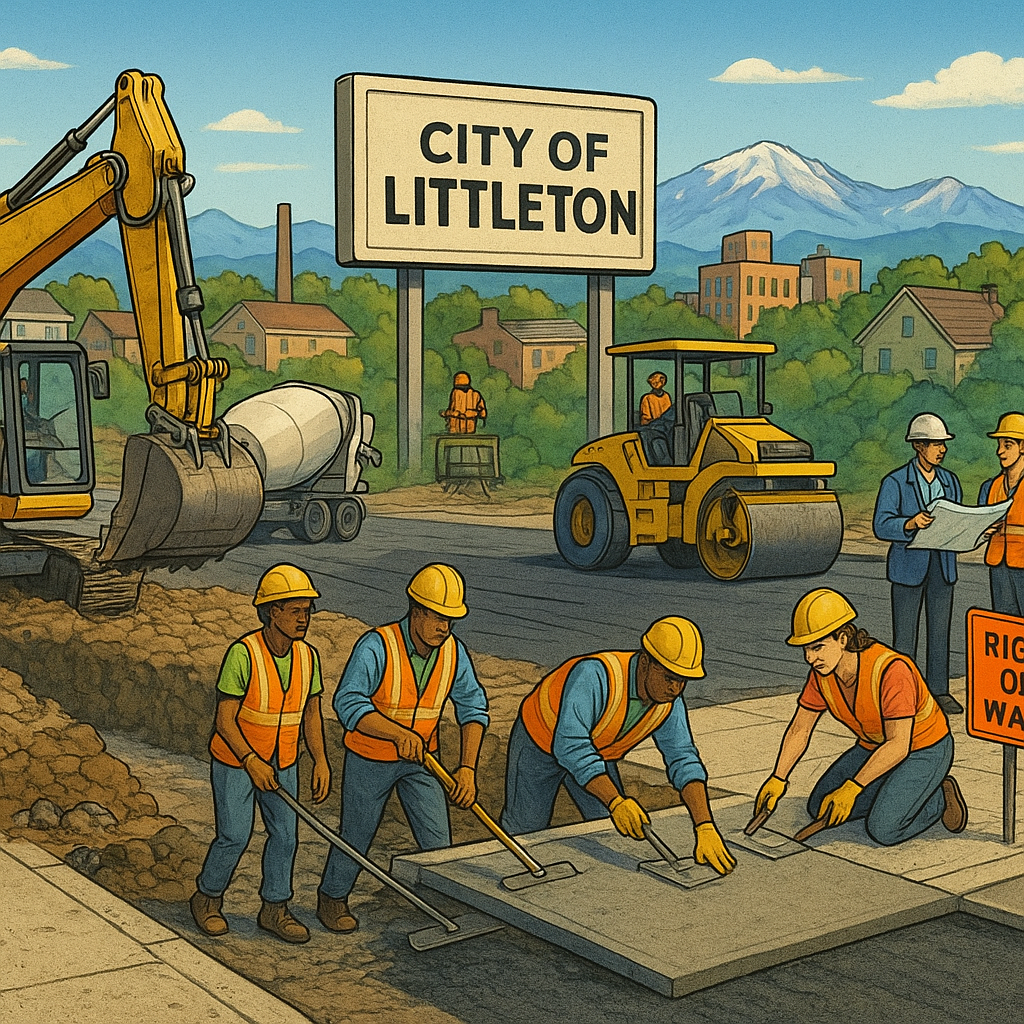
If you’ve ever driven through a construction zone in Littleton, Colorado, you’ve probably noticed crews digging up streets, pouring fresh concrete, or laying down smooth new asphalt. Behind all that work is a whole lot of planning, permits — and often, a specific type of financial guarantee called a Right of Way, Street Excavation, Concrete, Paving, or General Contractor Bond. If you’re a contractor looking to take on these projects, this bond isn’t just another piece of red tape. It’s your ticket to doing business with the City of Littleton, and understanding it can save you time, money, and a few headaches along the way.
What Exactly Is a Right of Way and Street Excavation Bond?
Think of this bond as a three-way promise. You have the contractor (that’s you), the City of Littleton (the obligee), and a surety company (the bond provider). The bond says: “If this contractor digs up a public street or sidewalk and doesn’t put it back the right way, the city has a financial cushion to fix it.” In simpler terms, it’s like a security deposit for the city’s infrastructure. You don’t pay the full bond amount upfront — instead, you pay a small premium, and the surety backs the promise.
Whether the project involves street excavation, concrete work, paving, or general contracting that touches the public right-of-way, the city wants to know the work will be done correctly and safely. A bond ensures that if something goes wrong — like a shoddy patch job, an unsafe trench, or incomplete restoration — Littleton taxpayers aren’t stuck footing the bill.
Who Needs This Bond in Littleton, CO?
Not every contractor needs this bond, but if your work takes you into the public right-of-way, you almost certainly do. The public right-of-way includes streets, alleys, sidewalks, curbs, gutters, and sometimes even the strip of grass between the sidewalk and the curb. Here are a few examples of who typically needs to secure a Right of Way, Street Excavation, Concrete, Paving, or General Contractor Bond in Littleton:
- Street excavation contractors — cutting into asphalt to install or repair water lines, sewer connections, gas pipes, or underground utilities.
- Concrete contractors — replacing damaged sidewalks, building new curbs and gutters, or pouring driveway approaches that connect to a public street.
- Paving companies — resurfacing roads, patching potholes, or doing full-depth reclamation on city streets.
- General contractors — managing larger projects where any part of the work extends into or impacts the right-of-way, even if subcontractors handle the digging.
If you’re not sure whether your specific job requires a bond, the City of Littleton’s Public Works or Engineering Department can give you the definitive answer. It’s much better to ask early than to have your permit held up later.
How Does the City of Littleton Use These Bonds?
You might wonder why a simple permit isn’t enough. Permits set the rules, but a bond enforces them financially. The city issues permits for work in the right-of-way with the understanding that the contractor will follow all specifications — things like proper compaction, correct concrete mix, smooth asphalt transitions, and timely restoration of the site. If the contractor cuts corners or walks away before finishing, the bond covers the city’s cost to hire someone else to make it right.
This isn’t just a Littleton thing. Most Colorado municipalities have similar requirements, but Littleton has its own specific bond forms and amounts. Skipping this step could lead to a stop-work order, fines, or even losing your contracting license. So while it might feel like just another checkbox, it’s actually a core part of doing business professionally and responsibly.
Bond Amounts and What They Mean
Bond amounts vary depending on the type and scale of work. In some cases, the city requires a flat minimum bond — often anywhere from $5,000 to $25,000 or more. Larger projects might need a higher bond to match the potential restoration cost. The important thing to remember is that the bond amount isn’t what you pay. If the required bond is $10,000, you’ll only pay a small percentage of that as an annual premium, usually somewhere between 1% and 5%. Your exact rate depends on your credit score, business experience, and the surety company’s underwriting guidelines. Good credit could get you a premium as low as $100 for a $10,000 bond.
What Are the Key Requirements from the City of Littleton?
Littleton keeps the process straightforward, but you do need to have your ducks in a row. While exact details can shift, here’s generally what the city looks for:
- Valid business license — You must be licensed to operate as a contractor in Littleton. If you’re already licensed, great. If not, handle that first.
- Right of way permit application — Before work begins, you’ll apply for a permit specific to the street excavation, concrete, or paving project. The bond is typically required as part of that application.
- Completed bond form — Littleton often requires the bond to be on a city-specific form. This means a generic bond certificate may not be accepted. Work with a surety agent who knows Littleton’s requirements.
- Proof of insurance — The city will also want to see liability insurance and workers’ compensation coverage. The bond doesn’t replace insurance; they serve different purposes.
- Duration of the bond — The bond usually needs to stay in effect for the entire length of the project plus a warranty period (often one or two years after completion). If you let the bond lapse, your permit could be revoked.
Getting these pieces right the first time avoids back-and-forth with the city and helps you start digging — literally — sooner.
How Much Does a Littleton Right of Way Bond Cost?
This is where many contractors breathe a sigh of relief. The cost to you is only a fraction of the total bond amount. If the city requires a $15,000 Street Excavation Bond, you’re looking at paying somewhere between $150 and $750 per year, depending heavily on your personal credit and business financials. Contractors with strong credit and a solid track record typically get the best rates. Even if your credit isn’t perfect, specialized surety programs can help you get bonded, sometimes with a slightly higher premium.
Why does credit matter? The surety company is essentially vouching for you. They want reassurance that you’ll finish the job and make any needed corrections, so they look at your financial responsibility. The good news is that many bond agencies can quote you in minutes, so you’ll know the exact cost before you commit.
Simple Steps to Get Your Bond Fast
No one wants to wade through pages of fine print. Here’s a streamlined path to get your Littleton bond in hand:
1. Confirm the exact bond type and amount. Call the City of Littleton’s engineering or public works division and ask, “What bond do I need for this specific job?” They’ll tell you whether it’s a Right of Way Bond, Street Excavation Bond, or a General Contractor Bond, and the required dollar figure.
2. Gather your business and personal info. You’ll need your business name, address, license number, and sometimes your social security number for a credit check. The more organized you are, the quicker the quote.
3. Shop with a surety bond specialist. Not all insurance agents handle these niche bonds. Look for a surety company or broker who writes Colorado contractor bonds regularly, especially those familiar with Littleton’s specific forms.
4. Complete the application and pay the premium. Once approved, you’ll get a bond document. Double-check that it matches the city’s requirements exactly — correct names, amount, and signature lines.
5. File the bond with the city. Submit the original signed bond along with your permit application. Keep a copy for your records. The city may return it or mark it as satisfied once the warranty period ends.
In many cases, the whole process from quote to signed bond can happen the same day, especially if you use an agency that offers electronic documents.
Common Pitfalls and How to Dodge Them
Even experienced contractors stumble over a few things. Here’s how to steer clear:
- Using a generic bond form. Littleton can be particular. If your bond isn’t on the city’s preferred form, it may be rejected outright. Always confirm form requirements upfront.
- Letting the bond expire too soon. Remember the warranty period. If you cancel the bond the day you finish paving, and six months later a settlement crack appears, the city wants that bond still active. Check the required maintenance or warranty bond duration.
- Confusing the bond with insurance. The bond protects the city, not you. Your general liability policy covers accidents or damage to third parties, but the bond ensures contract performance specifically for the right-of-way restoration.
- Waiting until the last minute. Permits can’t be issued without the bond. Starting the bond application a few days before you plan to break ground keeps your schedule on track.
Why This Bond Is Actually Good for Your Business
It’s easy to see the bond as just another expense, but it’s also a signal of professionalism. When you show up with a valid Littleton Right of Way Bond, you’re telling the city, “I stand behind my work.” It can set you apart from less established competitors and build trust with local officials. Over time, that trust can lead to smoother permit processes and even referrals for public or private projects. Plus, bonded contractors often find it easier to secure larger jobs because the bonding infrastructure is already in place.
Real-Life Example: A Day in the Life of a Paving Contractor
Let’s paint a quick picture. Imagine you’re a paving contractor hired to replace a section of residential street in Littleton. You’ve got your crew, your equipment, and a tight deadline. Before you can mill off the old asphalt, you go to the city with your permit paperwork and your $25,000 Street Excavation Bond already signed. The city reviews everything, issues the permit, and you start work. Midway through, a surprise thunderstorm washes out part of the new base you just installed. You recompact and fix it right away — because you know the bond requires you to deliver a durable finished product. Once the job passes inspection, the bond stays in place for the two-year warranty period. If any potholes appear during that time, you’re on the hook to repair them, and the bond backs that promise. No drama, no unexpected bills for the city. That’s how a bonding requirement does its job quietly in the background.
Is a Littleton Concrete or Paving Bond Different from Other Bonds?
Yes, it’s a specific type of license and permit bond, tied directly to the work being done in the public way. It’s not the same as a general contractor license bond that the state might require. It’s also not a bid bond or a performance bond for a specific project owner — though sometimes a larger project might need those too. The City of Littleton Right of Way Bond is all about restoring the public space to city standards. Even if your work involves concrete flatwork, curb and gutter, or asphalt paving, the bond umbrella covers you as long as the city’s right-of-way is part of the job.
Wrapping It All Up
Getting a Littleton CO Street Excavation, Concrete, Paving, or General Contractor Bond doesn’t have to be confusing. Once you know the amount you need, team up with a surety expert, and stay on top of city forms, you’ll be cleared to work in no time. Remember to keep the bond active through the warranty period, and you’ll build a reputation as a contractor who does things by the book.
Ready to dig in? Reach out to the City of Littleton for your specific project requirements, then contact a surety bond provider who understands Colorado municipal bonds. With the right bond in place, you can focus on what you do best — building safe, long-lasting streets and sidewalks the community can count on.