Obtaining an auto salvage license in Omaha requires verifying your site is properly zoned for vehicle dismantling and securing a salvage dealers license bond before the city will issue approval.
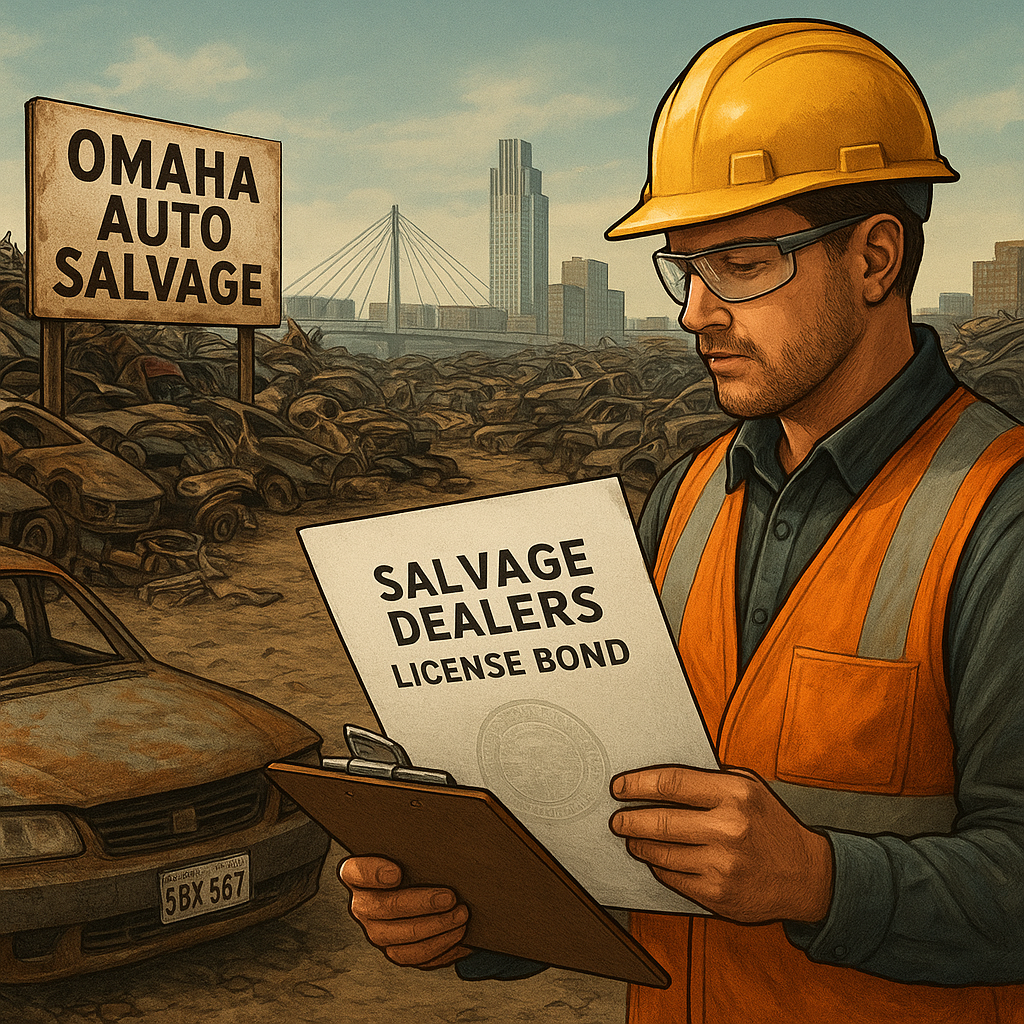
Your Roadmap to an Auto Salvage License in Omaha
Have you ever looked at a rusty, abandoned car and seen dollar signs instead of scrap metal? If that sounds like you, you might be ready to dive into the auto salvage business. Maybe you already have a piece of land on the edge of town, or you’ve spent years tinkering with old engines and know which parts are worth their weight in gold. Before you can start buying those end-of-life vehicles and selling usable components, there’s one box you absolutely must check. You need an auto salvage license issued by the City of Omaha, Nebraska. It’s not a bureaucratic maze designed to frustrate you—it’s a clear set of steps that, once you understand them, is totally manageable.
This guide breaks everything down into bite-sized pieces. We’re skipping the confusing legal jargon. Think of this as a friendly chat over coffee where you learn exactly what the city requires, why a little thing called a salvage dealers license bond matters so much, and how to glide through the process without pulling your hair out.
Why Omaha Takes Auto Salvage Licensing Seriously
Omaha is a vibrant city, and like any thriving community, it balances business opportunity with neighborhood safety. When you run a salvage yard, you’re dealing with vehicles that may leak fluids, attract pests, or become an eyesore if not handled responsibly. The licensing process isn’t there to stop you from earning a living. It exists to make sure everyone plays by the same rules, keeping the environment clean and the public protected.
Imagine a salvage yard without any oversight. Cars piled high, oil seeping into the ground, and no record of where vehicles came from. That’s a nightmare for the community and a headache for honest operators like you. A license tells the city, your customers, and the neighborhood that you’re a legitimate business owner who meets a professional standard. It’s a badge of trust.
Step-by-Step Guide to Securing Your Omaha Salvage License
Let’s get practical. You don’t need a law degree to navigate this; you just need to follow the sequence. Here’s how the journey typically unfolds.
1. Nail Down Your Location and Zoning
Before any paperwork crosses a counter, you must confirm your proposed business site is properly zoned. The City of Omaha’s Planning Department is your first stop. Not every industrial or commercial lot automatically permits vehicle dismantling and storage. You’ll need to check the specific zoning designation—often heavy industrial or a special use permit. Think of zoning like a neighborhood agreement: certain areas are reserved for quiet homes, others for factories, and some for businesses like yours. If your land isn’t zoned correctly, no license will be issued, no matter how perfect your application looks. Talk to a city planner early. They can tell you if your spot is good to go, or if you need to apply for a variance or conditional use permit.
2. Gather Your Business Paperwork
Treat this part like putting together a puzzle. You’ll need a few foundational documents. Start with your business registration. If you’re a sole proprietor, that might be a simple trade name filing. An LLC or corporation will need a Nebraska Certificate of Organization. You’ll also need a federal Employer Identification Number (EIN) from the IRS. Even if you don’t have employees yet, the city often wants to see that number. Next, check on your sales tax permit from the Nebraska Department of Revenue. Salvage yards sell parts, and the state wants to make sure you’ll collect and remit sales tax properly.
3. Understand and Secure the Salvage Dealers License Bond
Now we arrive at a piece that trips up many first-time applicants: the City of Omaha NE Salvage Dealers License Bond. Don’t let the name scare you. A bond is simply a promise wrapped in a financial safety net. The city requires this bond to protect itself and the public from any unlawful or unethical actions by a salvage dealer. If you fail to follow the rules—like buying a stolen vehicle and dismantling it without proper records—the bond can pay out a claim to the injured party. Only then would you owe the bonding company back.
How much bond do you need? The city sets the amount. Commonly, it’s in the range of $10,000, but always verify the current requirement with the City Clerk’s office or the finance department. You don’t pay that full amount out of pocket. Instead, you pay a small yearly premium, often between 1% and 5% of the bond total, depending on your credit score and financial history. So if the bond is $10,000 and your premium rate is 2%, you might pay just $200 a year. It’s an affordable way to satisfy a major licensing hurdle.
To get a bond, you work with a surety bond company or an agency that specializes in license bonds. They’ll ask for a quick application and run a soft credit check. Most people qualify easily. You’ll receive a bond document that you file with your license application.
4. Complete the Official License Application
With your bond ready and business documents in hand, head to the City of Omaha’s licensing division. You’ll fill out the specific application for an auto salvage dealer. Be prepared to list your business name, physical address, ownership structure, and your Nebraska driver’s license or state ID number. The form may ask for a detailed description of your operation—what you’ll buy, how you’ll store vehicles, and your business hours. Answer honestly and completely. Omissions only cause delays.
5. Prepare for Inspections and Fees
Once your application and bond are submitted, the city will likely schedule an inspection of your premises. An inspector wants to see that your yard is secure, with fencing of the proper height, and that you have adequate measures to prevent environmental contamination like a concrete pad or spill containment for fluids. They’ll check that you’re not blocking public sidewalks and that vehicles are stored in an orderly fashion. This isn’t a white-glove test, but it isn’t a rubber stamp either. Walk your property a few days ahead of time and fix obvious issues—loose fence boards, weeds, trash piles. A clean, well-organized yard makes a great impression.
You’ll also pay the license fee, which is separate from your bond premium. Fees vary and are typically an annual cost. Ask for a fee schedule so you know the exact amount.
6. Receive Your License and Maintain Compliance
After passing the inspection and having all documents approved, you’ll get your auto salvage license. Frame that thing—it represents your hard work. But remember, this isn’t a one-and-done deal. You’ll renew your license every year, which means keeping your bond active and your yard up to code. Don’t let your bond lapse. If it cancels, the city will suspend your license faster than a Nebraska thunderstorm rolls in.
Why the Bond Is Your Silent Business Partner
We touched on the City of Omaha NE Salvage Dealers License Bond earlier, but it deserves its own spotlight because many people misunderstand it. A license bond is not insurance for your business. It doesn’t protect your tools, your building, or your vehicles. It’s a consumer protection mechanism. Let’s use an analogy. Pretend the bond is a special savings account that the city can tap into if you break the law. You never touch the money. The bonding company just guarantees that the funds exist. If a claim is made and found valid, the surety pays out, and then you reimburse the surety every penny. So it keeps you honest because you don’t want to deal with a claim and repayment.
For someone selling parts, this bond tells your suppliers—like tow companies and insurance auction houses—that you’re a credible buyer. They know you’ve met city standards. It’s a competitive edge you might not have considered.
Common Questions Popping Into Your Head Right Now
How long does the whole process take? If your location is already zoned correctly and you have your bond in hand, the application review and inspection can wrap up in a few weeks. Zoning changes, though, can add months. Start the zoning conversation tomorrow.
What if my credit isn’t perfect? Bond premiums are higher for lower credit scores, but you can almost always get bonded. Some agencies specialize in working with less-than-perfect credit. You might pay a slightly higher percentage, but the door doesn’t slam shut. The bond is based on the overall risk picture, not just one number.
Can I run my salvage business from home? In most cases, no. Residential zoning in Omaha does not permit auto salvage operations. You’ll need commercially zoned industrial land. There are rare exceptions for very limited, non-visible operations, but don’t count on that. Always plan for a commercial space.
Making the Process Painless: A Few Quick Tips
Nobody enjoys paperwork, but a little organization goes a long way. Create a folder, either physical or digital, and label it “Omaha Salvage License.” Inside, keep copies of your bond, zoning approval, business registration, EIN letter, and application. When the city calls with a question, you’ll have the answer at your fingertips instead of fumbling through a drawer.
Call the city’s licensing office directly instead of relying solely on the website. Regulations can change, and speaking to a real person often reveals tiny details—like a recently updated bond form or a required notarization—that a generic webpage might miss. Write down the name of the person you spoke with. It builds rapport and makes follow-up smoother.
Finally, view the bond requirement as a benefit, not a burden. It’s the city’s way of saying, “We’re willing to trust you, and we want you to succeed, as long as you follow the rules.” Thousands of businesses in Omaha carry similar surety bonds every single day. You’re joining a community of legitimate professionals.
Your Next Moves
You’re now armed with the knowledge to move forward confidently. Start by verifying your zoning. Reach out to a surety bond provider to get a no-obligation quote on that all-important salvage dealers license bond. Then gather your business documents and reach out to the City of Omaha NE licensing team. Each small step you take brings a stack of old cars closer to becoming a real, profitable salvage operation. The road to a license isn’t a dead end. It’s a well-marked path that leads straight to doing what you love, legally and successfully, right here in Omaha.