Lincoln is using a public space bond to transform its streets from purely vehicular corridors into vibrant community gathering places with wider sidewalks, green spaces, and safer pedestrian infrastructure. This funding approach aims to shift the city's mindset toward prioritizing people, health, and social connection over traditional car-centric design.
Have you ever walked down a street and felt like something was missing? Maybe the sidewalks were too narrow, there wasn’t a single bench to rest on, or the traffic noise made it impossible to enjoy a conversation. Cities everywhere are asking the same question: How do we turn lifeless asphalt into places where people actually want to be? Lincoln, Nebraska, is answering that question with an exciting tool called a public space bond. It’s a financial engine that helps reshape streets into vibrant, welcoming gathering spots. But what does that really mean for you, your family, and your daily routine? Let’s unpack it together, in plain, everyday language.
What Is a Public Space Bond, and Why Does Lincoln Need One?
Think of a public space bond as a community savings account with a specific goal. Instead of setting aside money for a rainy day, the city asks voters for permission to borrow money upfront. That pile of cash is then poured into projects that breathe new life into streets, plazas, and parks. The city pays it back over time, much like you would a home mortgage. The “bond” part simply means it’s a promise to repay, with interest.
Lincoln isn’t alone in using bonds for everyday upgrades. But the way the City of Lincoln, NE focuses its public space bond on blending streets with social life is what makes the approach special. Traditionally, streets were seen as one-trick ponies: they moved cars from point A to point B. That old-school thinking left us with barren stretches of concrete that nobody lingered on. Lincoln’s vision, however, treats streets as the front porch of the city. They become extended living rooms where neighbors meet, kids play, and local businesses thrive.
From Gray to Green: The Use of Streets as Public Space
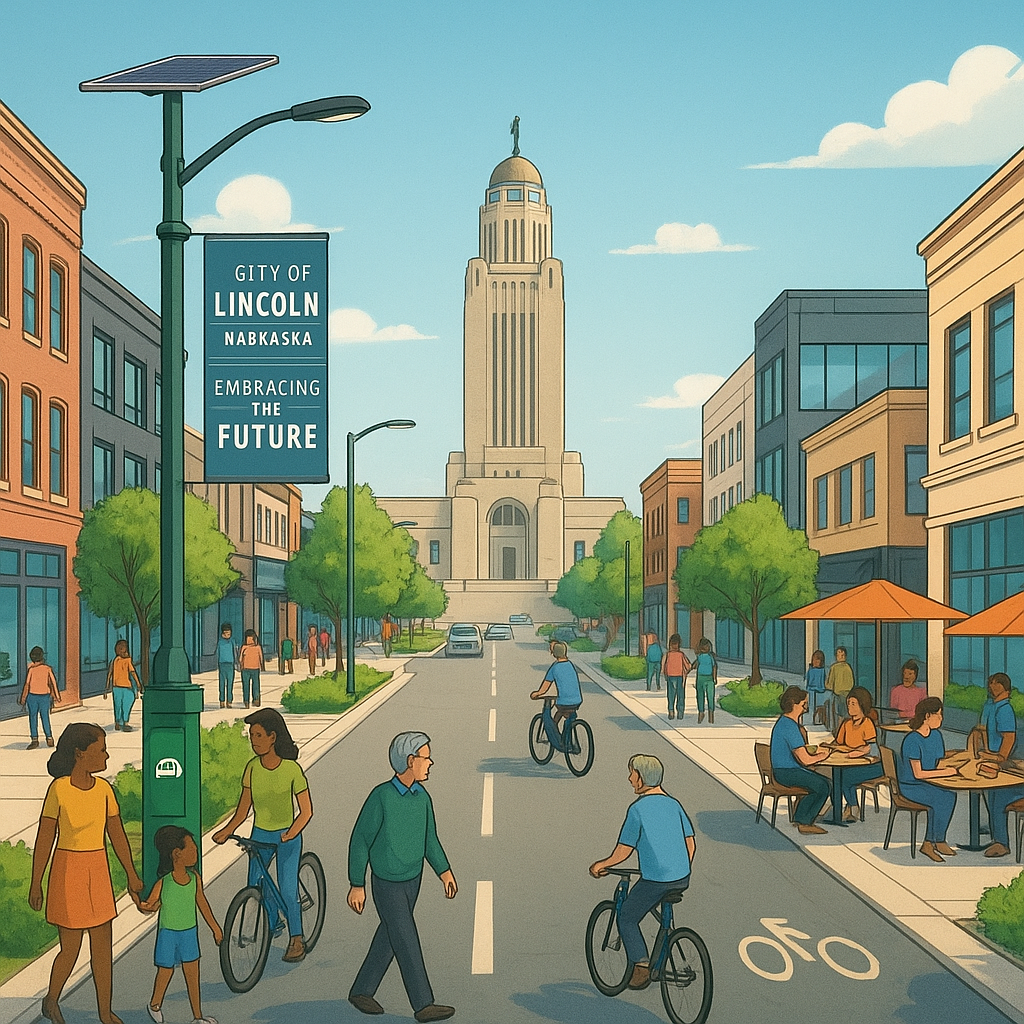
When we talk about the use of streets in Lincoln, we’re really talking about a huge mindset shift. Picture a classic arterial road. Now picture that same corridor with wider sidewalks, colorful planters, bike lanes protected by curbs, and trees forming a leafy canopy. That’s the transformation a public space bond can fund. The pavement doesn’t disappear—it gets a soul.
You might be wondering, “Does changing a street really make that big of a difference?” Absolutely. Small tweaks create a ripple effect. Imagine you’re pushing a stroller. On a narrow, cracked sidewalk right next to speeding cars, you’d feel tense and hurried. On a wide promenade separated from traffic by a row of shrubs, you’d slow down, breathe easier, and maybe even stop for a coffee. That’s the magic of prioritizing people over vehicles. Lincoln’s use of streets becomes a tool for health, safety, and connection, not just transportation.
More Than Just Asphalt: The Bonds Behind the Beauty
A public space bond does the heavy lifting that a regular annual budget often can’t handle. Think of it this way: your city’s yearly budget is like your weekly grocery money. It covers the essentials—filling potholes, trimming trees, keeping the lights on. But what about that big dream renovation you’ve been wanting? The bond is the home equity loan that lets you build the deck, remodel the kitchen, and finally plant that garden, all at once. For the City of Lincoln, NE, these bonds cover the substantial upfront costs of tearing up old streetscapes and building something visionary.
These projects don’t just look pretty; they are carefully engineered. They might include stormwater gardens that soak up rain to reduce flooding, permeable pavers that let water seep into the ground, and smart lighting that improves safety. This multi-functional approach is a hallmark of Lincoln’s public space revitalization. Every dollar from the bond stretches further because it solves several problems at the same time.
How Revitalization Fuels a Vibrant Community
A vibrant community isn’t built by accident. It’s nurtured through intentional design. When Lincoln invests in its public spaces, it sends a clear message: this is a place where you belong. Have you ever noticed how some streets feel alive at all hours while others feel deserted? The lively ones usually have three things: a reason to be there, comfortable places to stay, and a feeling of safety. Let’s look at how a public space bond delivers all three.
- A reason to visit. Public art installations, splash pads for kids, and flexible spaces for weekend farmers’ markets turn a simple route into a destination.
- Comfortable stays. Benches placed in the shade, public restrooms, and tables invite you to sit and watch the world go by. You aren’t just passing through; you’re hanging out.
- Eyes on the street. More people walking and sitting means more natural surveillance. A busy, well-loved public space is almost always a safer space.
For a city like Lincoln, Nebraska, cold winters and hot summers also demand smart design. A bond project might add heated pavements in a plaza to melt snow or plant deciduous trees that provide shade in August but let sunlight through in February. These thoughtful touches keep the city bustling all year round.
Connecting the Dots: Lincoln City NE Use of Public Space Bond in Action
Let’s ground this concept with a relatable scene. Imagine a downtown street that was once a five-lane speedway. Drivers floored it to make the next green light, and pedestrians felt like intruders. Through a bond, the City of Lincoln, NE reimagines that space. They might reduce car lanes, widen the sidewalks, and add a protected two-way bike path. Outdoor dining patios spill out from restaurants. The speed limit drops naturally because the visual environment tells drivers to slow down.
This isn’t about declaring war on cars; it’s about creating a fair balance. Emergency vehicles still need clear access, deliveries happen smoothly, and you can still drive there. But the design makes it clear that a street is a shared asset, not a private racetrack. The Lincoln City NE Use of Public Space Bond process ensures that these projects are not top-down decrees. The best revitalizations are shaped by the very people who will use them. Community meetings, online surveys, and pop-up demonstrations let residents test ideas before concrete is poured. This turns a financial tool into a true tool of democracy.
Small Changes, Big Economic Impact
It’s easy to talk about the fuzzy feeling of community, but what about your wallet? Well-maintained, attractive public spaces are incredible economic engines. When a street becomes a pleasant place to stroll, foot traffic skyrockets. Local retailers, coffee shops, and bookstores suddenly have a captive audience that isn’t whizzing by at 40 miles per hour. Property values near revitalized corridors often see a steady increase, reflecting the high demand for walkable neighborhoods. The public space bond, in a way, pays dividends back to the entire community through a stronger tax base and a more resilient local economy.
Addressing the Elephant in the Room: Is It Worth the Cost?
Whenever a city proposes a bond, the immediate question is: “How much is this going to cost me, and what do I get in return?” That’s a fair and responsible question. Bonds do involve repaying debt, and that repayment shows up in property tax calculations. However, think of it as a group investment where the benefits are shared by everyone, not just a few individuals. A single family might not be able to fund a city park, but together, through a small, shared contribution over many years, everyone gains a space for picnics and play.
The key is accountability. The City of Lincoln, NE typically places a strong emphasis on transparency, with clear timelines and budgets posted for the public to see. You can track exactly where that public space bond money is going. Is it going to that new plaza downtown? The protected intersection near the school? The tree planting initiative along the main corridor? This clarity builds trust, turning a complex financial mechanism into a straightforward community promise.
What This Means for Your Daily Life
Maybe you’re an early-morning jogger who craves a continuous trail free of car crossings. Perhaps you’re a parent hoping your teenager can safely bike to a friend’s house. Or you’re a senior who wants a shady spot to meet friends without having to buy an expensive coffee. Lincoln’s public space revitalization speaks to all of these needs. It weaves practical, everyday quality of life into the very fabric of the city.
Next time you’re out and about, pay attention to the streets you avoid. What makes them uninviting? Now, picture the opposite. That’s the heart of this transformation. The use of streets is being redefined from mere movement to meaningful moments. The public space bond is simply the key that unlocks this potential, and Lincoln, Nebraska, is showing how a vibrant community can grow directly from the pavement up. It’s a journey from gray to green, from noise to calm, and from isolation to connection—one thoughtfully designed block at a time.