Utah's Mt. Olympus Improvement District requires excavation contractors to secure a performance lateral bond, a financial guarantee that ensures proper installation and repair of underground sewer and water connections while shielding public funds from costly, substandard work.
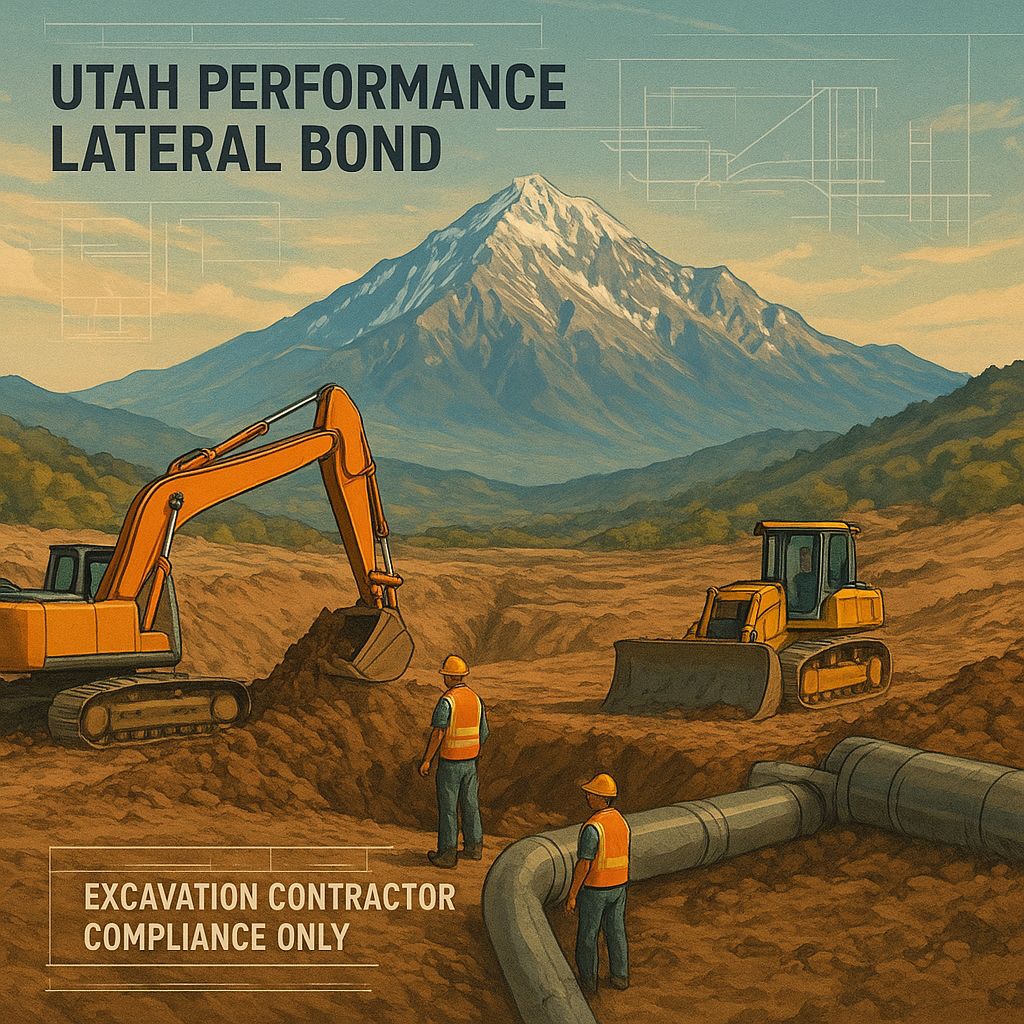
Have you ever watched a massive excavation project unfold in your neighborhood and wondered, “What guarantees are in place to make sure this job gets done right?” That’s where a special kind of financial promise steps in. For work happening within the Mt. Olympus Improvement District in Utah, the answer often comes in the form of a Utah Performance Lateral Bond. It’s not the most glamorous topic, but it’s the safety net that keeps everyone honest and protected.
If you’re an excavation contractor looking to land a project, or a property owner curious about what goes on behind the scenes, you’re in the right place. Let’s break down how contractor compliance with these bonds is quietly making a big difference in the Mt. Olympus district.
What Exactly Is a Performance Lateral Bond?
Think of a performance lateral bond as a three-way handshake between the contractor (you), the project owner (the Mt. Olympus Improvement District), and a surety company (the financial backer). It’s a guarantee that the excavation contractor will complete the job according to the project’s plans, specifications, and state regulations. If things go sideways—maybe the work is left unfinished or doesn’t meet required standards—the district can tap into that bond to get the problem fixed without draining public funds.
The word “lateral” is important here. A lateral is the underground pipe that connects a property’s plumbing to the main sewer or water line out in the street. So, a Utah Performance Lateral Bond zeroes in on the excavation and installation or repair of those specific connections. It’s a specialized promise in a world where shovels meet sensitive infrastructure.
Why the Mt. Olympus Improvement District Requires This Bond
The Mt. Olympus Improvement District is responsible for maintaining the water and sewer systems that serve a large swath of the Salt Lake Valley. When a contractor digs up a street or a front yard to replace a failing lateral line, the district wants absolute certainty that the job won’t create future problems—like a sinkhole, a backflow issue, or a pipe that collapses a year later. Nobody wants to pay for a repair twice.
Requiring an Excavation Contractor Compliance bond does a few key things right off the bat:
- Screens for serious contractors. Getting bonded requires a financial review. Fly-by-night operators rarely qualify, so the bond acts as a filter.
- Places financial responsibility. If something goes wrong, the district has a clear path to recovery without lengthy lawsuits.
- Protects public infrastructure. A single botched lateral repair can damage a main line, disrupt service for dozens of homes, and create a costly mess. The bond helps prevent that nightmare.
It’s a bit like requiring a security deposit before someone borrows your expensive tools. The district is simply being a good steward of community assets.
The “Compliance Only” Approach – What Makes It Different
You might have seen the phrase “Compliance Only” attached to this type of bond. It’s not a watered-down version—it’s a targeted one. A standard performance bond might cover everything from the excavation itself to paving restoration and landscaping. A compliance-only lateral bond, however, is laser-focused on meeting the district’s specific technical codes and lawful requirements.
So, what does that mean in real life? If your company is digging up a parking strip to replace a clay pipe with PVC, the bond guarantees that you will:
- Use the district-approved materials.
- Follow the correct burial depth and slope.
- Adhere to all safety and sediment control measures.
- Properly inspect and pressure-test the line before backfilling.
This narrow focus often makes the bond a bit easier to secure. Surety companies like clarity, and “compliance only” removes some of the guesswork about what triggers a claim. For a contractor, a Compliance Only bond can mean a smoother application and a slightly lower premium because the risk is more defined.
How Does the Process Work for an Excavation Contractor?
Let’s walk through the journey so you can see how manageable it really is. Imagine you’ve just won a bid to replace fourteen lateral connections on a quiet street under the district’s jurisdiction. Before you can start the first day of digging, you’ll need to provide a bond. Here are the typical steps:
Step 1: Get the Bond Request from the District
The Mt. Olympus Improvement District will give you the exact bond amount they require. This number is usually tied to the total project value. For a smaller lateral repair, it might be a few thousand dollars. For a larger, multi-property job, it could climb higher. Don’t guess—the district sets the figure.
Step 2: Apply Through a Bonding Agency
You’ll contact a surety bond agency that is licensed in Utah and familiar with the Mt. Olympus Improvement District’s forms. You’ll fill out a short application and share a bit about your business finances. It sounds scarier than it is. For many experienced contractors with decent credit, approval can happen the same day.
Step 3: Pay the Premium and File the Bond
You won’t pay the full bond amount upfront. You pay a small percentage, the premium, which is often between 1% and 5% of the total. Once you pay, the surety hands you the official bond document. You file that with the district, and you’re cleared to mobilize your crew.
This isn’t a recurring annual fee in most cases. It’s a one-time project obligation that stays in effect until the district formally signs off on your work.
Real Benefits for Contractors (Beyond Just Getting the Permit)
It’s tempting to see bonding as just another hurdle or expense. But smart contractors view it as a growth tool. How so?
- Builds instant trust. When you present a bond, you’re telling the district, “My business is solid enough to be backed by a large financial institution.” That trustworthiness can lead to more referrals and fewer administrative headaches.
- Prevents disputes from draining your cash. If a disagreement arises about whether you met the compliance standard, the bond provides a structured resolution. Instead of a messy, direct legal battle that could tie up your working capital, the surety company investigates and handles the claim fairly.
- Keeps your focus on the dirt work. Knowing the compliance box is checked lets you concentrate on what you do best: operating the excavator, managing your crew, and finishing on time.
What about the cost? Is it worth it? Think of the premium as an insurance policy on your reputation. One claim from a property owner complaining of a sunken sidewalk after backfill could cost thousands in repair and lost goodwill. The bond encourages you to get it right the first time—and it covers the client if something slips.
What Happens If Something Does Go Wrong?
Let’s paint a picture. You complete a lateral replacement, the district inspects it, and everything looks good. Six months later, after heavy spring rains, the ground settles dramatically, cracking the new lateral pipe. The district determines that the bedding material wasn’t compacted to code. Now what?
This is where the Utah Performance Lateral Bond activates. The district files a claim against your bond. The surety company doesn’t just write a check blindly; they investigate. If they find the claim is valid, they will pay the district up to the bond’s limit to hire another contractor to fix the issue.
And here’s the part many contractors misunderstand: the bond is not insurance for you. You are ultimately responsible to repay the surety for every penny they pay out on a valid claim. It works like a co-signing arrangement. The surety trusts you to finish the job right, but they will come to you for reimbursement if you don’t. This structure gives you a huge motivator to double-check your compaction tests and do the work exactly as specified.
Why This Matters to the Mt. Olympus Community
If you’re a homeowner in the district, you might never need to understand the bond paperwork directly. But you’ll feel its effects. These bonds directly contribute to:
- Long-lasting infrastructure. Lateral failures are messy. Bonded compliance means less chance of a sewer backup flooding your basement.
- Smooth streets. Proper excavation and backfill prevent the patches and potholes that make driving feel like an off-road adventure.
- Responsible spending. The district doesn’t need to set aside massive contingency funds for contractor defaults, keeping your water and sewer rates more stable.
Every time you see a crew working on a lateral line with a “Bonded and Insured” sign, you’re witnessing a small safeguard that protects the neighborhood’s health and property values. It’s a quiet but powerful thing.
Common Questions We Hear from Contractors
“Is this the same as my general liability insurance?”
No, and it’s a critical distinction. General liability covers things like property damage or bodily injury—say your excavator accidentally knocks over a mailbox or a bystander trips. The performance lateral bond is specifically about the project’s completion and compliance. You’ll often need both, but they serve completely different purposes. One covers accidents; the other covers broken promises.
“I’ve never needed this bond before. Why now?”
Many smaller municipalities defer to general state licensing, but improvement districts like Mt. Olympus have the authority to set their own protections. If you’re crossing into their jurisdiction for the first time, this requirement is just part of their standard rules. It’s not anything you did wrong—it’s simply how this specific district has chosen to safeguard its system.
“What if I have a perfect track record? Can I skip it?”
Your track record is impressive, and the district will undoubtedly love to see it. But the bond is non-negotiable for the project. The good news is that a stellar history and solid business finances often lead to the lowest possible bond premium. So your past successes directly lower your cost of doing business today.
Setting Yourself Up for a Smooth Bonding Experience
To make the whole process feel effortless, keep these small tips in your back pocket. First, work with a surety agent who knows the Utah excavation landscape and the specific form used by the Mt. Olympus Improvement District. Generalist agents can sometimes submit the wrong paperwork, delaying your start date.
Second, keep your business financials organized, even if you hate bookkeeping. Surety companies love seeing a decent business credit score, a balanced checkbook, and maybe a short letter from your accountant. Think of it like getting approved for a mortgage. The more proof you have that you’re financially responsible, the better your rate.
Finally, always read the bond form’s exact language before filing it. Look for any expiration dates, automatic renewal clauses, or special conditions that might trip you up. A few minutes with a highlighter can save you from a claim that happens because of a missed administrative detail.
The Bigger Picture: Strengthening Our Shared Ground
We tend to overlook what’s buried beneath our feet until something goes wrong. The combination of an Excavation Contractor Compliance mindset and a properly filed Utah Performance Lateral Bond bring a sense of order to the messy, muddy reality of underground construction. In the Mt. Olympus Improvement District, this system isn’t about creating obstacles for contractors; it’s about building a partnership where everyone—from the operator in the trench to the family eating dinner in their home—can feel confident that the job will be done right.
So, next time you see that bond document attached to a project file, don’t think of it as red tape. See it as a badge of reliability. It’s a signal that you’re playing by the rules, that the district is protecting its residents, and that the entire community is working together, pipe by pipe, to keep things flowing smoothly for decades to come.