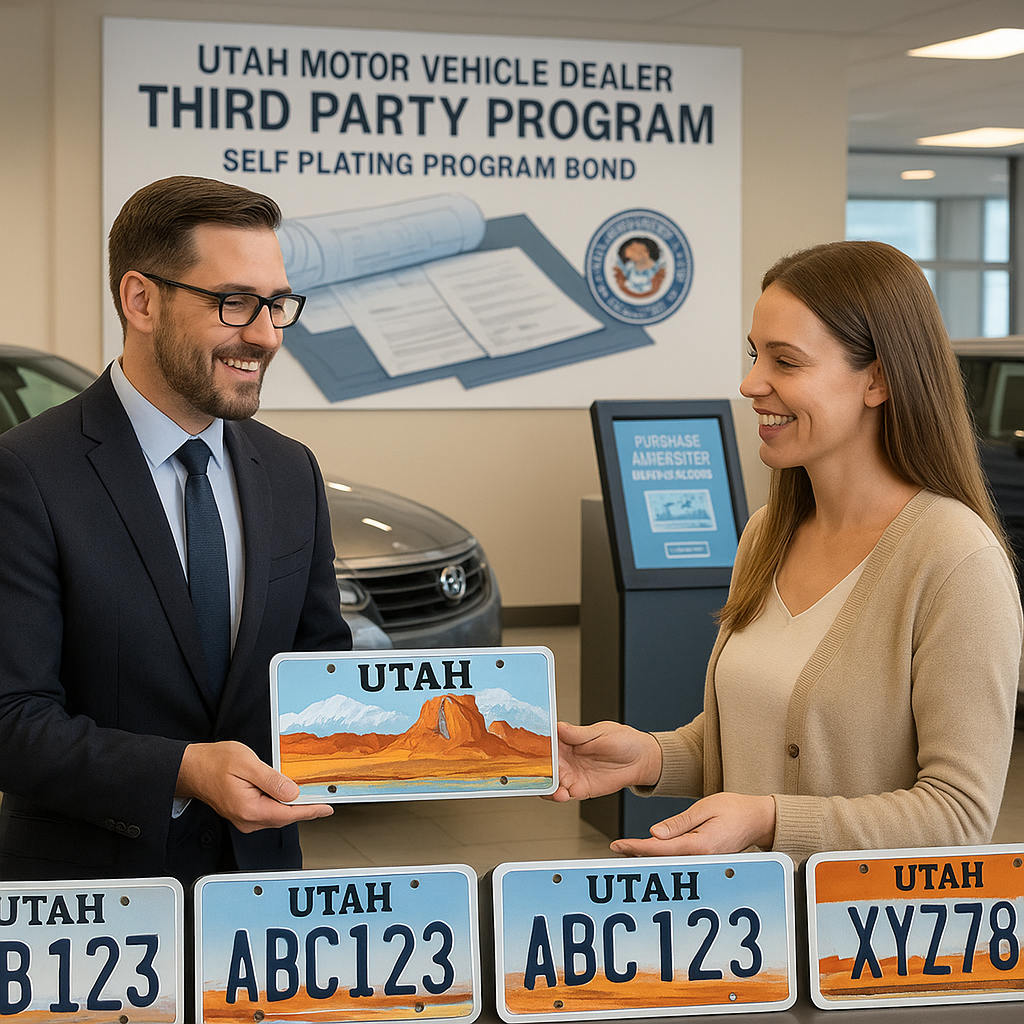
Imagine a customer walks into your dealership, falls in love with a car, and wants to drive it home today. The one thing standing between them and their new set of wheels? The license plate. In Utah, car dealers can say goodbye to sending customers to the DMV with a stack of paperwork and a prayer. A special program lets you take control of the entire process—including handing over the plates—right in your office. It’s called the Third Party Self-Plating Program, and understanding how it works could change the way you do business.
If you’re a motor vehicle dealer in the Beehive State, you’ve probably heard the term tossed around. But what exactly is it? Why does it matter for your bottom line? And what’s the deal with the bond you keep hearing about? Let’s break it all down in plain, everyday language—no legal degree required.
So, What Is the Third Party Self-Plating Program Anyway?
Think of the Utah Motor Vehicle Dealer Third Party Program as your backstage pass to the DMV’s database. Instead of being just a middleman who sells a vehicle and waves goodbye, you become an authorized extension of the Division of Motor Vehicles. You can complete title transfers, process registration, and yes, actually issue permanent license plates and temporary permits right on the spot.
It’s called “self-plating” because you’re no longer dependent on the state office to physically mail the plates or handle the registration. You manage your own inventory of license plates securely, just like a DMV branch would. The program is all about speed and convenience—for you and for your customer.
But with great power comes great responsibility. The state isn’t going to hand over the keys to its registration system without a few safeguards in place. That’s where the bond comes into the picture.
The Bond: Your Promise to Play by the Rules
Before you can enroll in the self-plating program, Utah requires you to post a UT Motor Vehicle Dealer – Third Party Program Self-Plating Program Bond. If the name feels like a mouthful, don’t worry. It’s simpler than it sounds.
A surety bond is basically a three-way promise. You, the dealer, pledge to follow all state laws and DMV regulations. The state (Utah) is the entity that requires the promise. And a third party—the bonding company—backs up that promise financially. If you break the rules, the bond steps in to make things right.
Let’s put it in relatable terms. Think of the bond like a security deposit you put down when renting an apartment. The landlord holds it, and if you cause damage, they use that deposit to cover the costs. The Self Plating Program Bond works the same way. If a dealer mishandles plate inventory, fails to submit proper fees, or commits fraud, the state can file a claim against the bond. The bonding company then pays out to cover the damages—but ultimately, you’re responsible for repaying every penny.
Why Does Utah Need This Bond?
Imagine a dealer issues a temporary plate for a car, collects the registration fees from the buyer, and then… simply never passes that money on to the DMV. The buyer drives away thinking everything is legit, but months later they discover the car was never properly registered. That’s a nightmare scenario for everyone except that dishonest dealer. The bond exists to prevent those headaches. It guarantees the state and the public won’t be left holding the bag.
For most dealers, the required bond amount is set by state regulation. You don’t need to guess. Your bonding company will help you nail down the exact figure based on the program’s current requirements. The good news? You don’t pay the full bond amount. Instead, you pay a small percentage—a premium—often based on your credit score and financial history.
How Does the Self-Plating Process Actually Work?
Let’s walk through a real-world example. Say a family buys a used SUV from your Salt Lake City lot on a busy Saturday afternoon. Without the self-plating program, you’d hand them a temporary paper tag and ask them to wait while you mail in the paperwork, or send them to a DMV office on Monday.
With the program, the experience is radically different. Here’s the streamlined version:
- Complete the sale – You finalize the purchase, just like always.
- Access the DMV’s online portal – Using secure login credentials, your authorized staff enters the vehicle and buyer information directly into the state system.
- Calculate and collect fees – The system tells you exactly what registration and title fees are due, and you collect them from the buyer.
- Grab a plate from your secure inventory – You pick a permanent metal license plate or issue a temporary permit from the stock the state provided.
- Hand the keys—and the plate—over – The customer drives away with everything legally in place. No waiting, no second trip.
This ability to offer license plate sales right at your dealership cuts down on delays and gives your customer service a huge competitive edge. Happy customers tell their friends. It’s a win-win.
What Dealers Stand to Gain (Beyond Happy Customers)
Sure, the customer convenience is the headline benefit, but the Third Party Self-Plating Program also makes your business life easier in ways you might not expect.
- Faster turnaround on deals: No more waiting for checks to clear the DMV or plates to arrive in the mail. The vehicle is legally on the road the moment it leaves your lot, so your sale is truly final.
- Reduced paperwork errors: Entering data yourself directly into the DMV database lets you catch mistakes instantly, rather than finding out two weeks later that a form was rejected.
- Professional image: You’re not just another small lot. You operate with the same authority as a large franchise dealership. Customers see you as a one-stop shop.
- Better cash flow: Because you submit fees electronically and reconcile accounts efficiently, you aren’t tying up money in float or dealing with messy refunds.
- Tighter inventory control: You manage your own plates. You know exactly what’s in stock, what’s been assigned, and what needs to be reordered.
Is the Program Right for Every Utah Dealer?
While the benefits are substantial, the program does add a layer of administrative responsibility. You’ll need to train staff on the DMV software, maintain strict security over the physical license plates, and keep impeccable records. If your dealership is a small, one-person operation, you’ll want to weigh the extra workload against the time savings.
But for most dealers—new or used, big or small—the ability to issue plates on site creates a smoother, more professional customer experience that sets you apart from competitors who still do things the old-fashioned way.
How to Get Started with the Bond and the Program
Ready to jump in? The path isn’t complicated, but you’ll want to follow these steps carefully.
Check your eligibility. You must already hold a valid Utah motor vehicle dealer license. The self-plating program is an add-on privilege, not a standalone license. Make sure your dealer license is in good standing with no major violations.
Determine your bond requirement. Contact the Utah DMV or a reputable surety bond agency. Ask specifically for the Utah Motor Vehicle Dealer Third Party Program Self Plating Program Bond. They’ll tell you the exact bond amount and help you with a quote. Bond premiums are typically a fraction of the total bond value, so don’t stress about the face amount.
Gather your paperwork. You’ll need your dealer license number, business details, and often a completed application from the bond agency. The bonding company runs a quick credit check and issues the bond quickly—sometimes in just a few hours.
File the bond with the state. Once you have the bond, you submit it to the DMV along with any other program enrollment forms. The state reviews everything and, upon approval, grants you access to the third-party system and issues your initial plate inventory.
Stay compliant. The work doesn’t stop after approval. You’ll renew the bond periodically (often annually), and you must follow every rule about plate security, fee submission, and reporting. A single violation can put your bond—and your program access—at risk.
What Happens If Something Goes Wrong?
Life happens. Maybe an employee inadvertently misplaces a license plate, or a customer claims they were charged the wrong fees. If the DMV receives a valid complaint, they may file a claim against your bond. The bonding company investigates. If the claim is justified, they pay out up to the bond’s penalty amount. But here’s the critical part: you must reimburse the bonding company for every dollar they pay out. That’s what makes a surety bond different from insurance. Insurance protects you; a bond protects the public and the state—and you’re on the hook to make the bonding company whole.
This is why treating the program with respect and training your team properly matters so much. It’s not just about a piece of paper. It’s your reputation and your financial safety on the line.
Bringing It All Together
The Utah Motor Vehicle Dealer Third Party Program Self Plating Program Bond might seem like just another regulatory hoop to jump through, but it’s actually the gateway to a better way of doing business. By securing this bond, you show the state and your customers that you’re serious about compliance, speed, and top-notch service.
Imagine never again having to tell an excited buyer, “The plate will be here in a week.” Instead, you can say, “Here are your keys—and your new plates. Enjoy your drive.” That simple shift creates loyalty and trust that competitors can only dream about.
If you’re ready to elevate your dealership and embrace the convenience of license plate sales straight from your showroom, start the conversation with a bond expert today. Learn your rate, get the paperwork in order, and unlock the full potential of the self-plating program. Your customers are waiting.