Arapahoe County requires right-of-way bonds as a financial guarantee that any project disturbing public spaces—such as sidewalks, streets, or utility strips—will be properly restored. This requirement protects taxpayers and community infrastructure by ensuring contractors or property owners cover repair costs if work is left incomplete or damaged.
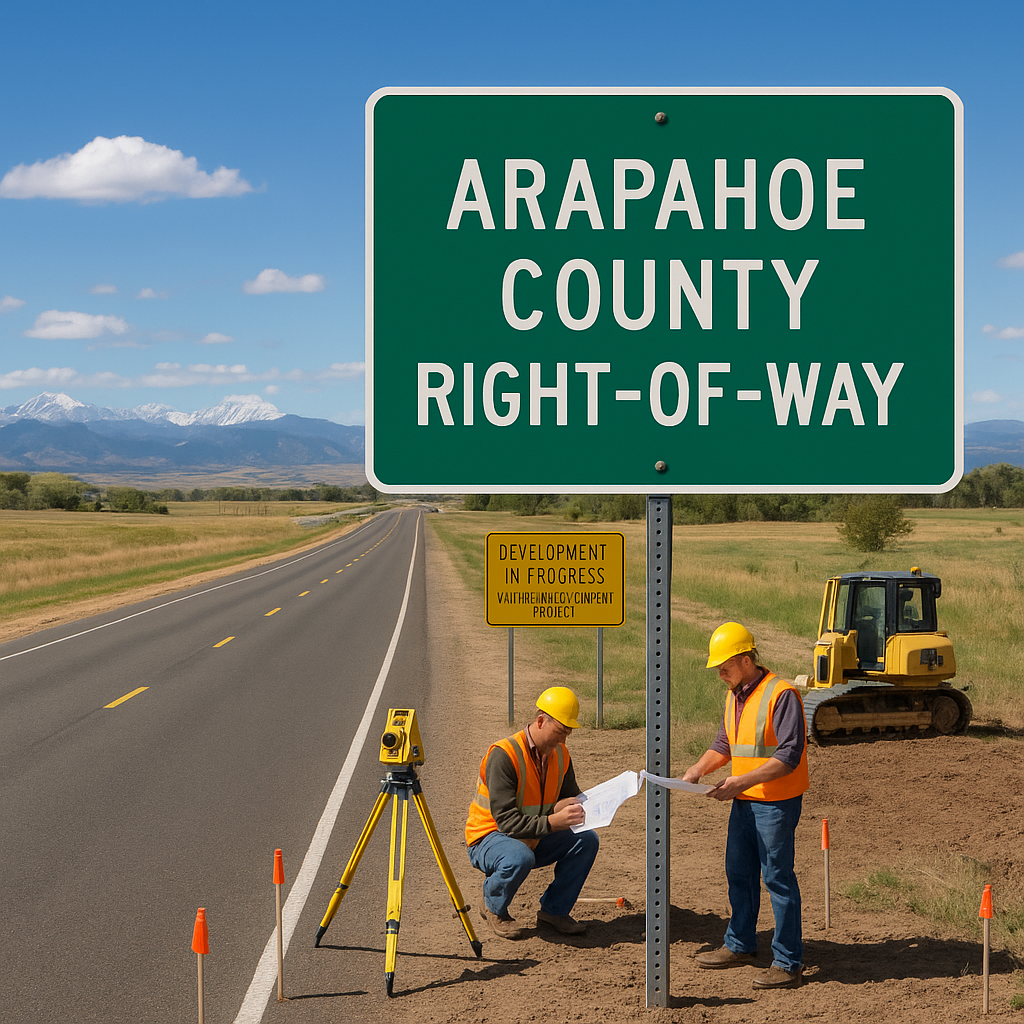
Ever find yourself planning a construction project, a landscaping overhaul, or even installing a new driveway in Arapahoe County, only to hear the term “right-of-way bond” and feel a little lost? You’re definitely not alone. This requirement pops up frequently when work bumps up against public property, and it can sound more intimidating than it actually is. Let’s break the whole thing down in plain, everyday language—no government jargon, no headache.
What Exactly Is a Right-of-Way Bond?
At its heart, a right-of-way bond is a promise. Think of it like a security deposit you might put down when renting a piece of equipment. The county isn’t trying to make your life difficult; they just need a financial guarantee that if your project disturbs a public space—like a sidewalk, street, curb, or utility strip—you’ll return that space to its original condition, or better.
Officially, this falls under Arapahoe County Public Works and Development. They oversee anything that touches the county’s right-of-way. The bond acts as a safety net. If a contractor digs up a section of road to connect a sewer line and then fails to repave it properly, the county can step in and use the bond money to fix it. This ensures taxpayers don’t foot the bill for private project mishaps.
Why Does Arapahoe County Require This Bond?
Arapahoe County is a busy, growing place. Between new housing developments, commercial build-outs, and simple home improvement projects, the amount of activity that intersects public infrastructure is staggering. The Public Works and Development department must balance encouraging property improvements with protecting the community’s shared spaces. A right-of-way bond is the tool that strikes that balance.
Imagine driving down a smooth neighborhood street, only to have a poorly patched trench turn into a tire-busting pothole six months later. That’s the scenario bonds prevent. By requiring a bond, the county ensures that every person or company performing work near the right-of-way has “skin in the game.”
Protecting You and Your Neighbors
The benefits ripple outward. A properly restored sidewalk prevents tripping hazards. A correctly reseeded utility strip keeps the neighborhood looking sharp and stops soil erosion. When everyone plays by the same rules, the whole community wins. Plus, if you’re the property owner, the bond helps guarantee your contractor doesn’t disappear before finishing the clean-up.
Who Typically Needs One?
You might assume this only applies to big construction companies, but that’s not entirely true. While large-scale developers certainly need bonds for massive infrastructure work, smaller players often need them too. You’ll likely need an Arapahoe County right-of-way bond if your project involves:
- Installing or repairing a driveway that crosses a public sidewalk.
- Connecting to public water or sewer lines.
- Excavating within a county easement or road shoulder.
- Building a new curb cut for access.
- Placing underground utilities like gas, electric, or fiber-optic lines.
- Pouring concrete for features that abut or alter the public right-of-way.
Even homeowners doing a major landscaping project that disturbs the area between the sidewalk and the street could potentially trigger this requirement. Always check with Arapahoe County Public Works and Development before breaking ground. It’s far easier to get the bond upfront than to face a stop-work order later.
How Does the Bonding Process Work?
Getting the bond isn’t as complicated as securing a mortgage. In fact, the process is designed to be fairly straightforward. You’re essentially purchasing a financial instrument from a surety company. Here’s the typical workflow, broken into bite-sized steps.
Step 1: Determine Your Scope of Work
First, clearly define what you’re doing and where. Are you just connecting a downspout drain under a sidewalk, or are you opening a 50-foot trench down the middle of a lane? The county will want to see plans and understand the extent of right-of-way disturbance.
Step 2: Get the Bond Amount from the County
Based on your project details, Arapahoe County’s Public Works and Development staff will calculate the required bond amount. This usually correlates with the estimated cost to restore the public area. If repairs might cost $10,000, they won’t ask for a $100,000 bond. It’s tailored to your project’s potential impact.
Step 3: Contact a Surety Bond Provider
Next, you’ll approach an insurance agency or surety bond company licensed to issue bonds in Colorado. Hand them the required amount and the county’s bond form. A right-of-way bond isn’t expensive like a full insurance policy; you pay a small percentage of the total bond amount—often between 1% and 5% for well-qualified applicants. So a $10,000 bond might cost you only a couple of hundred dollars for the year.
Step 4: Submit the Bond and Pull Your Permit
Once issued, the surety gives you the original bond document. You file that with Arapahoe County to satisfy the permit requirements. Keep a copy for your records. Now your project can legally begin.
Common Misunderstandings, Cleared Up
Let’s tackle a few myths head-on. A right-of-way bond is not a license or a permit on its own. It’s a prerequisite for obtaining your public works permit. Also, this is not an insurance policy that protects you or your equipment. It protects the county and the public from incomplete or substandard restoration work. If you damage your own backhoe in a trench, the bond won’t cover it.
Another big one: the bond doesn’t cover the entire value of your private project. It only covers the public right-of-way portion. So if you’re building a $200,000 home addition, your right-of-way bond might only be $5,000 or $15,000, strictly representing the sidewalk and curb repair cost.
What Happens If Something Goes Wrong?
Let’s paint a picture. You finish installing a new driveway approach, but the concrete you poured across the sidewalk has cracked badly, and a lip has formed that could trip pedestrians. The county inspector identifies the issue during a follow-up visit. They will notify you and give you a reasonable window to fix it.
If you refuse or fail to make the repairs, the county can file a claim against your right-of-way bond. The surety company will investigate. Should the claim be valid, the surety pays the county the cost to hire another contractor to fix the sidewalk. Then, the surety will come back to you for reimbursement. This is a crucial distinction: a bond is not a free pass. It’s a line of credit you’re ultimately responsible for repaying.
Keeping Your Project on Track
Nobody wants to deal with bond claims or enforcement actions. The easiest path is prevention. Hire contractors familiar with Arapahoe County’s standards. Make sure they understand the restoration requirements for asphalt, concrete, soil compaction, and landscaping. If you’re doing the work yourself, download the county’s right-of-way design standards guide. Don’t guess on thicknesses or materials.
Document everything with photos before, during, and after the work. This way, if a question arises months later, you have a clear record of what the site looked like when you finished. Finally, schedule required inspections promptly. A missed inspection can wrongly flag a completed job.
Why This Matters for a Growing County
You might wonder why the bond is such a non-negotiable piece of the puzzle. Arapahoe County combines urban bustle with suburban neighborhoods and rural stretches. The right-of-way network—streets, trails, drainage—is the skeleton connecting all of it. When that skeleton gets chipped away by well-meaning but poorly executed work, the entire community feels the effects in the form of more closures, higher maintenance costs, and even lowered property values.
The bond requirement quietly upholds quality. It encourages pride in workmanship. It ensures that the new fiber-optic line that just brought your street ultra-fast internet doesn’t leave behind a crumbling gutter. Balancing progress with preservation is exactly what the Arapahoe County Public Works and Development department is tasked to do.
A Few Practical Tips Before You Break Ground
- Start early. Don’t wait until the day before you want to start digging to explore bonding. Give yourself at least a week, or longer for complex projects.
- Ask about an expiration date. Most right-of-way bonds run for a year, but some extend based on project completion plus a maintenance period. Know your timeline.
- Bundle when possible. If you’re a developer with multiple phases, talk to a surety agent about a blanket right-of-way bond. It can streamline paperwork and reduce fees.
- Talk to a human. The folks at the county are surprisingly helpful. A quick call to Public Works and Development can clarify exactly which bond form you need and the current fee schedule.
Looking at the Bigger Picture
The next time you see a crew patching the street or replacing a sidewalk panel, you’ll know there’s a bond somewhere in the background making sure the job gets done correctly. It’s a system rooted in accountability. For anyone engaging with Arapahoe County’s right-of-way, understanding this bond transforms a bureaucratic checkbox into a meaningful layer of protection for your investment and your neighborhood.
So, whether you’re a seasoned contractor or a first-time homeowner adding a circular driveway, embrace the bonding step as part of doing things right. It’s the hallmark of a project that respects public spaces and the neighbors who share them.