Contractor bonds in Westminster, Colorado protect both homeowners and the city by guaranteeing contractors follow local regulations and complete projects correctly. These bonds, required for permits and specific trades, provide financial coverage if work goes wrong, safeguarding public infrastructure and private investments.
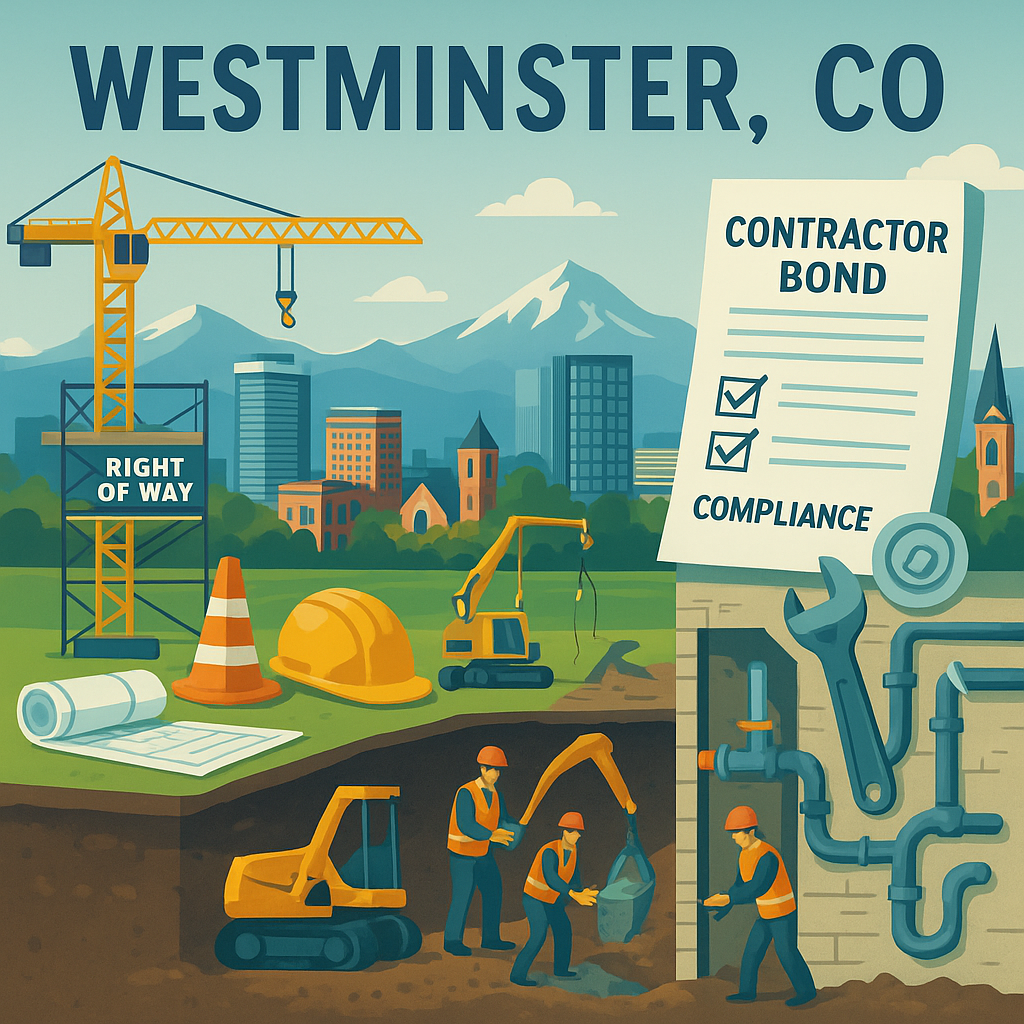
Picture this: you’re planning a home renovation, a new driveway, or maybe a full-scale commercial build in Westminster, Colorado. You’ve found the perfect contractor, signed the paperwork, and the crew is ready to break ground. But then someone mentions a “contractor bond,” and suddenly you’re wondering if you’ve stepped into a legal maze. It feels complicated, doesn’t it? In reality, contractor bonds are one of the simplest ways to protect your project, your wallet, and the community you love. Let’s walk through what these bonds are, why they matter so much in Westminster, and how they turn a potentially risky construction project into a safe bet for everyone involved.
What Exactly Is a Contractor Bond? A Simple Analogy
Think of a contractor bond as a safety net woven from three promises. The contractor promises to follow local rules and do the job right. The bond company promises to back them up financially if something goes wrong. And you, the project owner, get the peace of mind that the work won’t leave you with a mess that only your checkbook can fix. It’s not insurance for the contractor; it’s a guarantee for you, the city, and anyone else who depends on the project being completed correctly.
In Westminster, these bonds are typically a “license and permit” bond required by the city before a contractor can pull permits. They tell the city, “We trust this professional, but if they slip up, there’s money set aside to make things right.” So when you see the City of Westminster requesting a Right of Way bond or a Plumber bond, it’s simply the city’s way of saying, “We care about our streets, our pipes, and our neighborhoods, and we expect you to care, too.”
Why Westminster Takes Contractor Bonds So Seriously
Westminster straddles a unique spot between the Denver metro bustle and Boulder County’s open spaces. Growth is constant. New homes, businesses, and infrastructure projects pop up all the time. With that growth comes a huge responsibility to keep public property safe. Think about what happens when an excavation goes wrong: a water main breaks, a gas line is nicked, or a sidewalk collapses. The cost of repairs can skyrocket overnight. Contractor bonds ensure that the city—and ultimately the taxpaying public—isn’t left footing that bill.
Beyond protecting public coffers, these bonds guard your private investment. If a subcontractor walks off the job halfway through your bathroom remodel, the bond can step in to help cover the costs of hiring someone else to finish the work, up to the bond amount. It’s a layer of financial accountability that transforms a handshake deal into a legally fortified agreement.
Key Contractor Bond Types in Westminster, CO
The City of Westminster requires specific bonds depending on the work being done. You’ll often see them listed as Right of Way, General, Plumber, Concrete, Excavation Contractor bonds, and a category called “Commercial Contractor – Compliance Only.” Let’s break those down one at a time so they stop feeling like industry jargon and start feeling like the useful tools they really are.
Right of Way Contractor Bond
Does your project touch a sidewalk, alley, street, or any public strip of land between private property and the curb? Then a Right of Way bond is almost certainly in play. This bond promises that any work done in the public right of way—like installing a driveway approach, repairing a sewer lateral that crosses under the street, or putting up temporary signage—will be performed safely, and the area will be restored to its original condition. If a contractor leaves the road patched unevenly or forgets to re-sod a torn-up parkway, the bond provides funds to fix it without a long legal battle.
Have you ever tripped on a poorly repaired sidewalk? That’s exactly the kind of hazard a Right of Way bond aims to prevent. It keeps Westminster walkable and drivable, protecting everyone from the jogger out for a morning run to the family biking to a nearby park.
General Contractor Bond
General contractors are the quarterbacks of a construction project. They coordinate plumbers, concrete specialists, excavators, and electricians. Their bond is a broad safety net covering compliance with all applicable building codes, zoning laws, and safety regulations within Westminster. If a general contractor cuts corners by not pulling the right permits or using substandard materials, the bond can be triggered to bring the work up to code. This bond is your backstage pass to accountability—it ensures that the person in charge can’t hide behind subcontractors when something goes wrong.
Plumber Bond
Plumbing mistakes can be disastrous. We’re not just talking about a leaky faucet; we’re talking about contaminated water supplies, sewage backups, and structural damage from hidden leaks that fester for years. Westminster requires a Plumber bond specifically to ensure that anyone installing, altering, or repairing plumbing adheres to strict health and safety standards. The bond is a clean water promise to your family and your neighbors. If a bonded plumber installs a water heater incorrectly and it floods your basement, that bond is there to help make things dry and functional again.
Ask yourself: would you trust the water you drink to a stranger with no accountability? That’s the whole point. The bond turns a stranger into a vetted, responsible professional.
Concrete Contractor Bond
Westminster sees plenty of concrete work—patios, driveways, foundations, retaining walls. The city’s Concrete Contractor bond is designed to make sure flatwork and structural concrete meet engineering standards. Concrete that’s poured too thin or without proper reinforcement can crack prematurely, leading to costly replacements and safety hazards. This bond ensures that if a contractor’s work fails because they didn’t follow best practices, there’s a financial remedy. It’s like an extended, no-cost warranty backed by the weight of a surety company.
I’ve seen driveways sink three inches in their first year because the base wasn’t compacted. With a bonded concrete contractor, that headache becomes the bond company’s problem, not yours.
Excavation Contractor Bond
Digging deep opens up a world of risk. Underground utilities crisscross most properties and streets in Westminster—gas lines, electric cables, fiber optics, and water mains. An Excavation Contractor bond ensures that anyone moving earth does so with care, calls for utility locates, and repairs any damage they might cause. If a backhoe slices through a major gas line and causes an evacuation, the costs don’t fall on you or the city. The bond is there to cover damages and to encourage excavators to follow the strictest safety protocols. This bond quite literally save lives and prevents neighborhood-wide disruptions.
Commercial Contractor – Compliance Only Bond
Now here’s a term that often puzzles people: “Compliance Only.” This bond is a bit different. It isn’t a performance guarantee for the quality of the work itself; rather, it’s a promise that the contractor will strictly follow all relevant Westminster municipal codes, ordinances, and regulations while performing commercial construction. So if a contractor is building a new retail space and ignores setback requirements or ADA accessibility standards, the Compliance Only bond can be used to cover fines or the cost of bringing the structure into compliance. It’s a regulatory cushion that keeps commercial development from turning into a code-violation nightmare.
Think of it as the city’s rulebook enforcer. The contractor might build a beautiful storefront, but if they’ve blocked a fire lane or used non-approved signage, the bond answers for those infractions.
How Do These Bonds Protect You Personally?
It’s easy to assume bonds are just a city hall formality, something contractors grumble about and file away. But they directly affect your daily life in at least three powerful ways.
- Financial security: If a contractor’s mistake costs thousands of dollars to correct, filing a bond claim can recover that money without draining your savings or battling in court for years.
- Peace of mind during the project: Knowing there’s a bond in place means you can sleep better, confident that the contractor doesn’t have an escape hatch if things go sideways.
- Higher quality work in the community: Contractors who are bonded tend to be more diligent because they don’t want claims filed against them. They know their bonding capacity—and their reputation—depends on clean, reliable work.
Have you ever hired someone and then had that nagging feeling, “What if they don’t finish?” A bond is the answer to that question. It transforms uncertainty into actionable protection.
What Happens If Something Goes Wrong? A Real-World Walkthrough
Let’s bring this to life with a scenario. You hire an excavation contractor to dig a foundation for a new addition in Westminster. They’re bonded, as required by the city. Midway through the dig, they hit a sewer line that they failed to properly locate. Sewage backs up into your basement. The contractor admits fault but says they can’t afford the $15,000 emergency repair. Without a bond, you’d be stuck arguing, maybe suing, and definitely writing a check. With a bond, you contact the surety company, submit a claim, and the bond pays out up to its limit to restore the damage. The contractor then repays the surety—the bond doesn’t let them off the hook, it just makes sure you don’t become the bank.
This process keeps projects moving and tempers from flaring. It’s the city’s way of saying, “We want you to build, but we also want you to be responsible when you do.”
Common Questions About Westminster Contractor Bonds
Do you need to understand every detail before signing a contract? Not at all. But knowing the basics can help you ask the right questions. Here are a few that might cross your mind.
Is a bond the same as insurance? No. Insurance protects the contractor from their own losses or accidents. A bond protects you, the public, and the city from the contractor’s failure to follow rules or complete work according to code.
How do I know if my contractor has the right bond? Ask to see their City of Westminster bond certificate. It will list the bond type and the amount. You can also often verify through the city’s licensing department.
What if the damage exceeds the bond amount? The bond covers up to its penal sum. For large-scale projects, multiple bonds or higher amounts are sometimes required. Beyond the bond, you might need to pursue other legal avenues, but the bond provides an immediate, accessible resource.
Are these bonds only for big commercial jobs? Not at all. Even a small residential plumbing repair or a new concrete patio might require a bonded contractor if the work involves public right of way or touches on regulated systems. Always check with the city permit office.
Choosing a Contractor Who Takes Bonding Seriously
When you’re comparing bids, use the bond as a litmus test. A contractor who readily shows proof of bonding, explains what it means, and sees it as a badge of professionalism is likely someone who values doing things right. On the flip side, a contractor who dismisses bonds or seems reluctant to provide documentation might be signaling that they’re comfortable cutting corners.
I’ve found that the best contractors in Westminster wear their bonding requirements with pride. They’ll say, “Of course I’m bonded—it protects both of us.” And that’s the kind of partnership you want when you’re investing in your home or business.
Westminster’s Big Picture: Bonds Build Trust That Builds Communities
Behind every permit, inspection, and bond filing, there’s a bigger story. Westminster’s careful bonding requirements help maintain property values, keep infrastructure reliable, and ensure that growth doesn’t come at the expense of safety. When a city mandates bonds for Right of Way, General, Plumber, Concrete, Excavation, and Commercial Compliance, it’s weaving a fabric of trust between residents, business owners, contractors, and local government.
So the next time you hear “contractor bond” and feel a flicker of confusion, remember this: it’s just a promise—with teeth. A promise that your street will be repaved neatly, your plumbing will deliver clean water, your concrete won’t crack prematurely, and your excavation won’t turn into an underground disaster. That’s a promise worth paying attention to, whether you’re building a dream kitchen or a new community center.
Westminster, Colorado, is a place where smart regulations meet common-sense protection. By understanding the role of these bonds, you’re not just checking a box; you’re actively participating in a safer, more accountable construction culture. And that benefits every single one of us who calls this vibrant city home.