Septic tank contractors in Englewood, Colorado, must secure a discharge waste permit bond to guarantee compliance with local waste disposal regulations, protecting the city and public from environmental hazards. This three-party agreement ensures financial accountability for any regulatory violations.
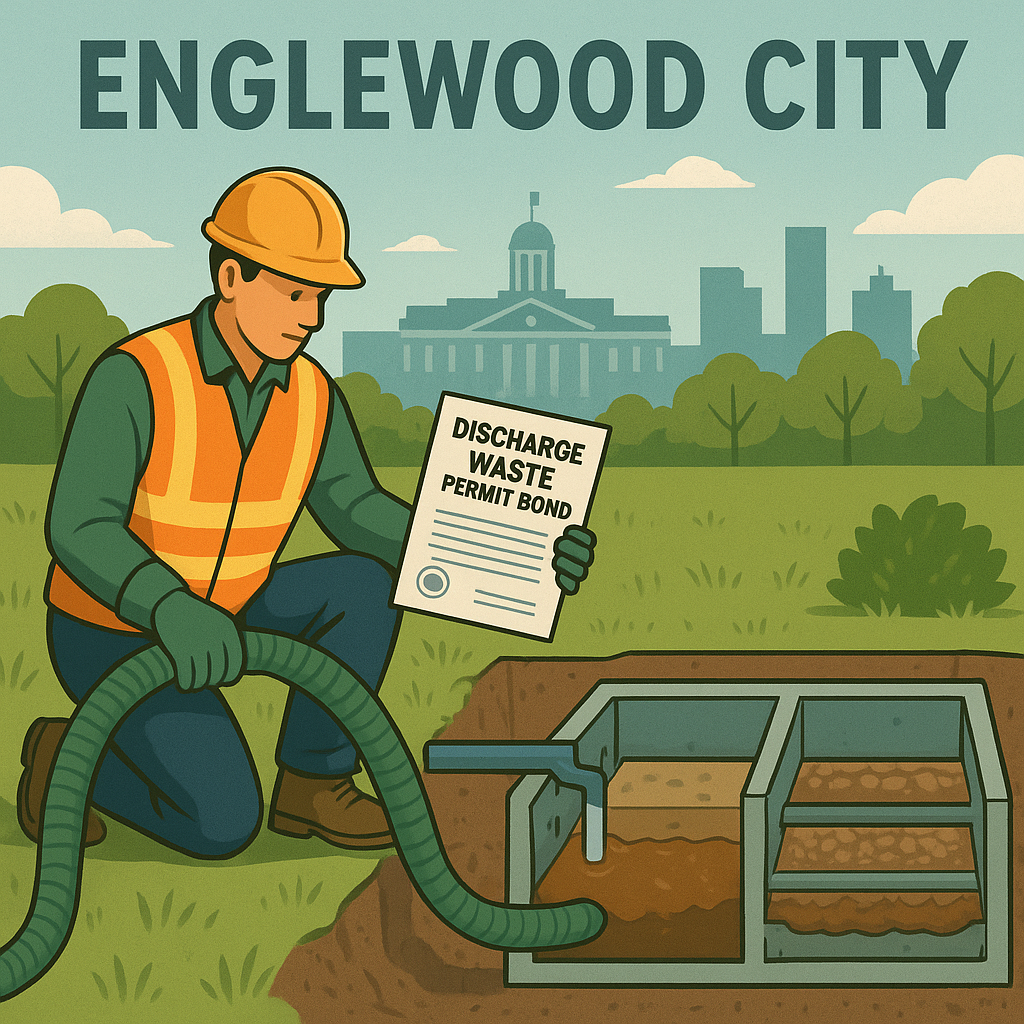
If you’re a septic tank contractor working in Englewood, Colorado, you’ve probably heard the term “discharge waste permit bond” tossed around. It might sound like just another piece of paperwork, but it’s actually a key part of keeping your business compliant and your clients protected. So, what is it really? And why does the City of Englewood care so much about it?
Think of this bond as a financial promise. It’s not insurance for your company. Instead, it’s a three-party agreement that guarantees you’ll follow the local rules when hauling, treating, or disposing of waste. If something goes off track, there’s a safety net in place for the public and the city. Let’s break that down in plain English.
What Exactly Is a Discharge Waste Permit Bond?
Imagine you’re a homeowner, and a septic contractor accidentally spills waste into a nearby stream while working on your property. That’s a mess nobody wants. The discharge waste permit bond exists to handle situations exactly like that. In the simplest terms, it’s a surety bond required by the City of Englewood for septic tank contractors who need a discharge waste permit.
This bond ensures that if a contractor violates the city’s waste disposal regulations, there’s money set aside to fix the problem. The city, the contractor, and the bonding company are all part of the deal. The contractor pays for the bond. The city is protected. The bonding company guarantees that obligations will be met. If the contractor slips up, the bonding company can step in to cover the damages—up to the bond amount—and then the contractor must repay that money.
You might hear it called a “compliance only” bond in some circles. That’s because its main job isn’t to cover incomplete work or general business debts. It’s laser-focused on one thing: making sure septic tank contractors comply with the specific rules around waste discharge in Englewood.
Why the City of Englewood Requires This Bond
Englewood, like many Colorado communities, takes its environmental responsibilities seriously. Wastewater treatment and proper disposal protect the local water supply, soil, and public health. When a septic contractor doesn’t follow the rules, the consequences can be severe. We’re talking contaminated groundwater, foul odors, or even disease outbreaks in the worst cases.
The City of Englewood requires the discharge waste permit bond as a proactive measure. It’s not about making life hard for contractors. It’s about creating a system where everyone plays by the same rulebook. The city can’t monitor every pump truck every minute. But with a bond in place, they know there’s a financial incentive for compliance—and a remedy if compliance fails.
Think about it this way: if you hire a contractor to empty your septic tank, you want peace of mind. You don’t want to wonder if they’ll cut corners and dump waste where they shouldn’t. This bond helps reassure you that the contractor is vetted and held accountable.
Who Needs a Discharge Waste Permit Bond in Englewood?
Not every business in the plumbing world needs this bond. It’s specifically aimed at septic tank contractors who transport and discharge waste within Englewood city limits. If your work involves pumping out septic systems, hauling the waste, and then discharging it at an approved facility, you’ll almost certainly need this bond as part of your permit application.
General plumbers or drain cleaners who don’t deal with large-scale waste transport might be off the hook. But if you’re in the business of septic tank pumping, portable toilet servicing, or grease trap cleaning that generates liquid waste, the City of Englewood will want to see that bond before they issue your discharge waste permit.
How Does the Bond Protect Homeowners and the Environment?
Let’s walk through a real-world scenario. Suppose a contractor accidentally discharges septic waste into a storm drain instead of a proper treatment facility. That pollution can travel straight to the South Platte River, harming wildlife and creating a public health hazard. The city would need to act fast to contain and clean up the mess. Those costs can be enormous.
With the discharge waste permit bond in place, the city has a direct path to recover cleanup costs from the bonding company. The bonding company then turns to the contractor for reimbursement. Homeowners who suffer property damage from the contamination can also file a claim. In this way, the bond acts like a specialized emergency fund that doesn’t drain taxpayer dollars.
It’s a bit like having a security deposit on an apartment. The landlord knows that if you damage the place, they can use your deposit to fix it. The city views the bond as a security deposit against environmental missteps. If everything goes smoothly, the bond sits quietly in the background.
What Does a Discharge Waste Permit Bond Cost?
Cost is always a hot topic for small business owners. Fortunately, you’re not paying the full bond amount upfront. That would be brutal. If the required bond is $10,000, you only pay a small percentage—usually between 1% and 5% of that total—as an annual premium. So, your out-of-pocket cost might be just a few hundred dollars a year.
What determines that percentage? The bonding company looks at your personal credit score, business financials, and experience in the industry. A contractor with solid credit and a clean track record might snag a 1% rate. Someone with shaky credit could see rates closer to 5% or even need to provide collateral. Still, it’s far less than the full bond amount.
Don’t forget that this is a recurring expense. The bond typically renews annually alongside your permit. Factor that into your business budget so you’re never caught off guard when renewal season rolls around.
Steps to Get Your Bond and Stay Compliant
The process isn’t complicated, but it does require some paperwork. Here’s a straightforward path:
- Check the city’s requirements: Contact the Englewood Public Works or Environmental Services department to find out the exact bond amount needed for your permit type. Requirements can vary based on the volume of waste you handle.
- Find a reputable surety company: Look for a bond agency that specializes in contractor bonds in Colorado. They’ll understand the local landscape and can often get you approved quickly.
- Gather your documents: You’ll likely need your business license, credit information, and details about your equipment and experience. Having everything ready speeds up the process.
- Submit an application: The agency will run a quick check and present you with a quote. If you agree, you’ll pay the premium and receive your bond form.
- File the bond with the city: The original bond document must be delivered to the City of Englewood as part of your permit application. Don’t forget to keep a copy for your records.
Once you’re bonded and permitted, the real work of staying compliant begins. Keep detailed logs of your waste disposal trips. Always use approved treatment facilities. Train your crew on spill prevention and emergency response. A single violation can trigger a claim against your bond, making it harder and more expensive to get bonded in the future.
Common Questions Contractors Ask About This Bond
Is the bond the same as insurance?
No, and that’s a crucial distinction. Insurance protects your business from unexpected losses like accidents or lawsuits. A surety bond protects a third party (the City of Englewood and the public) from your failure to follow the rules. If a claim is paid, you have to reimburse the bonding company. Insurance typically doesn’t require reimbursement after a covered claim.
What happens if a claim is filed against my bond?
The surety company will investigate. If the claim is valid, they’ll pay out up to the bond limit. Then they’ll come to you for repayment. Too many claims, and you might find yourself unable to get bonded again. It’s far better to address issues directly and avoid claims altogether.
Can I use a bond from another city?
Usually not. Each municipality has its own requirements. A bond for Denver or Littleton won’t satisfy Englewood’s specific regulations. You’ll need a separate bond that names the City of Englewood as the obligee.
How long does the bond last?
Most discharge waste permit bonds are issued for a one-year term and must be renewed alongside your permit. Some bonding companies offer multi-year options for convenience, but the annual premium remains.
Why Some Contractors Overlook This Requirement
In the rush to start a new project or to cut costs, contractors sometimes skip the bonding requirement. Maybe they think nobody will notice. But the City of Englewood actively checks for compliance. Operating without the proper bond can lead to fines, permit revocation, or even a ban from working in the city. It’s simply not worth the risk.
Think of the bond as a professional stamp of approval. It tells clients, “I’m serious about my work, and I stand behind my compliance with environmental laws.” In a competitive market, that can be a real differentiator.
Keeping Your Business on the Right Side of Compliance
Once you’ve got the discharge waste permit bond, don’t just file it away and forget about it. Make compliance part of your company culture. Review the city’s waste discharge regulations regularly—they can change. Attend any training or workshops offered by the municipal environmental department. Build relationships with the approved disposal sites so you always have a compliant destination for your waste.
You might also consider adopting best practices that go beyond the minimum. Use GPS tracking on your vehicles to document where waste was discharged. Implement a spill response plan that every employee knows by heart. These extra steps can prevent accidents that lead to bond claims and protect the beautiful Colorado environment we all share.
At the end of the day, navigating Englewood’s discharge waste permit compliance isn’t just about avoiding penalties. It’s about being a responsible business that contributes to a clean, safe community. The bond is a tool that helps you do exactly that, and understanding it fully is the first step toward long-term success.