Denver requires paving contractor bonds to protect the public and city from substandard work on right-of-way projects, ensuring contractors complete jobs safely and correctly or the bond covers repair costs.
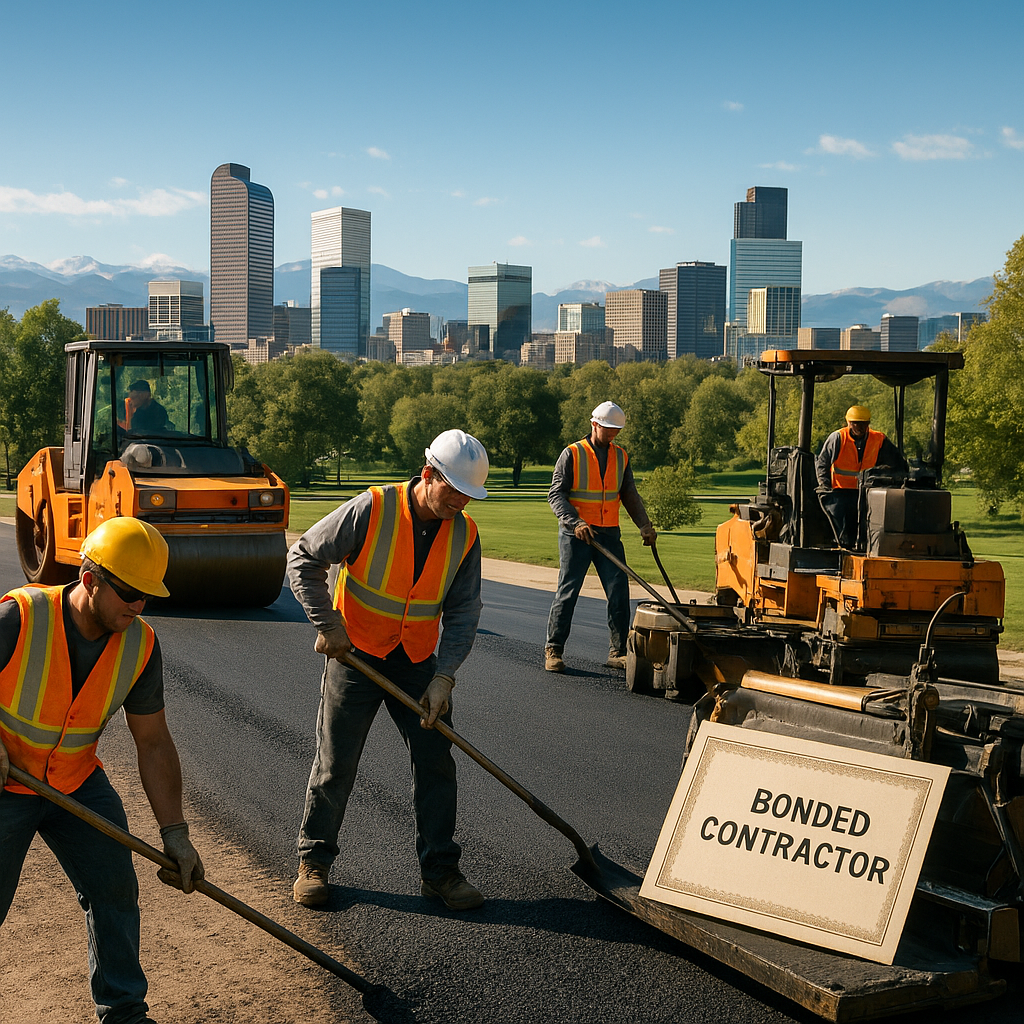
If you’ve ever driven through a freshly paved street in Denver, you’ve probably enjoyed the smooth ride without giving it a second thought. But behind that new asphalt is a lot of paperwork, permits, and financial protections most people never see. One of the most important hidden pieces? The Denver paving contractor bond. If you’re a contractor looking to work on public right‑of‑way projects in the City and County of Denver, this little document isn’t just a suggestion – it’s your golden ticket.
Maybe you’ve heard terms like “right‑of‑way bond” or “paving bond Denver CO” thrown around and felt your eyes glaze over. That’s totally normal. Bonds can feel intimidating, but they’re actually pretty straightforward once you pull back the curtain. Think of this as a chat over coffee where we break it all down – no jargon, no confusing legalese, just the plain facts you need.
What Is a Denver Paving Contractor Bond?
Let’s start with the basics. A Denver paving contractor bond is a type of surety bond. In the simplest terms, it’s a three‑party promise that protects the city and the public if a contractor doesn’t follow the rules. The three parties are:
- The Principal: That’s you, the paving contractor.
- The Obligee: The City and County of Denver, which requires the bond.
- The Surety: The insurance company that backs your promise financially.
Imagine you’re borrowing your neighbor’s prized lawnmower. You promise to return it clean and undamaged. Your other neighbor, who knows you well, agrees to cover any repairs if you accidentally break it. That well‑known neighbor is the surety, and their assurance is like a bond. Denver asks for this same kind of assurance so public property ends up in good shape, not full of hidden problems.
When you obtain a City and County of Denver right‑of‑way bond, you’re essentially telling the city, “I’ll do the job correctly, according to your rules. But if I mess up and don’t fix it, this bond will pay to make things right.” It’s not insurance for your business – it protects the city and taxpayers, not you.
Why Does Denver Require a Right‑of‑Way Bond?
Denver’s streets, sidewalks, curbs, and gutters are part of a huge public network called the right‑of‑way. When you dig up a street to lay new asphalt, you’re temporarily in charge of a piece of public land. The city wants to make sure that when your equipment leaves, everything is restored to a safe, long‑lasting condition.
Without a paving bond Denver CO requirement, a contractor could do subpar work, damage surrounding infrastructure, or fail to complete the job. The city would then be stuck footing the repair bill – and that means taxpayer money disappearing into a pothole. The bond shifts that risk to the contractor and the surety company, not the public.
In a way, requiring a bond is like Denver asking for a security deposit before you borrow their property. You get full access, but if something gets broken, the deposit pays for the fix. It’s reasonable, clear, and fair for everyone involved.
How the Bond Protects Everyone (Really)
You might be thinking, “Another license requirement? Great.” But the bond actually works in your favor, too. It boosts your credibility instantly. When homeowners, business owners, or the city see that you hold a Denver paving contractor bond, they know you’ve passed a financial review and that there’s a safety net behind your work.
Here’s how the protection flows:
- For the city: Funds are available to correct incomplete or faulty work on public property.
- For citizens: The neighborhood doesn’t get stuck with cracked curbs or dangerous utility patches long after your crew leaves.
- For contractors: It levels the playing field. Every company competing for right‑of‑way permits must meet the same standard, keeping unreliable operators from undercutting bids and disappearing.
Think of it as a badge of trust. Much like a restaurant health inspection grade posted on the front door, a bond signals that you’re legit and accountable.
Who Needs This Bond in Denver?
Not every paving job requires a bond. If you’re pouring a private driveway and never touching public property, you might not need one. The requirement kicks in when your work involves the public right‑of‑way – that strip of land the city owns and maintains, which often extends past the curb and includes the sidewalk, planting strip, and sometimes even a portion of the driveway apron.
In Denver, the Department of Transportation and Infrastructure (DOTI) issues right‑of‑way permits. To get one, contractors typically need to post a paving contractor bond. This applies to a wide range of work:
- Street paving and repaving
- Alleyway improvements
- Sidewalk, curb, and gutter construction or repair
- Utility cuts and trench restorations
- Any excavation that disturbs the public right‑of‑way
The exact bond amount may vary depending on the scale of your project. A small asphalt patch might require a smaller bond, while a multi‑block reconstruction could demand a higher sum. Always check with DOTI or a bond expert to nail down your specific requirement.
How Much Does a Denver Paving Bond Cost?
Let’s talk numbers – that’s what everyone really wants to know. The bond works on a total coverage amount, but you don’t pay that full price upfront. Instead, you pay a small percentage called the premium.
For example, if Denver requires a $10,000 paving contractor bond, you might pay only $100 to $300 for it. The exact premium depends on your personal credit score, business financials, and experience. Surety companies look at you like a lender would. Strong credit and solid industry experience often mean the best rates – sometimes as low as 1% of the bond amount. A few bumps on your credit report might push the rate higher, but options still exist.
Here’s an analogy: It’s like renting an apartment. The landlord wants a security deposit of one month’s rent, not because they expect you to trash the place, but just in case. Similarly, you pay a fraction of the bond value today to promise you’ll handle the work responsibly tomorrow.
Typical bond amounts for Denver right‑of‑way paving work often sit in the $5,000 to $25,000 range, though larger projects can climb higher. A quick conversation with a surety bond agency that understands Colorado requirements can pin down your exact cost in minutes.
Steps to Get Your Denver Right‑of‑Way Paving Bond
Getting bonded might sound like a lot of red tape, but the process is smoother than fresh asphalt on a summer day. Here’s a simple walkthrough:
1. Confirm Your Bond Requirement
Reach out to Denver’s DOTI or check your permit application. They’ll tell you the exact bond type and the penal sum (the total coverage amount) you need. Don’t guess – getting it wrong can delay your project.
2. Gather Your Business Information
Surety companies will ask for your business name, address, years in operation, and often your personal credit details. Have your information handy. If you’re new to the industry, you might also need to share details about previous work or training.
3. Apply Through a Bond Agency
You can go directly to a surety company, but working with a specialized bond agency usually gets you more options and better rates. They shop around for you. The application often takes less than ten minutes online.
4. Get Your Quote and Pay the Premium
Once approved, you’ll receive your premium quote. Pay that, and the bond is issued. Many agencies can email you the bond the same day, sometimes within an hour.
5. File With the City
The bond alone isn’t enough; Denver needs to see it. Submit it with your permit application or as instructed. After that, you’re cleared to get to work – legally.
What Happens If a Claim Is Filed?
Nobody plans on trouble, but you should know how the safety net works. A claim on your Denver paving contractor bond can happen if someone – usually the city – believes you violated the bond’s terms. Maybe a patch job failed after three months, or a curb crumbled, and you didn’t return to fix it.
If a claim is valid, the surety steps in and pays up to the full bond amount. But here’s the critical detail: you have to pay the surety back. Unlike insurance, a bond is a form of credit. You’re responsible for every penny. That’s why it’s so important to stand behind your work and communicate openly with the city if an issue pops up. Most problems are solved long before a claim ever gets filed.
Common Mistakes to Avoid
Even savvy contractors trip up sometimes. Steer clear of these pitfalls:
- Assuming any bond works: A generic license bond isn’t the same as a right‑of‑way paving bond specific to Denver. Make sure the obligee is listed as “City and County of Denver.”
- Letting the bond lapse: Many bonds renew annually. If yours expires and you’re mid‑project, your permit could be suspended. Set reminders.
- Underestimating the bond amount: It’s better to slightly over‑bond than risk having your permit rejected. Talk to DOTI and build in a safe margin.
- Ignoring your credit: Even if you’re cash‑rich, bond cost is credit‑driven. Monitoring your score and paying bills on time pays off directly in lower premiums.
Why This All Matters for Denver’s Future
Every time a paving contractor pulls a permit and honors their bond, the whole city benefits. Better roads, safer sidewalks, and neighborhoods that hold their value. The bond isn’t just bureaucracy – it’s a quiet promise between the contractor, the city, and every person who walks or drives on those streets.
So next time you see a crew laying down fresh asphalt in a Denver neighborhood, you’ll know there’s more under the surface than rocks and oil. There’s a bond holding it all together – literally and financially. And if you’re the one holding that bond, wear it proudly.
Ready to Get Bonded?
The road to bonding doesn’t have to be bumpy. Whether you’re a one‑truck operation or a growing pavement company, there are agents who specialize in Denver paving contractor bonds and can walk you through the whole process. A few minutes of paperwork can unlock the permits you need to bid bigger, work legally, and earn trust across the Mile High City.
Still have questions? Ask a bond expert or the nice folks at Denver DOTI. They’d much rather help you get it right the first time than chase you for paperwork later. After all, in the world of right‑of‑way work, a smooth start leads to a smooth finish – just like the roads you’ll build.