Aspen, Colorado requires contractors and developers to secure a maintenance bond for any work performed in the public right-of-way, guaranteeing the quality and longevity of repairs to protect city infrastructure. Understanding these bonding and permitting rules is essential for anyone undertaking projects that touch public streets, sidewalks, or utility strips to avoid costly liabilities.
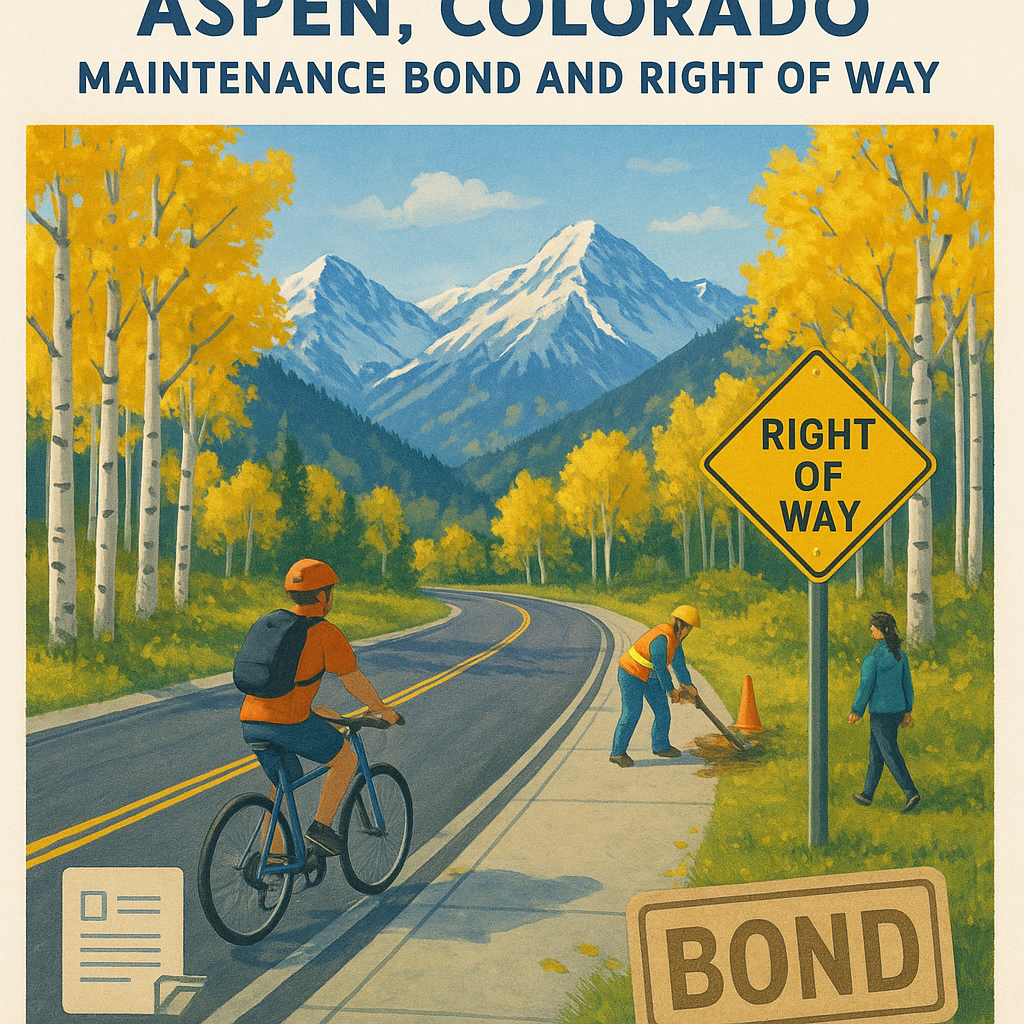
Imagine you’re strolling through downtown Aspen, surrounded by stunning mountain views and beautifully maintained streets. It’s easy to forget that underneath those sidewalks and asphalt lies a complex network of utilities and infrastructure. Every time a contractor needs to dig into that public space—what the city calls the right-of-way—they’re not just moving dirt. They’re making a long-term promise. And that promise is backed by something called an Aspen CO maintenance bond. If you’re a contractor, developer, or even a homeowner taking on a big project, understanding this bond and the city’s right-of-way requirements can save you from major headaches down the road.
What Exactly Is a Maintenance Bond?
Let’s break it down in plain English. A maintenance bond is a type of surety bond. Think of it like a safety net—or better yet, a warranty that’s backed by a third party. When you complete a construction project in a public right-of-way, the city wants assurance that your work will hold up over time. The bond guarantees that if something goes wrong due to faulty materials or workmanship during a set period, the money will be there to fix it.
It’s not insurance for the contractor. It’s protection for the City of Aspen and its residents. If a sidewalk you poured starts cracking six months after installation, the city can make a claim on the bond rather than spending taxpayer dollars. This keeps everyone accountable without a messy legal battle.
Why Does the City of Aspen Require a Maintenance Bond?
Aspen isn’t just any mountain town. It’s a place where tourism, luxury living, and environmental stewardship collide. The city invests heavily in public infrastructure to keep things looking pristine and functioning smoothly. When a contractor cuts into a street to install a new water line or builds a driveway approach over a public walkway, that work becomes part of Aspen’s permanent landscape.
Without a maintenance bond, a rushed or subpar job could deteriorate quickly. Freeze-thaw cycles at high altitude can be brutal on asphalt and concrete. A small defect today could become a dangerous pothole next spring. The maintenance bond requirement puts a financial motivator behind quality. It says: “You promised this would last, and we’re holding you to it.”
The Right-of-Way: More Than Just a Road
You’ll hear the term “right-of-way” (or ROW) a lot when dealing with Aspen permits. What does it actually mean? Simply put, the right-of-way is the strip of land reserved for public use. It usually includes the street, sidewalks, curbs, gutters, and the area between the sidewalk and the property line—often called the parkway or utility strip.
If your project touches any of these areas, you’re stepping into the public realm. Even if you own the adjacent building, the ground beneath that sidewalk doesn’t belong to you. The city manages that space to ensure safe, unobstructed passage for everyone. So, digging, paving, or even placing a temporary structure usually requires an encroachment permit, and that’s where the Aspen CO maintenance bond comes into play.
Aspen’s Specific Right-of-Way and Bond Requirements
Every municipality has its own rulebook, and Aspen’s Municipal Code spells out exactly what’s needed. While you should always check with the City of Aspen Engineering Department for the latest updates, here’s the general picture:
Who Needs an Aspen CO Maintenance Bond?
Any contractor, utility company, or private developer performing work that disturbs the public right-of-way will likely be required to post a bond. This could include:
- Road cuts for utility installations or repairs
- Sidewalk replacements or new curb cuts
- Landscaping projects that alter drainage along the street
- Installation of signs, awnings, or underground vaults that extend into the ROW
Even some major home renovation projects that tie into city utilities beyond the property line might trigger this requirement. Don’t assume that a small job flies under the radar—if it’s in the public way, the city wants a guarantee.
How Much Is the Bond and How Long Does It Last?
The bond amount typically reflects the scope and cost of the work. For a simple sidewalk repair, it might be a few thousand dollars. For a large utility project, it could be significantly higher. The city often sets the bond at a percentage of the estimated cost of the improvement, sometimes 100% of the restoration cost. The maintenance period is commonly two years, but it can vary. During that time, you’re on the hook for any defects.
Getting the Bond in Place
You can’t pick up a maintenance bond at a hardware store. You’ll need to work with a surety bond agency. They’ll look at your credit history, business financials, and experience. Don’t worry—most established contractors can obtain one quickly. The premium you pay is a small fraction of the total bond amount, often between 1% and 3%. Once secured, you’ll provide the bond paperwork to the city before they issue your right-of-way permit.
How to Make the Process Smooth and Stress-Free
Navigating city requirements can feel like learning a new language. Here are a few practical tips to keep things moving:
Start early. Don’t wait until the day before you want to break ground. Underwriting for a surety bond can take a few days, especially if it’s your first one.
Document everything. Take photos of the existing conditions before you dig. When the maintenance period ends, you’ll be grateful for proof that the crack in the asphalt was there long before you arrived.
Ask questions. The City of Aspen Engineering staff are there to help. A quick phone call can clarify whether your specific project needs a bond, what the required amount is, and what forms to submit.
Don’t confuse bonds with insurance. A maintenance bond protects the city, not your business. You still need your own general liability insurance. And if a claim is made on the bond, you’ll have to reimburse the surety company—so it’s essentially a credit line, not a free pass.
Common Missteps That Trip Up Contractors
Even seasoned pros can stumble. One big mistake is thinking the maintenance bond is “optional” because you’ve never been asked before. Rules change, and enforcement can tighten. Another pitfall is forgetting that the maintenance clock starts ticking only after the city accepts the work, not when you put down your tools. If there’s a delay in the final inspection, your two-year window might start later than you expect.
Also, watch out for bond exhaustion. If a claim is paid out, the bond amount might be reduced. You may need to replenish it to keep the city happy. Always keep an eye on the status of your bond throughout the maintenance period.
Why This System Actually Benefits Everyone
It’s easy to see the bond as just another bureaucratic hurdle. But zoom out, and you’ll notice it creates a healthier relationship between contractors and the community. For contractors, having a maintenance bond in place signals that you stand behind your work. It can be a competitive advantage when bidding on projects. For the city, it reduces the risk of unexpected repair bills. For residents and visitors, it means fewer potholes, safer sidewalks, and a town that looks as good as its postcard image.
And if you’re a homeowner hiring a contractor, ask whether they carry a maintenance bond for right-of-way work. If they don’t, and something goes wrong, you could be dragged into a dispute with the city—something nobody wants.
Frequently Asked Questions
Do I need a maintenance bond for a small repair in my driveway apron?
Often, yes. The driveway apron sits in the public right-of-way. Even a patch might require a permit and a bond. Check with the city—they can tell you if there’s a minimum threshold below which a bond isn’t required.
How much does an Aspen CO maintenance bond cost?
The premium depends on the bond amount and your financials. If the required bond is $10,000, you might pay between $100 and $300 for the two-year term. Larger bonds will cost more, but the rate remains a small percentage.
What happens if the city files a claim against my bond?
First, the surety company investigates. If the claim is valid, they’ll pay the city up to the bond limit. Then they’ll come to you for reimbursement. It’s not a loss you can shrug off—treat it like a loan that must be repaid. Avoiding claims is the best strategy, so do high-quality work from day one.
Can I use a cash bond or letter of credit instead?
Some municipalities allow alternatives. Aspen might accept a cash deposit or an irrevocable letter of credit in lieu of a surety bond. This can be useful if you have trouble qualifying for a surety bond, but it ties up your own money. Always verify current options with the Engineering Department.
Pulling It All Together
Aspen’s maintenance bond and right-of-way requirements are really about stewardship. The city wants to keep its public spaces safe and beautiful, and it wants the people doing the work to have skin in the game. By securing the right bond, understanding what’s expected during the maintenance period, and tackling the permit process head-on, you’re not just following rules—you’re building trust with the community you serve.
Ready to dig in? Reach out to a reputable surety bond provider familiar with Colorado requirements. Then circle back with the City of Aspen to confirm your paperwork is in order. A little preparation now keeps your project on track and your reputation solid for years to come.