Denver excavation bonds protect the public and the city by ensuring contractors cover damages from third-party liability, shifting financial risk away from taxpayers when projects go wrong. Securing this bond is mandatory for permits, especially for work in public right-of-way.
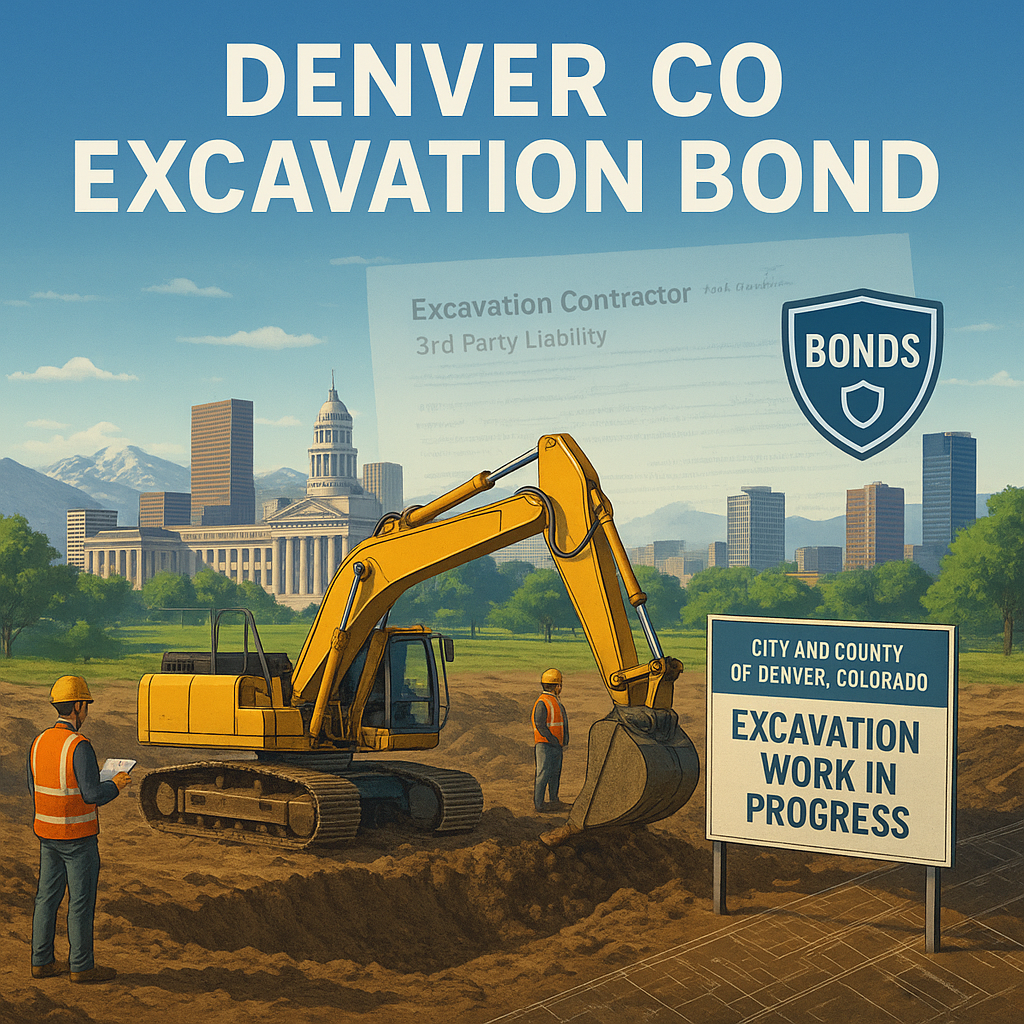
Let’s be honest—construction paperwork can feel like a stack of confusing fine print. But if you’re digging in the Mile High City, there’s one piece of that stack you absolutely can’t ignore. We’re talking about the Denver excavation bond. Whether you’re a contractor with mud on your boots or a homeowner planning a new addition, understanding how this bond and 3rd party liability work together can save you from massive headaches. So, grab a cup of coffee, and let’s break it all down in plain English.
What Exactly Is an Excavation Bond?
Think of an excavation bond as a financial promise wrapped in a legal safety net. It’s not insurance for your business. Instead, it’s a three-way agreement that protects the public—and specifically the City and County of Denver—if something goes wrong during your earthwork. The three parties are the contractor (that’s you, the principal), the government agency requiring the bond (the obligee), and the surety company that backs the bond.
If you follow all the local rules, codes, and safety requirements, the bond sits quietly in the background. But if a water main gets accidentally sliced open or a sidewalk collapses because proper shoring wasn’t used? That bond can be triggered. The surety pays out up to the bond amount to fix the damage, and then you have to pay the surety back every penny. So yes, it’s a form of credit, but one that keeps the community safe while you work.
Why Denver Requires Excavation Bonds for Contractors
Denver isn’t just asking for this paperwork to make your life difficult. The city wants to ensure that any excavation—from a simple utility trench to a deep foundation dig—doesn’t turn into an expensive disaster for taxpayers. Over the years, buried infrastructure has become a complex web underneath our streets. Gas lines, fiber optic cables, sewer mains, and water pipes crisscross every neighborhood. One wrong scoop from a backhoe can knock out internet for an entire block or, worse, create a dangerous gas leak.
By requiring contractors to secure an excavation bond before pulling a permit, the City and County of Denver shifts the financial risk away from the public and onto the contractor and the surety company. This requirement is especially strict for projects that involve cutting into public right-of-way, like when you need to repair a sewer lateral that goes under the street. Without the bond, you likely won’t get your permit approved. It’s that simple.
Third Party Liability: The Heart of the Protection
Now, let’s get to the phrase that often makes people’s eyes glaze over: 3rd party liability. But don’t worry, the idea behind it is incredibly straightforward. Imagine you’re digging next to a coffee shop on Colfax Avenue. The shop is the “third party.” They aren’t part of your contract with the property owner, and they certainly aren’t part of your agreement with Denver. Yet if your excavation causes their foundation to crack or cuts their electrical line, they suffer real harm. That’s a third party liability claim.
The Denver excavation bond is built around this concept. It guarantees that if your work damages someone else’s property or injures a passerby, there is a pot of money immediately available to make things right. The bond covers the city’s own infrastructure too—think curbs, gutters, street pavement, and traffic signals. So whether you harm a public asset or a neighbor’s private property, the bond is designed to respond. This is why you’ll often see the bond referred to as an “Excavation Contractor – 3rd Party Liability” bond on city documents.
A Real-World Example
Let’s say you’re replacing a water line for a bungalow in the Highlands neighborhood. While trenching, you accidentally hit an unmarked telecom conduit that feeds three other houses. Those homeowners suddenly have no internet, and the repair bill comes to $8,000. Your $10,000 excavation bond can cover that repair, keeping the homeowners from having to chase you through a lengthy court battle. The surety company handles the claim, pays the repair crew, and then works out a repayment plan with you. The neighborhood gets back to normal fast, and you maintain your reputation.
How the Bond, Insurance, and Permits Work Together
A common mix-up is thinking your general liability insurance policy does the same job as an excavation bond. They are related, but they don’t swap places. Insurance protects you from covered claims. The excavation bond protects the public and guarantees you’ll follow Denver’s specific rules. In many cases, the city wants to see both—a surety bond and a certificate of insurance—before you’re allowed to break ground.
Here’s how the process typically flows:
- You bid a job that involves any right-of-way excavation in Denver.
- You apply for a surety bond through a bond agency. The agency checks your credit and business history.
- You submit the bond along with your permit application to the City and County of Denver’s transportation or public works department.
- The city reviews your paperwork and issues the excavation permit, knowing the bond is in place.
- Once the work passes final inspection and no claims pop up during a set maintenance period, your obligation under the bond is released.
Breaking Down the Cost of a Denver Excavation Bond
People often worry that bonds are wildly expensive, but the reality is much friendlier than you might think. You don’t need to pay the full bond amount out of pocket. Instead, you pay a small percentage—called the premium—to the surety company. For a typical Denver excavation bond, if your required bond amount is $10,000, you might only pay between $100 and $300 annually for that coverage, depending on your credit score and financial strength.
Several factors influence your exact rate:
- Credit history: Strong credit often gives you access to the lowest rates.
- Business financials: Solid revenue and a healthy balance sheet help.
- Experience: Contractors with years of clean excavation history are seen as lower risk.
- Bond amount: The city sets this based on the scope of your work. Small sidewalk repairs may need a lower amount than major street cuts.
Even if your credit isn’t perfect, there are surety programs designed to help you get bonded. You just might pay a slightly higher rate while you build trust.
What Happens If You Dig Without One?
Picture pulling up to a job site on a crisp Denver morning, ready to put the excavator to work. Then a city inspector rolls up and asks for your bonded permit. If you don’t have it, you’re facing an immediate stop-work order. That means dumped equipment, delayed timelines, and an unhappy client. On top of that, the city can levy fines that quickly add up to more than the cost of the bond itself.
Worse, if you cause damage while digging without a bond, you’re personally on the hook for every cent of repair. You could lose your business, your equipment, and even face legal action from the city. The bond is, in many ways, the cheapest peace of mind you can buy when you’re working around Denver’s underground maze.
Common Questions Contractors and Homeowners Ask
Is the bond requirement only for big construction companies?
Not at all. If you’re a solo operator with a truck and a mini-excavator doing a small sewer repair in the right-of-way, Denver still wants that bond. The city cares about the risk to public infrastructure, not the size of your crew. The good news is that smaller contractors can often secure bonds with minimal hassle, as long as they have decent personal credit.
Who actually files a claim against the bond?
Typically, the City and County of Denver will file a claim if your work damages public property and you fail to repair it properly. But a private citizen—say, a homeowner whose fence or driveway was ruined—can also notify the city, which then triggers a review. The bond is there for the benefit of those third parties, and the city acts as the enforcer of that protection.
How long does the bond stay valid?
It usually stays active until the city releases your obligations. This could be weeks after the project wraps up, or it might include a one- or two-year maintenance period for deeper excavations. Be sure to check your permit’s specific conditions so you don’t mistakenly cancel your bond too early.
The Bigger Picture: Trust and Professionalism
Getting bonded isn’t just about compliance. It sends a signal to your clients and to the Denver community that you’re a professional who stands behind your work. When a homeowner sees that you’re licensed, insured, and bonded, they breathe easier. They know that if something unexpected happens beneath the surface, there’s a clear path to fixing it without endless court battles. In a competitive market, that level of trust can be what sets your excavating company apart from the guy with just a shovel and a handshake.
Wrapping It Up: Digging In With Confidence
Construction is full of surprises—hard rock where you expected soft dirt, forgotten pipes where you planned to trench, and weather that refuses to cooperate. One thing that shouldn’t be a surprise, though, is your financial exposure. The Denver excavation bond, centered on 3rd party liability, wraps a layer of protection around every soil shift, trench box, and backfill pile you manage.
Does it add a step to your permit process? Yes. Is it worth the tiny fraction of your project cost? Absolutely. By partnering with a good surety agent, keeping your credit healthy, and understanding exactly what your bond promises to the City and County of Denver, you can dig deeper, work smarter, and build a business that lasts as long as the foundations you pour. So the next time you stare at a set of plans, remember: that piece of paper isn’t a hurdle—it’s your shovel-ready shield.