Denver mandates a compliance bond for sidewalk contractors to protect homeowners, businesses, and the city from substandard work and financial loss. This three-party surety bond ensures contractors follow local codes, complete projects, and cover costs if they fail, helping property owners distinguish reliable professionals from fly-by-night operators.
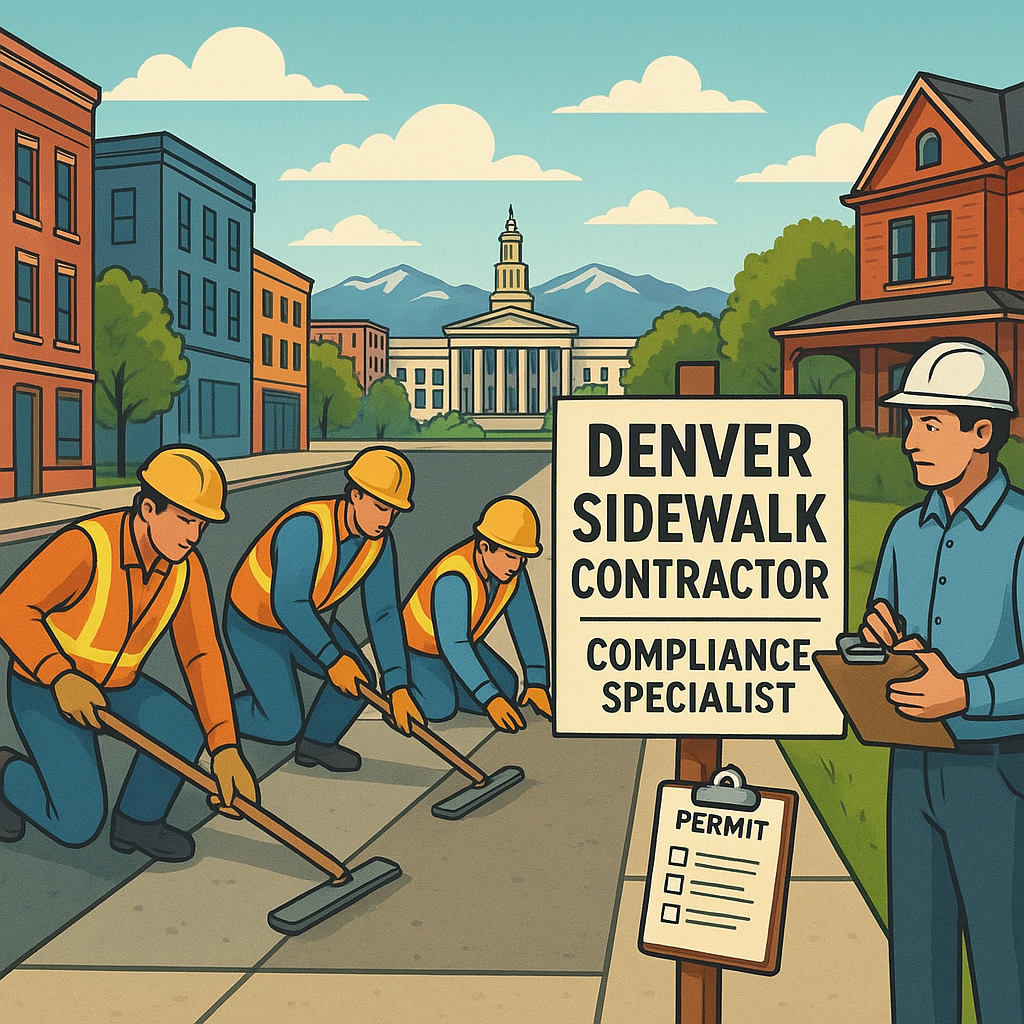
If you’ve ever tripped on a cracked sidewalk or waited months for a promised repair that never happened, you already understand the quiet importance of a solid, reliable walkway. In Denver, where tree-lined streets and vibrant neighborhoods invite daily strolls, the condition of public sidewalks matters more than many of us realize. Behind every smooth, even stretch of concrete is a contractor who has promised to do the job right — and a little-known financial safeguard called the Denver cement sidewalk contractor bond that makes sure that promise is kept.
You might be a homeowner planning a major curb-to-porch overhaul, a business owner making sure your storefront is accessible, or a contractor trying to stay on the right side of local rules. No matter which hat you wear, understanding this bond requirement will save you headaches, protect your money, and help you tell the difference between a fly-by-night operation and a true professional.
What Exactly is a Cement Sidewalk Contractor Bond?
Think of a contractor bond as a three-way promise written in money. It’s not insurance for the contractor — it’s a safety net for the customer and the city. A surety bond involves three parties: the contractor (you might see this called the “principal”), the government agency that requires the bond (the “obligee” — here, the City and County of Denver), and the bonding company (the “surety”). The bond guarantees that the contractor will follow all local codes, complete the work as agreed, and meet any financial obligations tied to the job.
If the contractor falls short — say they walk off the job before finishing, do work that doesn’t meet Denver’s safety standards, or fail to pay for permits — the bond can step in to cover the cost of fixing the mess. Unlike insurance, which protects the contractor’s own tools or liability, this bond is specifically designed to protect you and the city.
Why Denver Requires This Bond for Sidewalk Contractors
Denver is a city that takes its infrastructure seriously. Sidewalks aren’t just slabs of stone; they’re part of the public right-of-way. When a contractor starts digging up old concrete and pouring fresh cement, they’re not just working on your property — they’re often touching land the city has a stake in. To make sure nobody cuts corners and leaves taxpayers holding the bag, the City and County of Denver mandates a compliance bond for many sidewalk projects.
This requirement does a few important things at once. It filters out contractors who lack the financial stability or know-how to get bonded. It gives homeowners and business owners a clear path to financial recovery if things go wrong. And it gives the city confidence that its sidewalks — thousands of miles of them — will be built or repaired according to code without draining public resources on enforcement or corrections.
Compliance-Only Bond: What Does That Mean?
You might see this bond called a “compliance only” bond. That phrase isn’t just industry jargon — it highlights a key distinction. A compliance-only cement sidewalk contractor bond in Denver focuses strictly on whether the contractor obeys the rules: zoning regulations, building codes, permit requirements, and job site safety standards. It doesn’t cover every possible type of damages, like a general liability policy might, but it does ensure that the work itself meets legal and safety benchmarks.
Picture it as a referee standing next to the job site, ready to blow the whistle if the contractor steps out of bounds. The bond’s existence pressures the contractor to stay in the game and follow the rulebook, because if they don’t, the bonding company will have to pay up — and then come after the contractor to get reimbursed.
How Does the Bond Protect Homeowners and the City?
Let’s walk through a real-world example. You hire a contractor to replace a crumbling stretch of sidewalk in front of your Denver home. They pour the new concrete, but weeks later you notice serious cracking or pooling water because the slope doesn’t meet city drainage standards. The contractor stops returning your calls. Without a bond, you might have to sue, pay another crew out-of-pocket, and hope you eventually get your money back. With a bond in place, you can file a claim against it. The surety company investigates, and if the claim is valid, they’ll pay to have the sidewalk fixed correctly — up to the bond amount.
The city benefits similarly. If a contractor damages public property or leaves a sidewalk in a hazardous state, Denver can make a claim. This keeps small problems from becoming big, expensive liabilities and ensures that every neighborhood gets safe, durable walkways.
Who Needs a Cement Sidewalk Contractor Bond in Denver?
Not every single person with a trowel and a bag of Quikrete needs a bond. But if you’re a professional contractor bidding on public works or doing certain residential and commercial sidewalk projects that require a permit from the City and County of Denver, chances are high that you’ll be asked to provide proof of bonding. The exact threshold can depend on the project scope, the specific permits pulled, and the direction of the local building department.
New contractors often discover this requirement when they try to pull their first sidewalk permit. Experienced crews keep their bonds current as a badge of credibility. If you’re a homeowner vetting candidates, simply asking “Can I see your Denver sidewalk contractor bond certificate?” is a quick way to weed out unqualified operators.
How to Obtain a Denver Sidewalk Contractor Bond
The process is refreshingly straightforward, even if the concept feels unfamiliar. Here’s how it typically works:
- Find a reputable surety broker: Look for agencies licensed in Colorado that specialize in contractor bonds. They’ll help you find the right bond type for Denver’s specific compliance requirements.
- Submit an application: You’ll share basic business information, possibly financial statements, and details about your experience. Don’t worry; for compliance bonds, the underwriting is often quick and focused on your creditworthiness and track record.
- Receive a quote: The cost — called the premium — is usually a small percentage of the total bond amount. For a well-qualified contractor, this could be as low as 1-3% annually. So a $10,000 bond might only cost a couple hundred dollars a year.
- Pay and get bonded: Once you pay the premium, the surety issues the bond document. You’ll then provide a copy to the City and County of Denver when pulling your permit.
Is it a bit of paperwork? Yes. But it’s a manageable hoop to jump through, and once it’s done, you can take on sidewalk projects with full confidence.
What Factors Affect Bond Costs?
You might be wondering, “Will this break the bank?” Most contractors find the price quite reasonable. The premium depends on a few straightforward factors: the bond amount required by the city (often based on job value), your personal credit score, and your business’s financial stability. Contractors with solid credit and clean business histories enjoy the lowest rates. Even those with a few blemishes can still usually get bonded, though the premium may be slightly higher. It’s a bit like renting a car — a good driving record earns you the best deal, but most people still get behind the wheel.
The Link Between Bonding and Quality Work
Why should a piece of paper influence how neat a concrete edge looks or how long your sidewalk lasts without cracking? Because the bond creates accountability. Contractors who are bonded have a financial incentive to do things right the first time. A claim against their bond can raise their future premiums or even make them unbondable. So the system naturally rewards careful, code-compliant work and pushes out the sort of contractors who thrive on shortcuts.
For you, the customer, this translates directly into peace of mind. When you see that a Denver cement sidewalk contractor carries a current compliance bond, you’re seeing evidence that someone with deep pockets (the surety company) has vetted them and believes they’ll perform. That doesn’t mean you skip checking references or reviews, but it adds a thick layer of financial protection that a simple handshake could never provide.
What to Ask Before the First Bag of Cement is Opened
Whether you’re hiring a contractor or you are one, a few key questions can save everyone a lot of trouble. Ask these early in the process:
- “Is your Denver sidewalk contractor bond current, and can you show me the certificate?”
- “What bond amount do you carry, and what exactly does it cover?”
- “Have there ever been claims against your bond?”
- “Do you also carry general liability insurance and workers’ compensation?”
- “How will you ensure the finished sidewalk meets all City and County of Denver codes?”
Don’t be shy. Legitimate professionals welcome these questions because they reflect an engaged, knowledgeable client. If a contractor hesitates or provides vague answers, consider it a warning sign — like a concrete truck that never arrives.
Real-Life Consequences of Working Without a Bond
Imagine a scenario: A neighbor recommends a guy who does “cash jobs on the side.” He’s cheaper than anyone else, and you’re trying to stay on budget. A few months later, the new sidewalk buckles after a freeze-thaw cycle because the base wasn’t compacted properly. The city issues a notice demanding you fix the hazard. That “cheap” job is now costing you double, and you have zero way to recover from the contractor who vanished. A bond could have changed that entire story.
On the flip side, contractors who skip bonding expose themselves to fines, permit denials, and legal action from the city. Operating without required bonding in Denver can damage credibility and shut down opportunities before they even start. The minimal cost of the bond is almost always the smarter business move.
Making Denver’s Sidewalks Safer, One Bond at a Time
There’s a wider benefit that emerges when most sidewalk contractors in a city are bonded: the overall quality of public pathways rises. Kids getting to school, older residents walking to the park, visitors exploring local shops — everyone relies on well-built sidewalks. The bond requirement isn’t bureaucratic red tape; it’s a practical tool that lifts the baseline of workmanship across the entire Denver metro area.
So today, when you see a freshly poured sidewalk with a neat finish and proper grading, remember there’s a good chance a compliance bond stood behind it, quietly doing its job. And if you’re about to hire someone to create that scene in front of your own property, make sure a bond is part of the package. It’s a small detail that makes a massive difference.
In the world of Denver cement sidewalk contractor services, compliance and quality are inseparable partners. The bond is the thread that stitches them together, protecting homeowners, strengthening the city’s trust, and giving contractors a clear lane to demonstrate their professionalism. Whether you’re planning a single driveway apron or managing a multi-site commercial project, let this requirement work for you instead of against you. Ask for the bond. Demand the proof. And enjoy the quiet satisfaction of a sidewalk that stands the test of time — and Denver weather.