Denver requires parking lot contractors to secure a surety bond as a financial guarantee of compliance with local codes and regulations. The bond protects the city and property owners from substandard work, covering financial losses if a contractor violates rules or abandons a project.
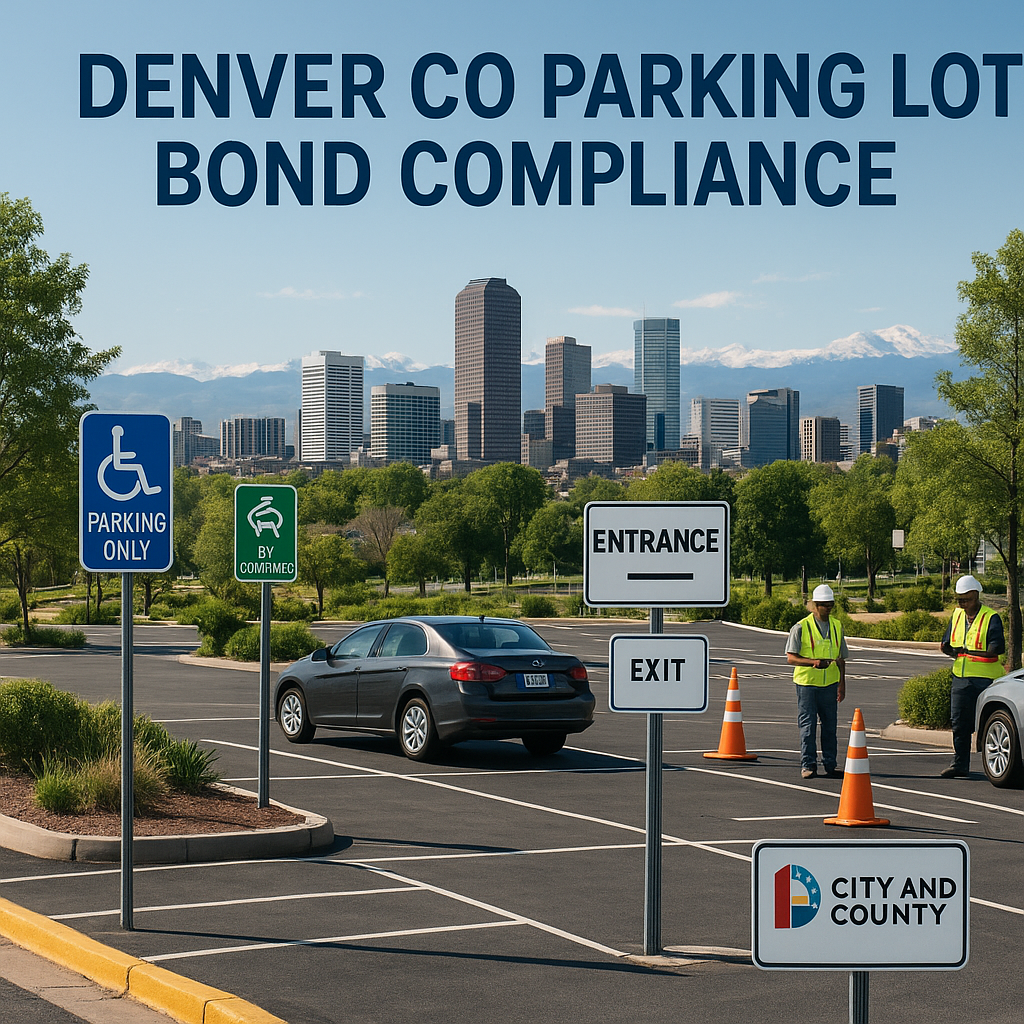
Picture this: You’ve just landed a contract to resurface a busy parking lot in downtown Denver. You have the crew, the equipment, and the expertise. But before you can break ground, the city asks for something you might not have on your radar—a parking lot contractor bond. If you’re scratching your head, don’t worry. You’re not alone. Let’s walk through everything you need to know about the City and County of Denver parking lot bond, why it matters, and how to get one without the headache.
What Is a Denver Parking Lot Contractor Bond?
Think of a Denver parking lot contractor bond as a promise, backed by money, that you’ll follow the rules. It’s a type of surety bond specifically required for contractors doing parking lot work in the City and County of Denver. You might hear it called a “compliance bond” or simply a “Denver CO parking lot bond,” but at its core, it’s a three-party agreement.
Here’s the simple breakdown: you (the contractor) purchase the bond from a surety company. The bond guarantees to Denver (the obligee) that your work will comply with local codes, permits, and regulations. If something goes sideways and you don’t hold up your end of the bargain, the bond steps in to cover financial losses or fix the problem.
A helpful way to picture it is like a security deposit. When you rent an apartment, the landlord holds a deposit in case you damage the property. The bond works in a similar way, except it’s an assurance you’ll play by the city’s rules throughout your parking lot project.
Who Needs a Parking Lot Contractor Bond in Denver?
If your business touches any part of parking lot construction, repair, or resurfacing within the City and County of Denver, there’s a strong chance you’ll need this bond. It’s not just for large-scale paving companies, either.
You typically need a Denver parking lot contractor bond if you:
- Pave or resurface asphalt parking lots
- Install concrete lots or curbing
- Striping and re-striping parking spaces
- Perform sealcoating and crack filling
- Handle any excavation or grading tied to parking area projects
Even if you’re a subcontractor hired to handle a specific part of the job, the main contractor might require you to be bonded. It all boils down to ensuring that every person working on the lot is accountable to Denver’s building codes and safety standards. The bond acts as your ticket to pulling permits and getting the green light to start the work.
Why the City of Denver Requires This Bond
It’s easy to see a bond as just another piece of red tape, but Denver’s requirements serve a real purpose. Cities have a responsibility to protect their infrastructure and the people who use it. A poorly built parking lot can lead to drainage issues, cracked pavement, and even safety hazards for drivers and pedestrians.
The City and County of Denver parking lot bond is a financial safety net. It guarantees that if a contractor cuts corners, violates building codes, or abandons a job, the city and property owners aren’t left holding the bag. The bond can be used to pay for repairs, bring the project up to code, or resolve disputes. In short, it encourages quality work and holds contractors accountable without forcing taxpayers to foot the bill.
For you, the contractor, carrying a valid Denver CO parking lot bond also sends a clear message: you’re a professional who takes compliance seriously. It can set you apart when bidding on jobs and give clients peace of mind.
How to Secure Your Denver CO Parking Lot Bond
Getting bonded doesn’t have to be a confusing ordeal. In fact, it’s often a straightforward process you can handle online or over the phone. Here’s how it typically unfolds.
First, you’ll reach out to a surety bond agency that’s licensed to issue bonds in Colorado. They’ll ask for some basic information about your business and the type of work you do. Then you’ll complete a short application.
The surety company will run a soft credit check (don’t panic, it’s usually not a deep dive) and review your experience. Why credit? Because the bond is a form of credit extended to you. The surety wants to see that you handle financial responsibilities well.
Once approved, you’ll receive a quote. You pay a premium—a small percentage of the total bond amount—and the bond is issued. You’ll get a bond form that you can then file with the City and County of Denver as proof that you meet the requirement. That’s it. Many contractors get bonded the same day they apply.
Factors That Affect Bond Cost
The cost of a Denver parking lot contractor bond depends on several things, but it’s often more affordable than you might think. The total bond amount is set by the city—that’s the maximum coverage. Your premium is determined by:
- Your credit score: Good credit can land you a premium as low as 1% to 3% of the bond amount.
- Business experience and financials: A solid track record works in your favor.
- Any past claims or bankruptcies: These can increase the rate, but specialized programs exist for contractors with less-than-perfect credit.
For example, if Denver requires a $10,000 bond and you have strong credit, you might pay just $100 to $300 for a year of coverage. Even if your credit is shaky, you can often still get bonded by paying a slightly higher premium.
Common Misconceptions About Compliance Bonds
Misunderstandings about surety bonds can trip up even seasoned contractors. Let’s clear the air on a few points that often cause confusion.
“The bond protects my business.” Not exactly. A contractor bond protects the city and the public, not you. If a claim is paid out, you are legally obligated to reimburse the surety company for every penny. Think of it as your financial guarantee, not an insurance policy for your mistakes.
“I can skip the bond if I’m careful.” Unfortunately, no. If the City and County of Denver says you need a parking lot contractor bond to pull a permit or maintain your license, skipping it can result in fines, project delays, or even the suspension of your right to work in the city. It’s a non-negotiable compliance piece.
“Once I buy it, I’m done.” Most Denver parking lot bonds require annual renewal. You must keep the bond active for as long as your permit or license is valid. A lapse can trigger the same penalties as never having one in the first place.
Keeping Your Bond in Good Standing: Compliance Tips
Getting the bond is step one. Staying compliant so you never face a claim is the ongoing goal. Here are some practical tips to keep your Denver parking lot contractor bond in excellent condition.
- Know and follow Denver’s paving codes. Stay up to date on local construction standards, from asphalt thickness to ADA accessibility requirements.
- Always secure the right permits. Don’t start any parking lot project until all approvals are in place. Missing permits is one of the fastest ways to trigger a bond claim.
- Keep your bond active. Mark your renewal date on the calendar and pay your premium on time. Letting the bond lapse can halt your work instantly.
- Communicate with clients clearly. Written contracts and change orders prevent misunderstandings that could escalate into disputes and potential claims.
- Address issues right away. If a client or city inspector flags a problem, fix it quickly. Being proactive shows good faith and often stops minor issues from becoming bond claims.
Treat your bond like a partner in your reputation. When you operate with integrity and attention to detail, the bond just sits quietly in the background doing its job.
What Happens if a Claim Is Filed?
No contractor plans for a claim, but knowing the process helps you react calmly if one ever arises. A claim on your Denver parking lot bond usually starts with a complaint. Maybe the city inspector finds that your resurfacing project doesn’t meet drainage standards. Or a property owner claims you left the job unfinished.
Once a claim is formally filed, the surety company investigates. They’ll look at the facts, your contract, and whether you breached any regulations. If the claim is valid, the surety may pay the harmed party up to the bond amount. Here’s the key: that payment is not a gift. You will need to repay the surety in full, often including legal costs. In essence, you’re responsible for every dollar the bond pays out.
The best way to avoid this financial sting is prevention. High-quality work, open communication, and a thorough understanding of Denver’s expectations keep claims rare and your business running smoothly.
Frequently Asked Questions About Denver Parking Lot Bonds
We hear a handful of questions again and again from contractors navigating the bonding process. Let’s tackle them head-on.
How long does a Denver parking lot contractor bond last?
Most bonds are issued for one year. You’ll need to renew them annually, as long as you continue doing work that requires the bond in Denver. Some sureties offer multi-year options, but the premium is usually calculated on an annual basis.
Can I get a bond with bad credit?
Yes, you can. While good credit gives you the lowest rates, the surety market has programs for contractors with lower credit scores or past financial bumps. You might pay a higher premium, but you can still secure the required bond and keep your business moving.
Is the bond a one-time fee?
No, the premium is a recurring cost. Think of it like a subscription that maintains your compliance. You’ll pay the premium each year to keep the bond active and avoid any gaps in coverage.
Does the bond cover me for all work in Colorado?
Not necessarily. The City and County of Denver parking lot bond is specific to Denver’s requirements. If you work in other Colorado municipalities, check their local rules—you may need separate bonds or additional coverage.